




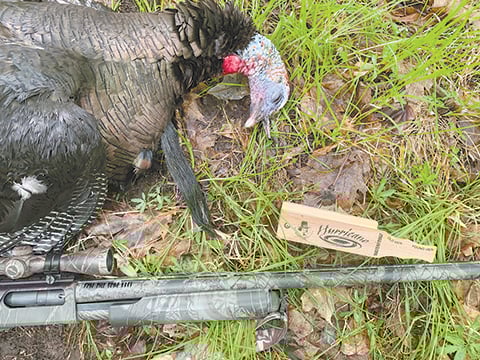
Copycat and cover calling will put more toms on the ground than any creative sounds you might conjure up to close the deal. Getting a boss hen hopping hot and heading your way is a prime example. If you’ve ever witnessed two hens trading barbs, you know what I mean.
Your calling job is to pull in the hen so that she is almost in your lap, i.e. close enough so that you can shoot any trailing tom.
The easiest way to do this task is to fire back the same calls the hen is issuing. She could be cutting, she might be yelping her head off, or she very well could be sputtering.
Whatever sound the hen utters, that’s what you need to fling at her. Only angrier and louder as she gets closer.
To add more fuel to the flame, stick with her verbal cadence and start covering her calls. All the while, keep an eye out for an approaching longbeard.
MORE TURKEY COVERAGE FROM OUTDOOR NEWS:
Bonus turkey tag fiasco hangs Wisconsin hunters out to dry
Wild turkey hunting’s great debate: How much calling is too much calling?
Up your consistency with these turkey decoying tips
On an Illinois hunt in Richland County, I almost got more hen action than I could handle. Not only did the boss hen mob my hide at the edge of an alfalfa field, but the whole flock crashed the twosome party. For a moment, I thought I was in dire straits.
The gobbler? He calmly stood 50 yards uphill taking in the scene. I never got a shot, but on other hunts trailing toms ended up flopping while the hen took flight.
Sometimes a competing hen is just looking for a good time and not worried about arguing over territory or lovers by coming in. Yet, there is still the element of jealousy that you can play upon.
Frequently this happens when a hen intercepts a tom that is responding to your calls. She just doesn’t want you repeating the same calls that she used to lure the tom her way. When they head off together, try to get out front. If they come into view, try talking to the tom the same way the hen did when she stole him away. Don’t think you can attract him by just doing some clucking and purring.
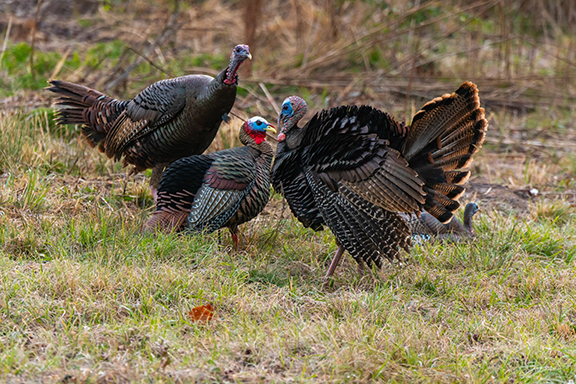
Another way that hens can be very useful is by letting you know what jennies think toms want to hear when trying to tickle their fancy. Say you’ve roosted a gobbler and aren’t quite sure what calls to use.
Wait for the hens to start tree yelping and doing assembly clucks when they hit the ground. All you’re trying to do is get in on the conversation using the same hen speak to get the tom’s attention.
The closer you can copy a hen’s overtures to toms, the better off you are in matching what they are used to hearing or want to hear. There is no better teacher than the local hens.
On the other side of the calling coin is the gobbler.
Don’t ignore learning to mimic tom talk.
When he’s still roosted, overlaying his calls with duplicates will suggest there is competition for his harem. Doing this imitation with a jake’s raspiness will sometimes bring the tom running in when he hits the ground.
Even if he gets the early light hens to join him, the curious gobbler might want to take a look at the interloper. Using a jake or full strut gobbler decoy, might pull him in to do battle if he is the head honcho.
Sometimes the best you can do is attract a band of jakes during mid-morning or afternoon hunts. Their short, raspy gobbles are annoying to an old tom that is also out trolling for a willing hen, especially later in the season.
Try getting a passing troop of jakes ramped up by copying and covering their calls. The more they gobble with excitement, the likelier it is that any nearby dominant tom will join the party.
Sometimes jakes and toms will be out trolling for love together. The group might be leery of dekes, especially in the later periods of the season. They’ll eyeball the spread and decide to veer away out of suspicion.
When they start moving off, hit your gobbler call by imitating the riled up raucous talk you’ve heard before from jakes. Sometimes they will turn on a dime and come running back for a closer look. Usually, the tom will follow right into the kill zone.
Staying in the moment by copying and covering the calls used by hens and toms will put more birds on the ground this season.
Wisconsin youths take aim at dove hunting
Lee DeBruin and his son Blake, 13, drove more than 200 miles in September to be students in the only

Pennsylvania Senate panel passes two of Sen. Dan Laughlin’s bills
The Pennsylvania Senate Game and Fisheries Committee advanced two bills at its Sept. 29 hearing – one that requires state
Tyler Frantz: October is a roll of the dice for outdoor fun
Is it possible for too much of a good thing to be a problem? It seems that way, at least
