




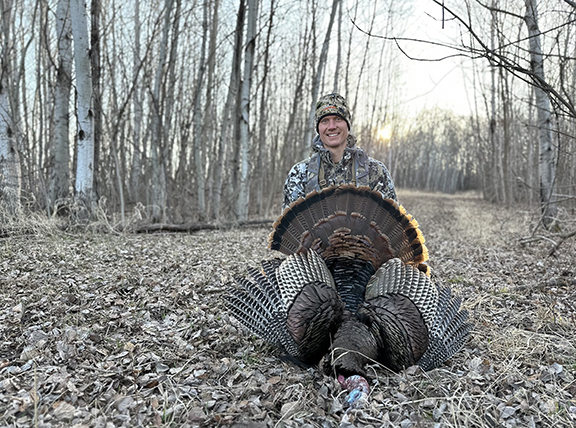
It was a little over an hour into Minnesota’s 2025 spring turkey season when two toms gobbled from about 100 yards away through the aspens.
I had sat tight in this spot since daylight, calling periodically at birds that had roosted on the neighboring property. A series of scouting runs that revealed scratchings on this trail through the timber left me confident this was the place to be on opening morning.
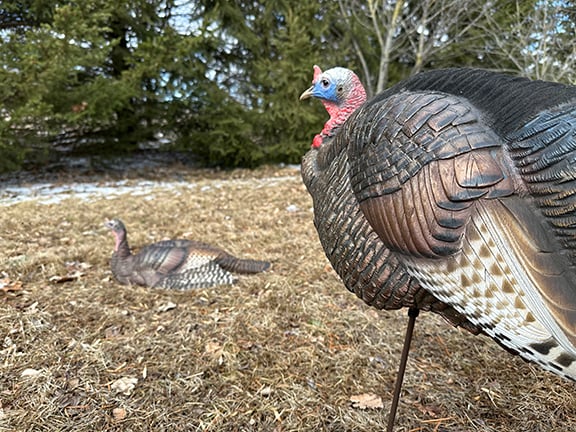
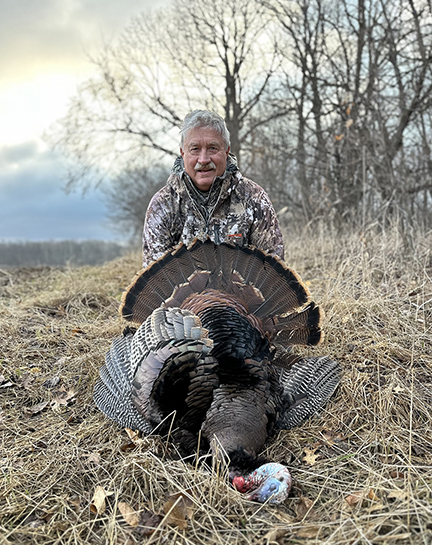
I talked with those two toms for a few minutes as the gobbles moved closer and closer. They had moved off the trail into the woods when I first spotted them, but once they saw the decoys – a three-quarter strut jake and hen – they couldn’t take it. Both birds ran right in before I pulled the trigger on the front tom.
That’s the draw of using decoys in the turkey woods. They can lead to close, controlled shots and exciting hunts. But that’s not always how it goes.
MORE TURKEY COVERAGE FROM OUTDOOR NEWS:
Shawnee National Forest offers a true public land turkey hunting experience in Illinois
Hunters asked to help with the science of wild turkey genetics this season
Fast forward to May. I was hunting in South Dakota with my bow. Plenty of birds worked to within shotgun range, but wouldn’t commit to the decoys for the 10-yard bow shot that would almost guarantee a dead bird.
Was there something wrong with the setup? Probably. That’s the challenge of running after turkeys with a bow. There’s a fine line between being hidden and having a clear shot.
“When you use really good decoys I don’t see a lot of decoy-shy birds,” said Tony Peterson, a longtime turkey hunter who has chased birds all over the country. “What I do see is blind-shy birds. There so often is a case where people don’t brush in a blind, pop it right next to a field, the sun’s shining off of it. I almost think that’s worse, but I do think sometimes people think decoy-shy birds exist because they’re using the wrong decoys.”
Peterson is a content creator for MeatEater, which owns Dave Smith Decoys. He is quick to point that out, but says he used Dave Smith Decoys years before he had any relationship with the company. It was a turning point, he says, that led to more success bowhunting turkeys.
“You learn so much about getting turkeys into decoys when you bowhunt them,” Peterson said.
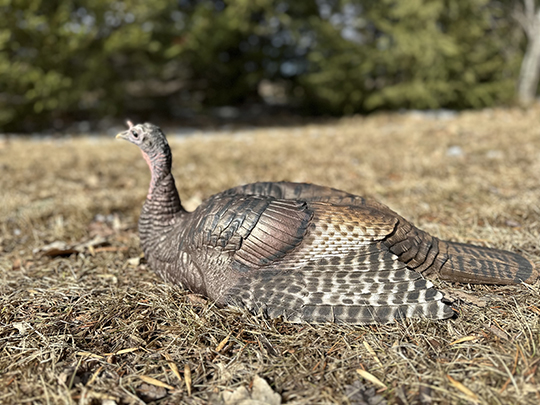
The decoys from DSD are known for their realism that stems from precision paint jobs and also the body posture of each decoy. That design that mimics the body language turkeys give off in real life is what separates DSD in Peterson’s mind.
Buying realistic decoys that exist today isn’t cheap (most from companies like DSD and Avian-X will cost more than $100), but it’s likely worth it for the turkey hunter looking for more consistency with decoys. But spending the money is just a start. There’s more to throwing a bird over your shoulder on a regular basis.
Watch and learn
One issue Peterson sees a lot is hunters not thinking through their choice of decoys.
“If you watch the progression of turkeys from wintering flocks to the end of May you see those flocks split up, you see things change,” he said. “They go from feeding in fields to feeding on insects in the woods and fresh growth, and they break up.”
How many birds are together? Where are they and what are they feeding on? Are toms being aggressive toward each other or have pecking orders been established where a less aggressive decoy spread might be the way to go to pull in a wider age range of toms?
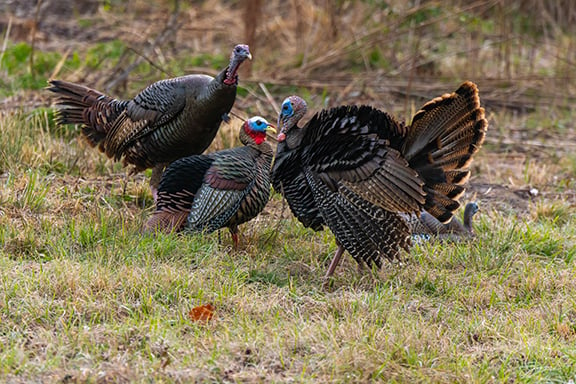
Watch live birds and take stock of what you’re seeing at certain points of the season. Then try your best to mimic it. Set up where birds naturally want to be.
“I consider it selling the scene. What would they be doing in that spot at that time?” Peterson said. “That’s the thing with turkeys. They’re not curious, so if you give them some reason to question it then you might get that drive-by at 60, 70 yards where he’s going to gobble and strut but he’s like, ‘I’m just not going.’ When they buy into it, then it’s over.”
Peterson uses more decoys in the early part of a season when birds are traveling together in larger numbers. It might be four or five hen decoys moving in the same direction with a three-quarter strut jake trailing behind them.
“Then I pare down throughout the season,” Peterson said. “By the time it’s the end of May, I’m down to one hen because that’s kind of what the live birds are working with. You want to give them something natural. You’ll see people put decoys out and the jake is pointing one way and the hen is pointing 180 degrees the other way and it doesn’t look natural.”
Using a big strutter decoy is tantalizing because it’s an awesome show when it works. It also might be the most likely decoy setup to backfire.
“For me, that is an early season situation where I’ve scouted a flock that has a big tom where they’ve clearly established dominance and he’s just not going to put up with a stutter in a place where that flock is going to end up at some point in the day,” Peterson said. “Those jakes and two-year-olds and other birds, they might not approach that strutter.”
Mastering the setup
Having multiple decoys to pick and choose from is great, but most hunters will have just a couple they are willing to buy and carry.
“If I had to pare down my setup for season-long success, it would be a (three-quarter) strut jake with a lay-down hen,” Peterson said. “If I only had to carry one it would be the jake because I’m the hen. When I’m calling I’m signifying that there’s a hen in the brush.”
That jake and lay-down hen combination has become a popular combo among hunters, but how you position the decoys is key.
“Get the jake right up behind her,” Peterson said. “And you’re pushing him right down to the ground, you want the least intimidating jake you can get.”
If using a blind, Peterson goes to great lengths to brush them in so they blend into the surroundings. Think about the sun and do what you can to position it so it’s not shining through the windows at time periods you are most likely to hunt.
“I see a lot of people who go into a blind and they are wearing camo, but they don’t have their face covered,” Peterson said. “You can get away with that if you are shotgun hunting, but if you’re going to bowhunt them and you’re not wearing black and you’re not thinking about the sun shining in there, then you’re in trouble.”
When bowhunting turkeys, Peterson wants his decoys set up close – about 7 to 10 yards away. If using a jake and hen decoy, plan the shot around the jake. That’s where toms are heading.
“People often put their decoys way too far out when bowhunting turkeys,” Peterson said. “You think about how small that vital zone is and how good they are at picking you off when you draw, I want them stupid close. One thing I’ve seen is if I’m out there without a blind and they buy into that (decoy scene), even if I draw and they bust me I can still kill them.”
Ohio’s Outdoor Calendar
A look at upcoming outdoor-related events from across Ohio published in the Sept. 22, 2026 edition of Outdoor News.

Ohio Cuffs & Collars: Stolen black walnut tree from Wallace O’Dowd Wildlife Area
Ohio cuffs and collars are field reports from the Division of Wildlife. These reports are from the Sept. 25, 2026
H2Ohio wetland to benefit St. Marys
As part of Ohio Gov. Mike DeWine’s H2Ohio Initiative, the Ohio DNR (ODNR) and the city of St. Marys held
