The rapid expansion of data centers is one of the least visible but fastest-growing land-use changes associated with the quickly advancing digital economy.
Not surprisingly, advocates frame centers as clean infrastructure. Left unmentioned is that they are anything but green. Left unchecked by the conservation community, centers will have significant effects on fish and wildlife through land conversion, water use, energy demand, pollution, and cumulative landscape impacts.
Understanding these ramifications and developing mitigations for them is essential for informed siting decisions and regulatory oversight. If the start to this piece sounds vaguely familiar that’s because it is. We’ve been to this rodeo before with renewable energy developments.
To wit, some in the environmental community portray wind and solar energy development as a “free lunch.” Yet “clean energy” can and does negatively affect wildlife. But these impacts rarely come up until it’s too late to do much in the way of effective mitigation.
MORE COVERAGE FROM OUTDOOR NEWS:
Outdoor Observations: New law a boost for Michigan’s hunter safety program
Listen to the ice and prioritize these winter fishing tips to stay safe
Pennsylvania Game Commission investigates five hunting-related shooting accidents
Here are some of the more obvious concerns:
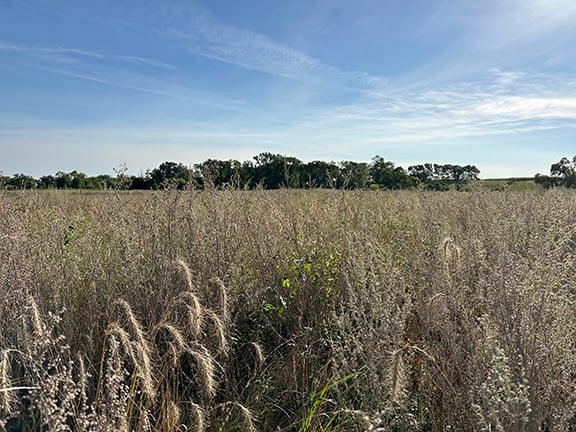
• Centers require large parcels of land and need to be located near power transmission lines and fiber infrastructure. As a result, construction results in the clearing of forests, grasslands, wetlands, and agricultural property. Even when data centers are sited on previously developed land, associated infrastructure like substations, access roads, transmission corridors, and security buffers fragments habitat.
Edge effects created by cleared areas encourages the spread of invasive species. Over time, the cumulative impacts of uncoordinated development can transform entire landscapes.
• Centers withdraw enormous amounts of water from municipal or groundwater sources for cooling. This can reduce stream flows, raise water temperatures, and lower water tables, increasing thermal stress on fish, impairing spawning habitat, and concentrating pollutants.
In some cases, thermal discharges or altered runoff patterns cause additional concerns. Where groundwater is heavily used, springs and wetlands may be lost altogether.
• Centers are energy-intensive, and their electricity demands usually drive expanded power generation and transmission infrastructure. These fragment habitat, increase avian collision risk, and introduce long-term disturbance corridors with unintended consequences.
• Centers generate constant noise from cooling systems and backup generators. Artificial lighting, especially at night, can disorient migratory birds, alter insect behavior, and change nocturnal wildlife activity patterns.
• Centers present documented chemical risks. Fuel storage for backup generators, coolants, and maintenance chemicals (e.g., corrosion inhibitors, forever chemicals) can contaminate soils and waterways. Stormwater runoff from large impervious surfaces (e.g., buildings, parking lots) can carry pollutants into nearby streams.
Yet the most underestimated effect of data centers is their cumulative impact at landscape scale. Although a single facility may present manageable challenges, the uncoordinated construction of multiple facilities across a region can overwhelm water resources, and transform land-use patterns across entire ecosystems.
As well, in the absence of landscape-scale planning, mitigation measures are more likely to fail.
As for renewable energy sources, the effects of data centers on fish and wildlife are mostly predictable and therefore aren’t inevitable. Careful siting on already-degraded lands, use of water-efficient or closed-loop cooling systems, on-site renewable energy generation, wildlife-friendly lighting, and habitat conservation offsets can offer substantial mitigations.
What’s required (yet again) is the early involvement of wildlife agencies. The problem, of course, is that such involvement usually (and at best) is an after-thought of public utility commissions, cash-strapped municipalities, and the developers themselves. The practical reality is that Michigan, like most states is angling to get in on the data center boom.
In all likelihood, these efforts will be successful.
Natural resources agencies need to elbow into the conversation now.








2 thoughts on “Commentary: Conservation needs a voice in the data centers conversations”
Yet another addition to the larger disaster of solar covering our states beautiful , productive farmland and open spaces.
We will regret this 10 to 15 years from now when there is a match better way to store data!