




Outdoor News may earn revenue from products shown on this page by participating in affiliate programs. This comes at no extra cost to you. Click here to learn more.
I wasn’t necessarily close to giving up saddle hunting after my first year trying it in 2018, but I left that season hoping I was missing something in terms of how to hunt comfortably.
Saddles are light and portable. You can get into many different trees with them, shoot nearly 360 degrees in some situations (this requires some practice and maneuvering), and use the tree trunk as a blocker between you and the animal.
The majority of my deer shot with a bow in a saddle come by hunting 12 feet high or lower because I’m able to stay hidden and time my movements effectively when it’s time to draw. These advantages immediately jumped out, but I’d be lying if I said my long sits weren’t a pain in the butt (or more accurately, my hips) during that first season.
MORE GEAR COVERAGE FROM OUTDOOR NEWS:
Top new gear for your 2025-26 ice-angling campaign
Dial back the volume with a suppressor on your predator rifle; here’s what to know
Gear items that will add to your efficiency this bowhunting season
So much has changed for the better for saddle hunters today. Its growing popularity among mobile hunters means many companies have entered the market. That has led to competition and creative ideas that push saddle-makers to produce better products.
Over the last handful of years, I’ve used four different models of saddles after making the switch from that initial setup. I hunted out of the Cruzr XC single panel and the Buzzard Roost two panel through the 2024 season.
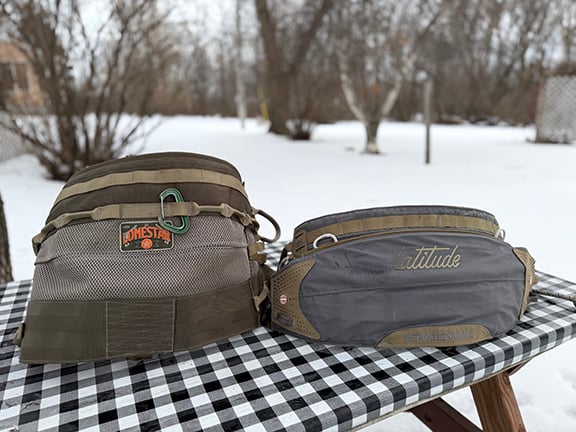
You won’t hear me complain about either saddle. They were a huge improvement in comfort over that first season. But the urge to try something new had me excited to hunt out of both the Lonestar and Method III saddles from Latitude Outdoors in 2025.
Here are my thoughts after many hours spent in both.
Method III review
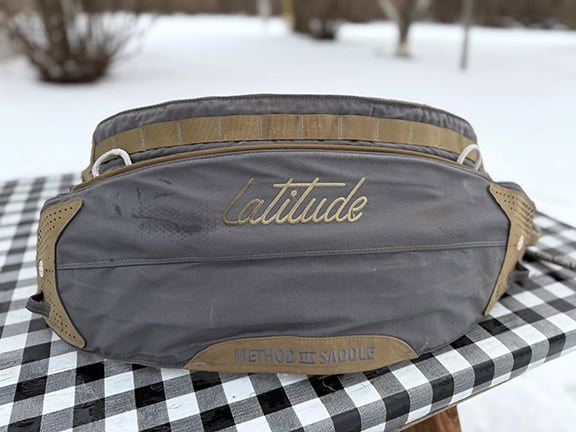
The Method III is Latitude’s latest two-panel saddle that they released this past summer.
A two-panel saddle is exactly what it sounds like – two separate panels that can be adjusted independently of each other that are attached with ropes or straps.
A single panel design is one solid piece of material.
Some prefer a two-panel for its flexibility. Two panels allow for fine-scale adjustments when it comes to moving the top or bottom panel up or down to reposition where the pressure points are throughout a long sit.
I do not have a strong opinion on whether one design is better than the other. I find both single and double panels easy to hunt out of.
RELATED VIDEO FROM OUTDOOR NEWS:
The regular-sized Method III weighs 38.7 ounces (it’s also available in an XL that weighs 42.1 ounces). That’s a bit heavier than the Lonestar (a single panel) that weighs 30 and 32 ounces in the regular and XL versions, respectively. I don’t notice the weight difference much, but that may be important for those who really count the ounces they pack in.
What stood out about the Method III is its simplicity. The magnetic strip that connects the bottom panel to the top panel for walking in and out of the woods held securely all season.
The drawstrings, which are used to set the distance between your panels, are accessible on the hips. There’s no reaching behind your back to mess with buckles or straps. You can lock it in and leave it or easily make small adjustments throughout a sit without much movement.
The ability to attach your sticks to the drawstrings for climbing the tree is an added convenience.
The padding on the inside of each panel aids in a comfortable sit.
I have dealt with varying degrees of hip pinch on long sits throughout my years saddle hunting, and that discomfort was very minimal with the Method III.
Lonestar review
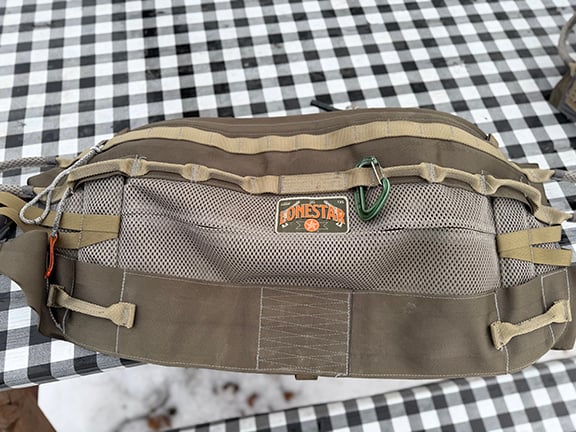
I’ll get right to the point here — the Lonestar is the most comfortable saddle I have ever used.
On its website, Latitude writes of the Lonestar: “This saddle sets a new standard for comfort, featuring our patent pending Cradle Chassis constructed with 4-inch webbing delivering twice the support surface area, redefining what comfort in a saddle feels like.”
Agreed.
The Cruzr XC, Buzzard Roost and Method III have all been comfortable saddles for me. But the Lonestar goes to another level. I have zero hip pinch and almost no noticeable muscle fatigue when using this saddle, even on the longest rut sits.
The only adjustment I make for comfort is moving the height of my tether or length of the bridge. Each tree leans a bit differently, and small adjustments can make a big difference in comfort.
Want a more efficient whitetail rut in 2026? Start brainstorming now
The Lonestar may look a bit bulky compared to many saddles. It measures a little over 14 inches from top to bottom at its widest point, but in no way did I find its size to be an inconvenience.
Latitude says the design features a Hip Pinch Reduction System that prevents the saddle from collapsing on itself, ensuring even pull from the top, bottom, and center of the saddle.
The way the Lonestar eliminates hip pinch is really what stands out. I texted a buddy who used the Lonestar for the first time this season, too, to see if he had the same impression.
“It’s awesome,” he said. “I’m really happy I bought it. Zero hip pinch.”
The saddle also wears comfortably in and out of the woods. It certainly did not feel cumbersome.
Quite the opposite, actually, as I barely notice it. The rope-belt system on Latitude saddles cinches it down tight without sagging, and the bottom of the panel sits away from my body just enough that I don’t feel it against the back of my legs at all while walking.
My pick
So what would my advice be if you are trying to choose between these two saddles?
Those who love a two-panel design will get a great saddle in the Method III. I have no real complaints about it, but the comfort of the Lonestar gives this single-panel the edge for me. It’s the first saddle I have used that completely blew me away in regards to comfort.
Whatever you choose, it’s nice to know we don’t have to put up with uncomfortable sits anymore in order to experience the benefits of saddle hunting.
Have questions related to the saddles mentioned here that weren’t covered? Email Eric Morken at emorken@outdoornews.com. He’d be happy to answer them.
Ralph Loos: Another Illinois DNR director, another test for state’s natural resources
We all live in the past because it’s one of the few things we’re truly confident in – good or
Wisconsin Wardens at Work: Illegal baiter just can’t help himself
A convicted felon was quick to admit to David Bennett, a Sheboygan County, Wis., game warden, when he was presented
Cornell University bans animal processing after two students used dorm kitchen to butcher black bear
Last fall, the story of two Cornell University students who butchered a legally harvested black bear in their college dorm
