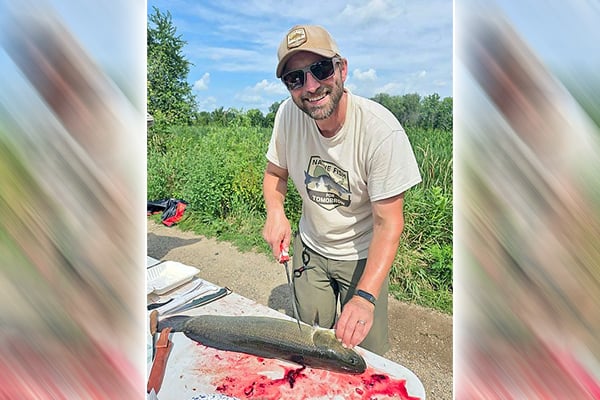
In 1875 the fish commissioners of Minnesota released their first annual report. They were wildly optimistic that whitefish would fuel a commercial fishing boom, if only they could eliminate the “vermin of the waters.”
Today it is amusing, if not bizarre, to read their disdain for the “egg devouring sturgeon,” pike, and “all cannibal fishes.” Reading those early fish commission reports you can’t help but shake your head and marvel at how much has changed.
Except that, for one group of fishes, nothing did change. The fish commissioners’ “vermin of the waters” legally became Minnesota’s “rough fish” in 1907. For 117 years, native rough fish were managed as vermin, exactly like the invasive common carp.
Not until 2024’s Native Fish Bill did Minnesota begin correcting the errors of the past by officially separating native rough fish from invasive fish. Unbelievably, in 2026, 151 years after the infamous Fish commission report, Minnesota still applies the same limits to native rough fish and the vermin carp: unlimited.
MORE COVERAGE FROM MINNESOTA OUTDOOR NEWS:
Minnesota Pheasants Forever honors volunteers, supporters during national event in Minneapolis
Minnesota’s ice season still cruising despite recent warm-up taking some toll
What to do when cold, clear, high-pressure days shut down fishing
Conserving native “rough” species might seem like an unprecedented shift but is actually something of a Minnesota tradition. Some readers might remember when turtles were removed from the rough fish list in 1975. Yellow perch were taken off the list in 1979.
In 2019, the Minnesota legislature removed whitefish, lake herring, and eelpout from the list. Each a missed opportunity for everyone to admit that managing turtles, perch, and 30 other native fish species like vermin was unscientific.
Fish and game management, as well as social norms, have changed dramatically during the past century. In 1949 Aldo Leopold published The Sand County Almanac and admonished hunters to stop shooting hawks. By the time we all learned to hunt such behavior was unconscionable.
Except, it seemed, for fish. Riverbanks everywhere used to stink with rotting suckers, buffalo, and bowfin. It often seemed that hunter-fishers left their ethics in the woods. If only Leopold had written another chapter about fish, how different things might look now.
But sadly, he didn’t. Today Minnesotans are debating two changes to the fishing regulations. The first is a reduction in the walleye limit from six to four. The second is changing native rough fish limits from “unlimited” to actual numbers.
RELATED COVERAGE:
Outdoor Insights: Proposed limits on Minnesota’s native rough fish not as cut and dried as one might think
Reasonable people can disagree about the walleye proposal, but no one is suggesting an end to walleye limits. Native Fish for Tomorrow wholeheartedly supports the proposed native rough fish limits because they promote both recreational harvest and conservation, just like the existing limits for walleye, bass, minnows, and shells.
Research published in the past decade fully supports possession limits for these native fish. There has been a long-term, statewide decline in white suckers, which shouldn’t surprise anyone who saw the price of decoy suckers last year.
Or take the freshwater drum, which makes invasive zebra mussels 50% of its diet. Drum are great eating, but limiting harvest to 30 is the least we can do for a native fish that eats actual vermin.
Similarly, 30 mooneye and goldeye (in aggregate) seems generous, considering they might carry federally endangered spectaclecase mussel larvae. There is also abundant research that shows bigmouth buffalo can live over a century and rarely reproduce in northern Minnesota.
In the Red River they migrate over 100 miles into Canada, where they are a protected species and harvest is prohibited. In northern Minnesota, the proposed limit of five buffalo is enough for a generous fish fry (the proposed limit is 30 in the southern zone). Not to mention additional research published on the other 13 species covered by the proposed limits.
Our fishing regulations should be based on science, not on misconceptions and management goals from 1875. We have gained a great deal of knowledge in the past century and a half, and our actions should reflect that.
Today the science is clear: Native fish are a finite resource, and they need finite limits.
Sturgeon, yellow perch, and turtles made the leap from vermin to managed resources long ago. It is 100 years past due for the rest of our state’s 143 native fish species to follow them.
Still, it’s better late than never.