




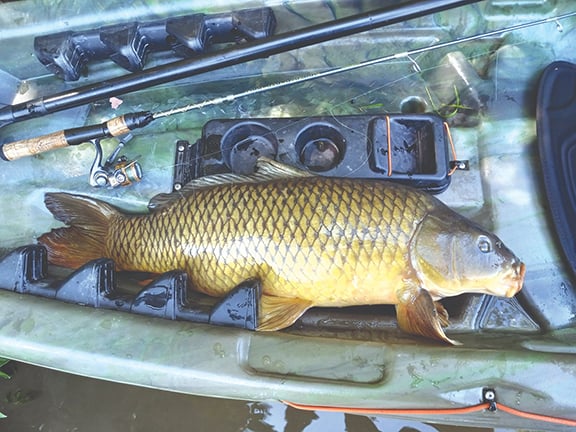
The Minnesota DNR opened a public comment period on new limits for native roughfish last week that may stir more controversy than you’d expect.
Most anglers don’t think much about the half-dozen species subject to the new regs, but some see commercial harvest. Plus a robust recreational bowfishery has emerged around roughfish the past 20 years.
 Curt Cich owns Twin Cities-based Edge Bowfishing, and his 12 guides churn through a steady stream of clients from mid-April to mid-October. He participated in a roughfish advisory committee that the DNR coordinated in 2024, and he doesn’t believe the science shows that the roughfish species subject to the new limits are declining.
He also believes that moving from unlimited possession limits to daily bags could put some of his guides into overlimit territory when traveling to properly dispose of fish. Most clients aren’t interested in keeping the fish, so disposal means bringing them to farmers, gardeners, and other landowners with whom he’s brokered disposal agreements.
Bowfishing tournaments potentially could bump into similar overlimit snags under new limits.
Bowfishers requested a “carve-out” in new regulations for such situations, Cich said, but the DNR proposal doesn’t include any.
MORE COVERAGE FROM MINNESOTA OUTDOOR NEWS:
Life for a 2026 Farm Bill? Conservation officials ‘cautiously optimistic’
Will hook-and-bullet issues get lost during Minnesota’s 2026 legislative session?
Shannon Fisher, DNR Fisheries populations monitoring and regulations manager, says that there are diverse opinions about roughfish limits. He admits that there’s not a lot of data about the status of these species, with the exception of white suckers, which have shown decreasing catch rates.
That said, there has been increasing discussion and advocacy from groups like the Izaak Walton League to review native roughfish limits and generally give these traditionally non-game species more respect.
Specific limits coalesced around the 30-mark, which have been in place for white and yellow bass. The proposal is less for dogfish at six daily given their lower abundance, propensity for dwelling in the shallows, and being nest-builders; they’re simple more vulnerable. He also noted that the limits do not apply to commercial operators, who work under a separate permit.
Regarding overlimit concerns among bowfishers, Fisher said the changes do not apply to their most popular target: the common carp. Our most devastating aquatic invasive species, common carp do not have limits and no bowfisher or angler will get in trouble for transporting a pile of them.
That’s part of the reason the term “native roughfish” is now being used in this discussion – to differentiate species like bigmouth buffalo from non-native roughfish, like common and Asian carp. Big picture, there’s chatter about what constitutes wanton waste with these native roughfish species. It’s a difficult topic, and the DNR supports the bowfishing industry, but they and folks like Tyler Winter of Native Fish For Tomorrow want fish used appropriately. Does placing native rough fish in a dumpster and using them for fertilizer qualify?
“It boils down to how these fish are being utilized, and there’s a lot of concern regarding their disposal. That has been one of the hot points for this debate,” Fisher said. “We are in discussion as an agency over whether or not that constitutes wanton waste.”
Winter cited the North American Model of Wildlife Conservation in my chat with him last week, noting that one of its tenets is harvest must be for a legitimate purpose.
“I take issue with dumpsters, but it’s a fine line to walk. Method of take is not an issue for me, but no matter how you harvest, the state wouldn’t tolerate that method of disposal for other species, say grouse or pheasants.”
I told you the issue wasn’t simple. However you feel about limits for native roughfish, chime in by Thursday, March 12. View this story for information on how to comment.

Ohio Cuffs & Collars: Stolen black walnut tree from Wallace O’Dowd Wildlife Area
Ohio cuffs and collars are field reports from the Division of Wildlife. These reports are from the Sept. 25, 2026
H2Ohio wetland to benefit St. Marys
As part of Ohio Gov. Mike DeWine’s H2Ohio Initiative, the Ohio DNR (ODNR) and the city of St. Marys held
USFWS announces new duck season framework process
The Department of the Interior recently announced that the U.S. Fish and Wildlife Service (USFWS) is finalizing a streamlined process

2 thoughts on “Outdoor Insights: Proposed limits on Minnesota’s native rough fish not as cut and dried as one might think”
Minnesota already has possession limits for empty mussel shells (24 whole shells/ 48 half shells). Limits for native fish shouldn’t be controversial here.
It is worth noting that Minnesota Statute 97A.031 prohibits wasting or destroying protected wild animals, except for common carp. The law applies regardless of limits.
97A.031 WANTON WASTE.
(a) Unless expressly allowed, a person may not wantonly waste or destroy a usable part of a protected wild animal.
(b) This section does not apply to common carp. https://www.revisor.mn.gov/statutes/cite/97A.031
Native Rough Fish are protected wild animals per MN Statute 97A.015 subd 39 https://www.revisor.mn.gov/statutes/cite/97A.015
Rough fish removal has an extensive history in MN, with state sanctioned commercial fishing, and Department of Conservation rough fish seining crews. Intensive rough fish removal was eventually abandoned as a management tool as research showed that removal of substantial numbers or biomass of the targeted species generally resulted in a surge in recruitment of new young fish to fill the void.
The relatively low rate of removal by bow fishing will have no lasting negative effect on native rough fish populations that are currently being underutilized.