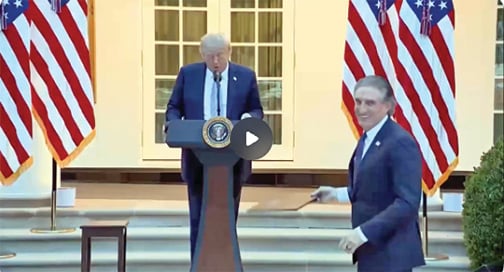
Washington, D.C. — Ducks Unlimited joined dozens of leaders from conservation, hunting, fishing, and outdoor organizations last Friday for an event celebrating hunters and anglers at the White House Rose Garden. President Trump signed two executive orders recognizing America’s hunting heritage and the longstanding contributions of hunters to wildlife conservation, habitat stewardship, and outdoor recreation.
The “Reinvigorating America’s Hunting Heritage” Executive Order directs federal agencies to expand public access to hunting and outdoor recreation, encourage hunter recruitment, increase wildlife management efforts, and support game meat donation programs, with a goal of strengthening America’s hunting traditions and conservation practices.
The executive order also includes language and provisions around increasing hunting access and protecting the use of lead ammunition where appropriate.
MORE COVERAGE FROM MINNESOTA OUTDOOR NEWS:
Mixed conditions, but more ducks greet Minnesota’s opener this Saturday
Minnesota’s 2026 elk harvest reaches nearly half of allocated tags during early season
Another View: Time to reimagine firearms safety programs
WYOMING
Lawsuit: Oil and Gas Leases Threaten Big Game Migration Routes
Cheyenne, Wyo. (AP) — The federal government broke environmental laws when it leased 179 square miles in Wyoming for oil and gas drilling, threatening already-diminished migrating big game herds, two groups assert in a lawsuit filed last week.
The Wilderness Society and Wilderness Workshop sued Interior Secretary Doug Burgum, the BLM’s acting Wyoming Director Kris Kirby and others last Tuesday asking the U.S. District Court in Colorado to revoke leases sold in Wyoming and Colorado in June. The lawsuit claims the federal agencies violated their own regulations and a slew of environmental laws by prioritizing oil and gas development over all other uses on federal public land that belongs to all Americans.
The BLM sold leases on 102 parcels in Wyoming for $34.7 million, money that is split between the federal government and the state. Conducted under last year’s One Big Beautiful Bill Act, the sales collected revenue through a 12.5% royalty rate, discounted by the act from 16.67%.
The leases threaten the Baggs mule deer and Sublette pronghorn migration corridors and other big game migrations east of Rawlins, The Wilderness Society, said in a statement. The lawsuit also challenges acreage leased in northwest Colorado, making the total contested area 430 square miles.
ARIZONA
Grand Canyon Water Supply Will Be Restored in Weeks, Not Months
Phoenix (AP) — National Park Service officials expect to restore a reliable water supply in the Grand Canyon in weeks – not months – as the deadly flash flood didn’t damage most of a near-complete pipeline project.
Officials said last week that they were just over a month away from completing a major upgrade to the sole 12.5-mile-long Transcanyon Waterline, which supplied water for millions of visitors to the Grand Canyon’s South Rim and about 1,600 residents of Grand Canyon Village.
Construction of a temporary water intake that matches the park’s pre-flood pumping capacity will start this week. Park officials encourage residents and tourists to continue conserving water as they work on a more than $200 million repair and upgrade.
Before the floods, officials said the project would ensure the park can meet its water supply needs for the next 50 years or more.
WASHINGTON
Cougars Affect Rate of Deer-Vehicle Crashes
Pullman, Wash. — Researchers say cougars may be making roads safer by changing how deer behave. The finding comes from a study in the Pacific Northwest that combined wildlife detections from 503 camera sites, movement data from 59 GPS-collared cougars and five years of deer-vehicle collision records.
According to the research, in areas where cougars were most active, deer were less likely to use habitat near roads, shifted toward more remote areas, and became more active during daylight hours. In one modeled landscape, the probability of at least one deer-vehicle collision dropped from 64% to 21% – a 67% reduction. Within the mapped study area, deer and elk accounted for 97% of 953 wildlife-vehicle collisions between July 2020 and June 2025; deer alone accounted for 92%.
The study, published online Aug. 5 in Current Biology, describes the effect as a “predation service.”