


Fall is the perfect time to catch Lake Erie’s giant walleyes; here’s what to focus on
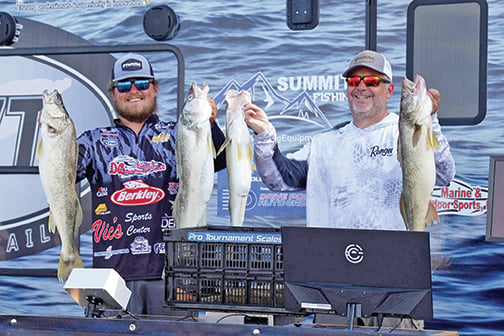
Sheffield Lake, Ohio — Anglers who are prepared to face some colder weather can catch lunker walleyes. For the past decade, walleye fishing derbies on Lake Erie have shown that big fish can be caught late in the season when they are closer to shore, fattening up for the winter.
Looking at the winners of the Walleye Fall Brawl over the past 12 years definitely shows a clear pattern. The derby starts in the middle of October and is held in the U.S. waters of Lake Erie.
However, the winning fish during the past 12 years have all been caught in November with 11 of the 12 being caught late in the month. In fact, most winning fish were caught after Nov. 20 and anglers who skip the turkey dinner on Thanksgiving have been very successful.
Looking at the winners from the past 12 years also shows that the big fish are definitely migrating to the Central Basin of the lake in search of food. Five of the 12 winning walleyes were caught near Cleveland and four near the Lorain/Sheffield area. The other three were caught in waters off of Huron and Sandusky Bay.
Walleye anglers hoping to hook into a hawg can see that the Central Basin is the place to be in November. But, what else can they learn from these tournament anglers? Ohio Outdoor News asked a former winner of the Walleye Fall Brawl and Walleye Slam and a recent winner of the Lake Erie Walleye Trail for some tips and advice that could help anglers land a big walleye worthy of tournament consideration.
FISHING FEATURES FROM OUTDOOR NEWS:
Glenn Sapir: Paradise lost in the form of a favorite bass pond
Tactics for late-summer walleyes
James Lindner: From crappies to muskies, there’s magic in swimbaits
Ed Hatten, from Chesterfield, Mich., won the Walleye Fall Brawl and Walleye Slam in 2024. He caught a 12.30-pound walleye that measured 31.25 inches to claim the top prize in both fall derbies. Hatten and his friend were fishing off shore from Vermilion when they caught the hawg that won the big prizes.
Hatten is already signed up for the Brawl, Slam, and The Walleye Derby for this year. He and friends have booked accommodations near Vermilion and are excited to start fishing.
“You know, I think that Cleveland to Huron stretch is going to remain that staple for everybody,” he said. “I mean, you know, three years ago, I think it was caught right in Cleveland. Mine was caught in Vermillion, and the last one last year toward Sandusky. I mean, those fish move, and there’s big fish scattered throughout.”
Hatten caught his winning walleye while trolling and said there are many advantages to that method on the big lake. However, he says the best strategy is to be flexible in your approach.
“If they’re gonna troll, they’ll focus on the bottom of the lake. A lot of the forward-facing techniques that I’ve seen, a lot of those fish are suspended, and they could be in the top third of the water column all the way to the bottom. So, I mean, it all depends on how they’re feeding. Don’t focus on any one technique. Spread your lures out in the water column if you’re out trolling, and you know if you’re a forward-facing sonar user, you still have to locate the fish, and you got to make them bite. So, from that standpoint, getting out and fishing is the biggest piece of advice that I could give anybody is go out and have fun doing it,” he said.
A number of anglers on Lake Erie (and other bodies of water) have been utilizing forward-facing sonar to locate and catch fish. Also called LiveScope fishing, anglers use forward-facing sonar to watch fish, structure, and their own lures beneath the water in real time.
In fact, it has become so popular that this year, Jason Fischer, director of the Walleye Fall Brawl, said they are offering a bonus for anglers who are using forward-facing sonar and enter a big fish.
Nick Oleksy, from Lorain, is a big proponent of LiveScope fishing. He and his dad, Ed, were the winners of the Lake Erie Walleye Trail (LEWT) tournament held at Geneva-On-The-Lake on Aug. 28-29 and were leading the race for LEWT Team of the Year. Oleksy said he mainly uses Wide Scope from the bow of his boat to hunt down and cast to big fish. He likes to cast jigheads with worms, Berkley Jerk Shads, and Berkley Finishers (affiliate links).
Water temperature will determine where he starts his hunt for big lunkers.
“If we’re having a hard cold, like a fall when it’s dropping quick, I will typically start more in the Huron area because the water temperature will drop faster,” Oleksy said. “ But if we’re kind of having like a slow, mild fall, I typically do like Cleveland because (walleyes) just kind of are slowly making their way back from out east when they did their big migration in the spring and summer.”
Oleksy said that he doesn’t necessary look for a particular temperature, but does look for cooler water.
“So, if you could find a temperature that’s you know, two degrees lower than the average, that’s kind of what we’re looking for,” he said.
Finding fish and keying in on them can lead to success for anglers fishing the fall derbies, Oleksy said.
“I would definitely watch the water temperature, and then I would trust your electronics from like a 2D sonar all the way to LiveScope to show what it’s showing you. None of that’s going to lie to you. That’s all we really do is we just run around across the lake looking for the right water. So, I guess water temperature-wise, if you wanted to throw it in, the stuff that’s like cooling off the fastest is going to, you know, get fish into a more feeding mood.”
Whether you prefer to drift and cast, troll, or enjoy watching the fish while LiveScope fishing, the Central Basin waters of Lake Erie offer many opportunities to catch a big money fish in the three derbies this fall. Just remember to keep an eye on the weather and be safe when the temperature drops.
SUBSCRIBER CONTENT
Read this article now.
Create a free Outdoor News account.
Create a free account below to get instant access to this article, thousands of Outdoor News stories, and our digital editions. Your 1-month trial starts the moment you sign up.
No credit card required
No credit card required
No credit card required
Subscriber? Login Here.
Share on Social
Hand-Picked For You
New York Fishing Report – October 30, 2026
Wisconsin Fishing Report – November 2, 2026
Lake of the Woods Fishing Report – November 3, 2026
Metro Area Fishing Report – November 1, 2026 – video
Find spots for ice fishing from your boat during fall – video
South Dakota Fishing Report – November 4, 2026 – video
Related Articles
MN Daily Update: Don’t wait to get your ice-fishing gear ready
It’s time to get that ice-fishing gear out of the corner of your garage that you haven’t touched since last
Minnesota’s homegrown brook trout strain shows first signs of success in metro streams
DNR crews found young brook trout in two east-metro streams this summer, proof that the new MN Driftless strain, bred

Age-old broadhead question: mechanical vs. fixed-blade
Many archers swear by fixed broadheads but it’s really about personal choice. Here is some exclusive insight into my impressions.
