




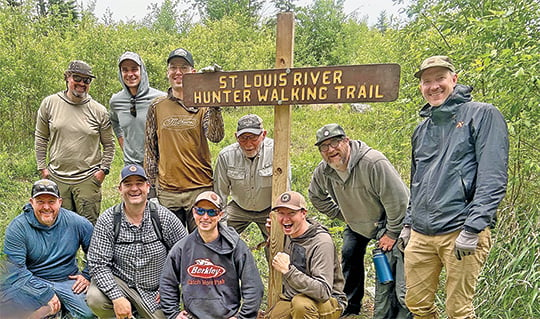
From June 12 to 14, the Minnesota Chapter of Backcountry Hunters & Anglers hosted a campout and stewardship event in northern Minnesota. The group stayed at the South Kawishiwi River campground and on Saturday, June 13, spent the day cleaning up hunter walking trails.
The St. Louis hunter walking trails are on the Laurentian Ranger District of the Superior National Forest. In the fall, the trails are closed to motorized vehicles so that hunters and dogs can use them unmolested.
Much of the 7.5 miles of the St. Louis trails have dense aspen regeneration after logging done over the past few years along with blowdown and brush encroachment.
MORE COVERAGE FROM MINNESOTA OUTDOOR NEWS:
Minnesota DNR evaluates new camera system for surveying wetlands, wildlife
Roadless Rule issue explodes in U.S. Congress
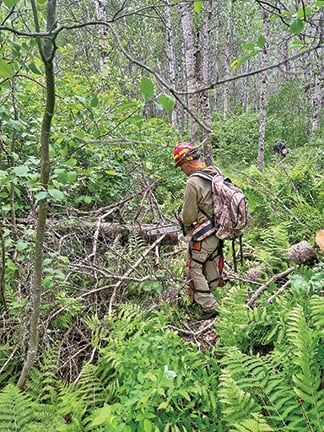
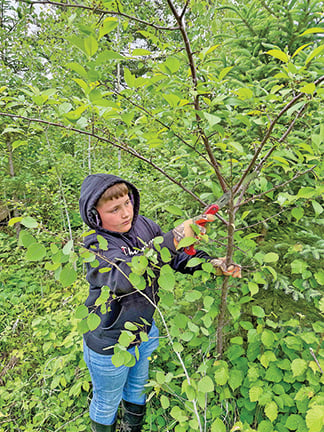
BHA partnered with the U.S. Forest Service on the project and cleared two loops, totaling 2.8 miles, of impediments that might trip up a hunter using these trails. The 18 volunteers ranged in age from 8 to 80 and included folks from nearby Ely and from other corners of the state.
“Funding cuts have really had an impact on maintenance work in the national forests,” said Timo Rova, BHA board member and retired USFS employee. “Conservation groups like BHA are going to have to step up and help out so that hunters, anglers and foragers can continue to access and enjoy our public lands.”
In fact, among the volunteers in the group were employees of the U.S. Forest Service and the Minnesota DNR – not there in an official capacity but on their personal time, which shows their commitment to public lands.
Greg Kvale, of Baxter, is, let’s just say on the older end of the age range of volunteers. He ran a brush saw for over two hours, working up a sweat.
When he stopped for a water break and to gas up the saw, he happened to see a cluster of oyster shelf mushrooms on aspen trees. So he took a break from cutting and started foraging. He ended up with about a pound-and-a-half of mushrooms, which he sauteed and served at the camp dinner Saturday night.
“This is one of the best stewardship projects that BHA has ever done,” Kvale, who is on the Minnesota BHA board, said. “We’re giving something back to the hunters of Minnesota by cleaning these trails. It was a good cooperative project with the U.S. Forest Service. And it was great to see kids involved.”
The day began with a safety talk by Rova and ended with a potluck and stories around the campfire. All agreed they want to continue with the project again next year.
After a day of sweat, bug bites, and hard work, it’ll be a little easier for hunters and dogs to chase ruffed grouse and whitetails through the woods next fall.
Pennsylvania’s hunting license sales down so far this year
Hunting license sales are down nearly 4.5% at the end of August, although Pennsylvania Game Commission officials believe there is
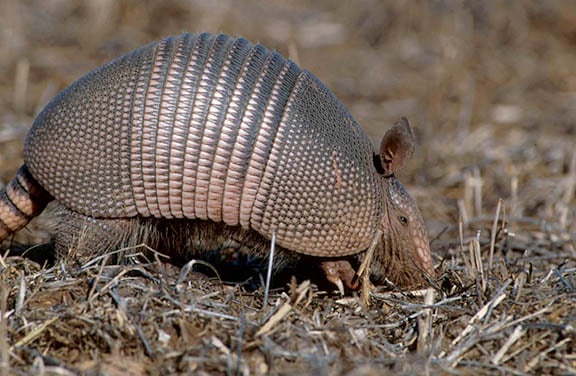
Origin of road-killed armadillo in southwest Ohio a mystery
An armadillo found as roadkill in southwest Ohio has researchers scratching their collective heads wondering from where the non-native mammal

Bowhunt gets started in Ohio with additional opportunity in CWD surveillance area
Hunters in Ohio’s chronic wasting disease (CWD) surveillance area have additional dates this season to pursue white-tailed deer. The Ohio
