




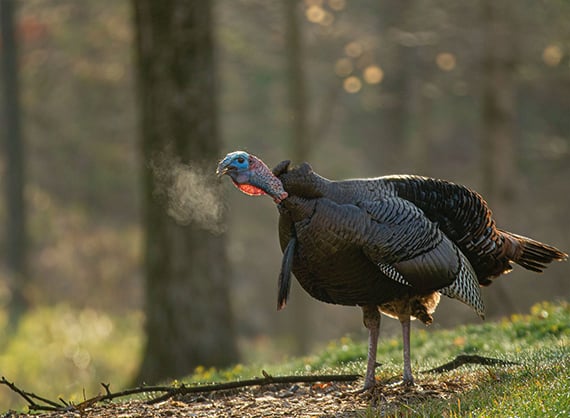
During spring 2025, a state-of-the-art, hunter-assisted research project called wildturkeyDNA was launched to begin assessing population genetics of wild turkeys.
Created through a partnership between the Wild Turkey Lab at the University of Georgia, the National Wild Turkey Federation, Ducks Unlimited, the Low Country Game Bird Foundation, and the University of Texas at El Paso (UTEP), wildturkeyDNA first focused on identifying the origins of unique and odd plumage patterns in wild turkeys.
Hunters who harvested turkeys with odd plumage were asked to submit samples for genetic testing, which revealed the presence of unique plumage colors in wild turkeys, as well as genetics traced back to domestic turkeys. Continuing research through wildturkeyDNA will evaluate the possible consequences of these initial results on the sustainability of wild turkey populations.
MORE TURKEY COVERAGE FROM OUTDOOR NEWS:
Red dot scopes help eliminate gobbler misses
New York native to head up National Wild Turkey Federation research
‘Trifecta’ of tactics helps hone in on poult survival rates for Wisconsin’s wild turkeys
As ongoing genetic testing occurs on samples from hunter harvested birds collected during 2025, as well as samples from wild turkeys captured in several states where active field studies are ongoing, several perplexing results have been uncovered. Specifically, low genetic diversity and high levels of inbreeding are being observed in some populations, which is prompting an expansion of wildturkeyDNA.
RELATED COVERAGE FROM OUTDOOR NEWS:
A quick chat with wild turkey expert Dr. Michael Chamberlain
The project will still rely on turkey hunters to collect samples from harvested turkeys across the species range, but we now will seek to provide a rigorous evaluation of genetic diversity, inbreeding potential, hybridization, and subspecies ranges. This collaborative project offers a unique opportunity to conduct large-scale science that will inform wildlife managers, state and federal agencies, and passionate wild turkey hunters.
Anticipated outcomes in 2026
- During 2026, hunters will provide tissue samples from up to 1,000 turkeys across the species range – so your help is needed.
- Partner researchers at UTEP will conduct analyses to determine the genetic ancestry of each harvested turkey, assessing levels of genetic diversity and inbreeding, as well as an evaluation of subspecies ranges and hybridization.
- Genetic results will be archived in a database of wild turkey genomes at UTEP.
- Project updates will continue to be shared through social media (@wildturkeyDNA).

How it works
- Go to wildturkeyDNA.com and register to participate or use the QR code above.
- Those that register will get an email asking them which county/counties they hunt in
- Hunters who are selected will be mailed kits and asked to collect a sample from birds they harvest.
- For each sample, hunters will upload an image of the bird and other information through their online wildturkeyDNA account.
- Samples will be sent to UTEP via pre-paid mail for genetic analysis.
- Hunters that don’t receive kits but want to participate will be sent a vial to put a sample in and asked to mail it to UTEP.
- Hunters receive a certificate of pedigree for their harvested turkey.
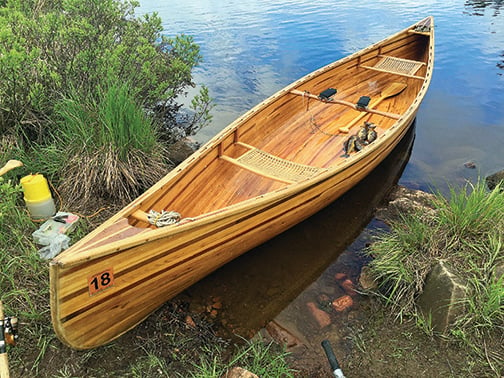
Got a hankering to build a wooden canoe? Here’s how to do it
“The way of a canoe is the way of the wilderness and of a freedom almost forgotten. It is an
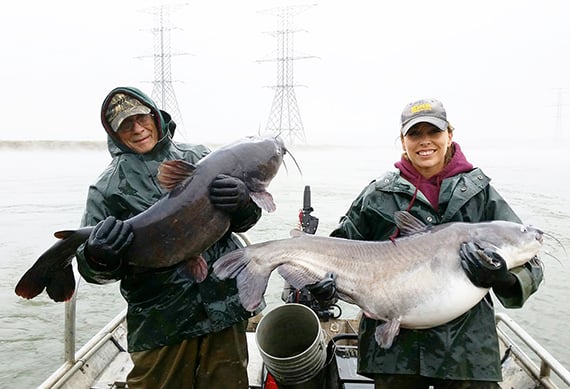
Longtime Illinois DNR fisheries biologist leaves behind legacy for anglers
He referred to himself as a “river rat” and spent his career working to better Illinois’ fisheries. Wayne Herndon Jr.,
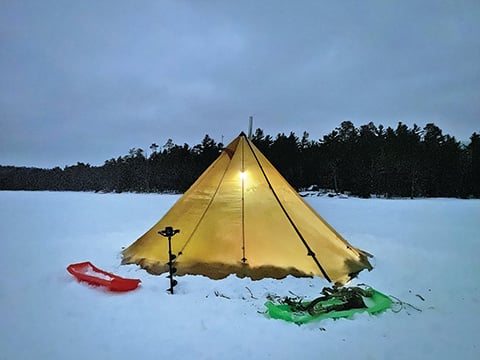
Ice fishing from a hot tent gives winter anglers freedom to roam
I’ve been using hot tents in the backcountry for years. Call it romanticizing, but there’s something special about watching smoke
