




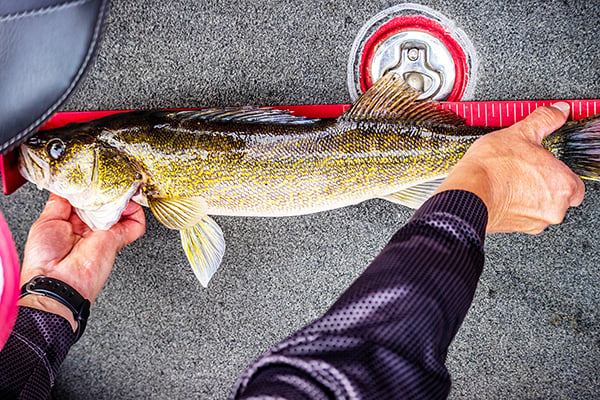
Isle, Minn. — While the Minnesota DNR won’t lock in its official open-water regulation for Lake Mille Lacs until sometime in March, the February Mille Lacs Fisheries Advisory Committee meeting aired members’ call for a liberal start in May.
The state’s allowable walleye harvest for the big lake in 2026 is lower this year at 105,300 pounds from 113,600 pounds last year.
At the start of the conversation at the Wednesday, Feb. 18 MLFAC meeting, most members sought a liberal start of the open water season, with the potential for a mid-summer adjustment or closure in July.
Other members, however, curbed that enthusiasm.
While most lake advocates desire a hot starting reg, being too liberal and then needing to transition to catch and release in July through the fall isn’t ideal either.
Regardless of the opener reg, the DNR says it’s open to a mid-season change based on harvest levels from the first half of the summer.
“If we know what the harvest is, let’s say, at the end of June, can we pretty accurately predict what the harvest will be by the end of the year? And the answer is probably we can,” said Brian Nerbonne, the regional fisheries director.
MORE COVERAGE FROM MINNESOTA OUTDOOR NEWS:
Minnesota’s ice season still cruising despite recent warm-up taking some toll
What to do when cold, clear, high-pressure days shut down fishing
Minnesota DNR adds new catch-and-release bass season as part of 2026 regulation changes
The idea of a three-, two-, and one-fish bag as the season progressed was the most supported bag limit suggestion for the upcoming open water season. In theory, allow liberal harvest of three at the start, reassess in July, and potentially reduce the limit to two or one.
“I don’t want to play it super safe, but I don’t want to see a planned closure at the Fourth of July as of this point,” said Roach’s Guide Service owner Tony Roach.
While 105,300 pounds is the number the agency will aim for, like last year, the DNR and Ojibwe bands have agreed there could be some leeway on that number.
“The state can go over 15%, if we choose. Or it would have to go to a full closure, but that would have to be paid back in the following season,” Nerbonne said.
Since 2019, when state anglers harvested 5,060 pounds more than was allowed, walleye harvest has remained well below the allowed poundage. In the past five years, state anglers have harvested anywhere from about 19% to 62% of the allowed take.
Specific slot sizes weren’t narrowed down during last week’s meeting, but Nerbonne tossed out the idea that fish over 17 inches could be kept, with one over 20 – a continuation of the slots from 2025.
Nerbonne said some of the reasoning behind that is the abundant 2024 year class, which is still ranging from 7 to 12 inches long. In an effort to support their growth, lowering the slot to 14 or 15 could start some early harvest of that big group flooding the system in a few years.
“We’re trying to think ahead a little of where this adult population is going to be the next couple of years,” Nerbonne said.
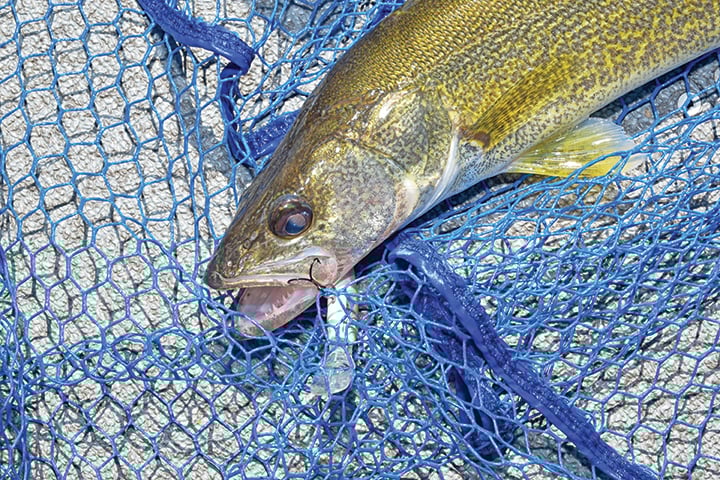
Hooking mortality concerns
An interesting point brought up during the meeting is that hooking mortality isn’t as pronounced as it was several years ago. With the advent of new technology like forward-facing sonar, anglers have become more efficient in when and where they’re catching fish.
“I think hooking mortality is way less than it used to be. The way people are fishing now, you hardly see anyone out Lindy rigging on the mud. You don’t see people fishing deep all year, you’re not trolling lead-core all August,” Tony Roach said.
From experience using FFS, Roach said through August and September, he now fishes efficiently in the 15- to 20-foot depths. But before the technology, he would troll with lead core from July to September looking for fish.
Hooking mortality, the state’s estimated number of fish that die after being caught, according to the state’s creel surveys, typically peaks from June to the end of July. Last year’s hooking mortality wasn’t as severe as it has been in previous years with a total of 3,196 pounds of walleye lost to hooking mortality.
The 2024 and 2023 seasons painted a different picture, with a sizable chunk of the total harvest coming from hooking mortality calculations.
From opener through the end of July, 14,942 pounds of walleye are assumed to have succumbed to hooking mortality in the 2024 fishing season on Mille Lacs. The total estimate of hooking mortality for the entire year was 16,933 pounds, which is more than half of the total harvest for the season of 29,891 pounds.
In 2023, hooking mortality totaled 17,591 pounds from opener through the end of July. About a third of the total harvest of walleye in 2023 is credited to hooking mortality with 22,903 pounds lost out of 62,525 total harvest from three years ago.
“The joke was that we’d need the national guard to push the dead fish off the shore if that was so much. … I think the hooking mortality should be reassessed,” said committee member Steve Kulifaj.
While a few members agreed that hooking mortality isn’t as rampant as it might have been in the past, Nerbonne said that the agency likely won’t change its calculation.
“I think I can probably say we’re not going to change the equation we use for hooking mortality. It would take a whole other study to go back and try to see how it might be different,” Nerbonne said.
Outdoor Insights: Time to raise Minnesota fishing license fees for nonresidents? And more election season thoughts
Quick comments on a few stories that have appeared in the news recently.
A buddy’s post on social media
Pro Fishing Tip of the Week: Catching fall giants on Mississippi River waters in Minnesota
We guide exclusively on the Mississippi River and the tributaries. The Mississippi is my favorite water body, and choosing between
Minnesota’s deer harvest trending well ahead of 2025
Wildlife managers from the Minnesota DNR expected hunters would shoot more deer this year, and early harvest numbers this fall

1 thought on “An upbeat outlook for Minnesota’s Lake Mille Lacs in 2026? Open water regs discussed”
Seems to be an error or confusion. Nerbonne suggests fish OVER 17 could be kept, reasoning for this is small 2024 YC fish, maybe LOWERING slot to 14-15 inches. Did he say or mean to say considering fish under 17 could be kept? That would make sense.