





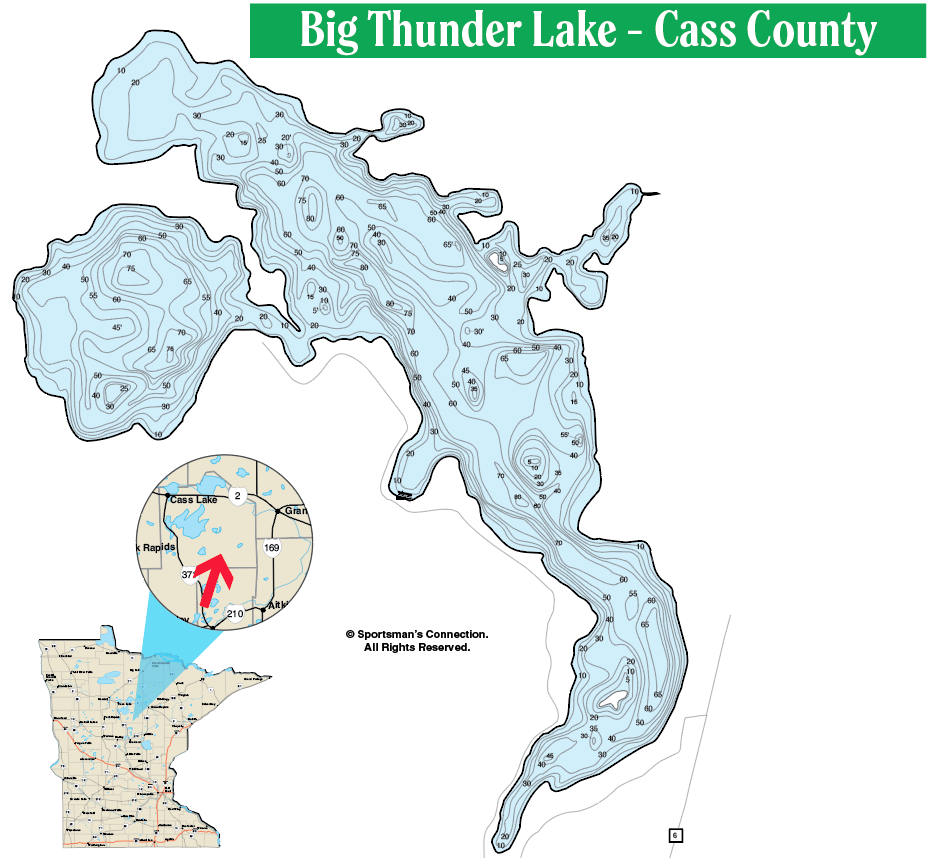
Located just south of Remer in Cass County, Big Thunder Lake is one of the prettiest bodies of water where you can wet a line in these parts.
Its cedar tree-lined shorelines and gin clear water just give it a special feel; although heavily developed with homes and cabins, it still offers somewhat of a Canadian-shield vibe.
Big Thunder also features a variety of structure, diverse bottom content, and sharp breaks off its banks. There’s a lot to take in here from a characteristic standpoint, before you can even talk about its solid fishing opportunities.
“Big Thunder does have a nice feel to it when you’re out there, it’s a really scenic lake to fish,” said David Lockwood, DNR fisheries specialist in Brainerd. “It’s also a pretty good all around fishing lake, but walleyes and bass are what most people go to Big Thunder for.”
When it comes to Big Thunder’s gamefish species – its walleyes, bass, and northern pike – there’s a big fish component that’s quite noticeable.
With very well established tullibee and yellow perch populations, these fish have high octane forage sources, which allows them to not just thrive numbers-wise, but in the size category as well.
The DNR most recently surveyed the lake in 2023, and although gill nets averaged just shy of four walleyes per net, there was plenty to feel good about on the walleye front. The fish sampled averaged 16 inches in length and walleyes over 28 inches were part of the mix. In addition, nine individual year-classes were represented.
 Big Thunder is stocked with walleye fingerlings during odd-numbered years and natural reproduction can be substantial at times. In fact, 43% of the walleyes sampled in 2023 were from non-stocked years.
Low-light periods can be a key to success for walleyes here (think night fishing). Work shallow points and neck-down areas early in the year and work deeper structure as the season wears on. Big Thunder also warms slower than most due to its depth, so its walleye action tends to crank up somewhere around Memorial Day Weekend.
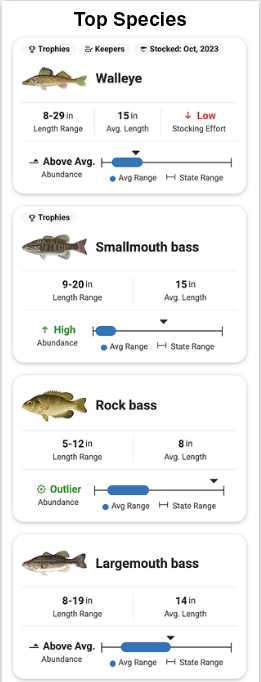
“Ideally, we’d like to be at about six walleyes per net in our surveys, so it was a little low last time; hopefully 2023 was just a bad netting year,” Lockwood said. “Big Thunder is historically known as a good walleye lake. It has good numbers of eaters and big walleyes, too.”
Solid numbers of largemouth and smallmouth bass are present in Big Thunder. The lake has a nice mix of vegetation to benefit its largemouths and plenty of rock and sand for its smallies.
During DNR electrofishing work in the spring of 2023, largemouth bass were captured at a rate of 81 fish per hour, while smallmouths were sampled at a rate of 40 per hour – both good numbers. The average length of both bass species was over 14 inches long and fish approaching 20 inches in length were present.
“There’s a lot of 14- to 17-inch bass in the lake, along with fish over 18 inches long; a very nice size structure with its largemouth and smallmouth,” Lockwood said. “While there’s good numbers of both, its smallmouth get more pressure. There’s not many other smallmouth bass lakes around that area.”
Crappie and bluegill numbers are in fine shape, and you might even come across a pod of perch that has a few fish in it big enough to keep. Crappies from 9 to 11 inches and bluegills around seven inches long are most prevalent, but both panfish species have some bigger individuals mixed in.
Big Thunder’s northern pike population always has been one of low numbers, but quality fish. Gill nets averaged less than two pike per set in 2023; the few sampled averaged over five pounds, and pike up to 38 inches were measured.
“You don’t hear as much about the panfish on Big Thunder, but there’s some decent-sized fish to be had,” Lockwood said. “And you don’t see many pike, but the fish you do catch will be chunky, healthy-looking northerns.”
LAKE PROFILE
Big Thunder Lake
Nearest town……………… Remer
Surface area ………….1,347 acres
Maximum depth ……….. 95 feet
Shore length ……………. 16 miles
Water clarity ……………… 17 feet
AIS present: Starry stonewort, zebra mussels
Fish species present:
Walleye, largemouth bass, smallmouth bass, black crappie, bluegill, northern pike, yellow perch, pumpkinseed, tullibee (ciscoe), burbot (eelpout), hybrid sunfish, rock bass, yellow bullhead, white sucker, shorthead redhorse, bowfin (dogfish).
For information:
DNR area fisheries office (218) 203-4301, the DNR website.
Minnesota duck hunters await fresh birds as warm weather lingers
If you spoke with enough waterfowlers and waterfowl managers across Minnesota in the last handful of days, the message you
Minnesota DNR reminds firearms deer hunters to prepare for CWD sampling
Sampling is mandatory for southwest Minnesota the opening weekend of firearms deer season Nov. 7-8

Short on walleyes, but long on muskies: Beers Lake in Minnesota’s Otter Tail County
Otter Tail County’s Beers Lake is an excellent walleye fishery – nope. Beers is loaded with good-sized panfish and northern
