





When it comes to turkey hunting, sometimes we all question ourselves.
When to call, what types of sounds to make, or how and where to set up on that gobbler are all things that we could all use some advice on. I am always amazed at how I am hunting an animal with a brain the size of a walnut, yet I often times get duped by these birds.
Well, for this story, I interviewed two of turkey hunting’s best in an effort to help you learn a few more tricks to hopefully help you put a notch on your spring turkey permit.
Herb Schulz used to be in the hunting video industry and in the outfitting business in famed Pike County, Ill. His many years in the video and outfitting business have made him a seasoned veteran in the woods.
Bill Epeards is no stranger to the camera, either, making appearances on Mossy Oak’s “Hunting the Country,” PSE’s “Today’s Bowhunter,” and “Jimmy Houston Adventures.” He has five grand slams and two world slams to his credit. Epeards also gives informational hunting seminars throughout the Mid-west.
Ohio Outdoor News: How do you scout for turkeys?

Schulz: I combine my spring turkey scouting with shed hunting. I love to hunt for shed antlers, and the turkeys will usually start to gobble around the end of February to mid-March, making me able to accomplish both.
I will mark the locations where I see turkeys during these trips on an aerial map. This gives me a pretty good picture of where those birds will be once the season opens.
Epeards: I scout for them all year round. I look for them when I am deer hunting. Gobblers will occasionally gobble in the fall, especially on warm days. My scouting really cranks up in mid-March.
This is when I will be in the woods when they fly down from the roost in the mornings to see which way they pitch down and to see where they go to feed. I will then mark these locations on a topographical map for future reference.
MORE TURKEY COVERAGE FROM OUTDOOR NEWS:
The .410 is the little turkey gun that could
Three types of locator calls every turkey hunter should use
Turkey poult survival focus of a new study in Wisconsin
Ohio Outdoor News: If you have multiple birds gobbling, how do you decide which birds to try to work?
Schulz: If it is still dark out, I will go after whichever one(s) I think will give me the best setup options. I will go after the bird that I feel will pitch down into a field, for instance, rather than one that will pitch into the timber. This way, I can get some decoys out for him to easily see, etc.
Also, I will try to go after the birds where I feel there are no creeks, fences, or other obstacles between us, making it more likely that he will come in.
Epeards: The most aggressive birds will usually come in easier, but if I have another bird that is a lot closer, than I may go after him simply because I won’t have to try to bring him in from a long distance.
With all else being pretty much equal, I tend to go after the bird that responds the most to my calls, and the one that will respond quickly. If he cuts me off when I am calling, and gobbles multiple times back to back, I will give him a try.
Ohio Outdoor News: What is your strategy for hunting early season birds?
Schulz: I like the strategy of patterning the birds the best for early season hunting. By knowing where the birds are likely to be, I know where to find birds and have a successful hunt if they decide to go quiet. This is a good time to call aggressively.
By doing so, you can get the hens really fired up and bring them in for a girl fight, with the gobbler bringing up the rear.
Epeards: I will be a lot more aggressive when I am hunting pressured birds. In this situation, I like to move in and call aggressively to try to bring the bird in before other hunters pull him away from me.
I will be less aggressive with unpressured birds. I like to see them and hear them respond more in this type of situation because I don’t have to hurry to try to get to them. This is when I can really work a bird up. In the early season, you are typically dealing with two-year old birds. The boss gobblers typically have hens with them and will gobble well from the roost, but they tend to get quiet when they hit the ground.
The boss gobblers do become more vulnerable later in the season, however. This is because many of the 2-year old birds have been shot, and many of the hens will be nesting, making the gobblers have to go in search of hens.
Ohio Outdoor News: What is your strategy for hunting late season birds?
Schulz: I tone things down a lot then. The gobblers tend to be more receptive at this time of the season. The hens are nesting, so a gobbler will be easier to work as he gets a little desperate in his search for love.
I take the bird’s temperature to feel him out, then base my calling strategies accordingly.
Epeards: My hunting strategies differ now than they did a few weeks ago when the season first began. The birds are nearly gobbled out, and they become warier.
I prefer to purr and cluck a lot during the late season – to wine him and dine him, so to speak. Be on the lookout, though. With gobble-shy toms and more foliage in the late season, those old gobblers can sneak right in on you.
Ohio Outdoor News: How do you attempt to call in a gobbler that is henned-up?
Schulz: I make aggressive hen talk. This is a situation where you have to get the hens cranked up in effort to bring them, and the gobbler, to you.
This is also a great time to mix and match decoys. The more realistic the spread, the better. Using a mixture of some photo image type decoys along with some 3-D ones can make a difference.
Epeards: I mimic the hens, only I will be more aggressive than they are. If they cutt, I cutt faster and louder. If they yelp, I yelp louder and more. Hopefully this will bring the flock in, with the gobbler in tow.
Ohio Outdoor News: How do you hunt pressured birds?
Schulz: I soften up the calling and use a variety of calls.
I also like to visit known strut areas. When hunting pressured birds, less is more, and oftentimes being patient will kill more turkeys than being a good caller. These strut areas are great places to sit and wait out a turkey.
I also scale back my decoy spreads in these situations, most often using only one decoy.
Epeards: If other hunters are in the area, I will hunt (turkeys) in much the same way as I mentioned hunting them in the early season.
If the birds are just spooky from weeks of hunting pressure, but I have the woods all to myself, then I will tone things down and try to let the gobbler’s curiosity bring him in more than anything else that I might try at that point.
Minnesota’s Outdoor Calendar
A look at upcoming outdoor-related events from across Minnesota published in the Sept. 18, 2026 edition of Outdoor News.

Minnesota Cuffs & Collars: 13-year-old has memorable waterfowl weekend
Minnesota cuffs and collars are field reports from DNR conservation officers. These reports are from the Sept. 18, 2026 edition
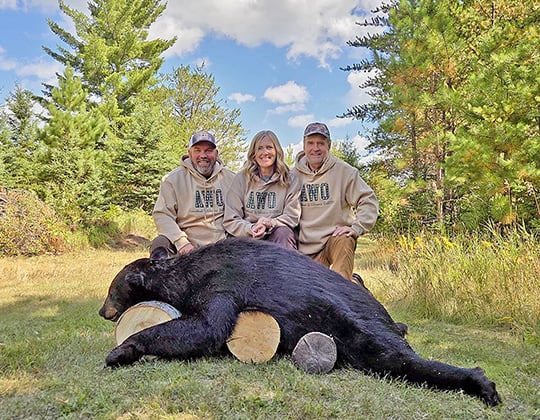
Pro Hunting Tip of the Week: Don’t give up on your bear season
The majority of bears are harvested in the first week or two of the fall bear hunt. At the start
