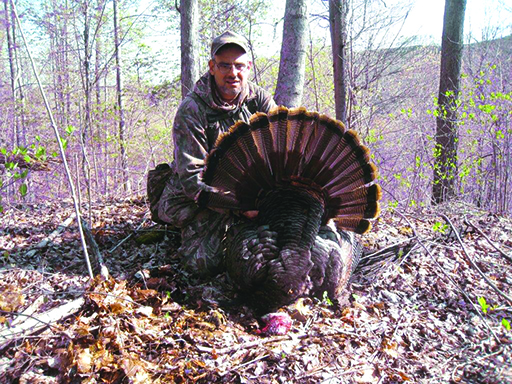
PGC marketing campaign misses the mark
Over the last several years, the Game Commission has taken drastic steps to compel hunters to shoot more antlerless deer.
PGC marketing campaign misses the mark Read More »
Over the last several years, the Game Commission has taken drastic steps to compel hunters to shoot more antlerless deer.
PGC marketing campaign misses the mark Read More »
The use fit in with the commission’s mission, but that changed in 2012 when the dams were classified as high-hazard, unsafe structures and were removed.
PF&BC sells Hereford Manor Read More »
Most of the anglers surveyed (57%) indicated they wouldn’t be in favor of managing the waters solely for wild trout and removing them from stocking, so the commission board finalized a motion at its Oct. 23 meeting that is a “best of both worlds” approach.
PF&BC board implements new C&R regs for wild brown trout Read More »
Access for anglers on the Lackawaxen River in Wayne County, Pa., keeps improving with the recent opening of a new park in Texas Township.
On Oct. 27, the Pennsylvania Fish & Boat Commission and several other state and local groups opened the White Mills River Access Park, which features a concrete boat launch, parking lot with ADA parking spaces and walkway, and restroom. The facility provides the first handicap-accessible public access to the Lackawaxen River in Wayne County.
Lackawaxen River access has opened in Pennsylvania’s Wayne County Read More »
For several years one thing has been missing from the process used to fill vacant seats on the Pennsylvania game and fish boards: fairness.
Typically, when a seat became vacant, the sitting commissioner was commonly reappointed for another four-year term. Anyone interested in applying for the seat didn’t have an opportunity to do so, in effect giving a commissioner the ability to continue serving in the capacity without any challenge. This means a sitting commissioner can serve for 12 years – three consecutive four-year terms – and thus maintain a stranglehold on the position.
Pennsylvania’s new fish and game commissioner appointment process a fairer approach Read More »
Nearly $10 million in grants were awarded by two federal agencies for projects in Pennsylvania and surrounding states aimed at improving the Chesapeake Bay.
The National Fish and Wildlife Foundation and the U.S. Environmental Protection Agency issued $9.6 million to 10 community-based projects to protect and restore the bay and its tributary rivers and streams. The money was derived from the Chesapeake Bay Stewardship Fund’s Innovative Nutrient and Sediment Reductions Program as part of the Bipartisan Infrastructure Law, which will provide $238 million over five years for programs helping to restore the Chesapeake Bay.
Agencies give conservation grants to boost Chesapeake Bay Read More »
A move to transfer $150 million from the Pennsylvania Game Commission that could also jeopardize the agency’s eligibility for federal Pittman-Robertson funding has been stopped.
On Oct. 4, the House stripped an amendment that was added by the Senate to a budget bill. The amendment authorized the transfer of $150 million from the Game Commission’s Game Fund to the state’s Clean Streams Fund. The move came after the agency realized significant revenue increases in 2021-22, much of it due to oil and gas lease royalties, which rose by $117 million from the previous year.
Pennsylvania House thwarts proposed plan to transfer money from Game Fund Read More »
No one wants to be disturbed while hunting, whether it’s by other people, vehicles, ATVS or dogs.
A move by the Pennsylvania Game Commission board to address the latter makes sense. During the September meeting, the board granted preliminary approval to prohibit the hunting of any furbearer through use of a dog during the overlap of any regular deer season or regular bear season.
Pennsylvania Game Commission barking up right tree with hunting dog proposal Read More »
A new program from Pheasants Forever gives farmers a financial incentive to set aside areas of their fields to give a boost to wildlife and the Chesapeake Bay.
The Field Border Incentive Program pays farmers to plant perennial grass and wildflower cover along the edges of crop fields that are usually less productive. The program is funded by a $500,000 grant from the National Fish and Wildlife Foundation. Farms within nine watersheds in the eastern half of Pennsylvania are eligible for the program.