




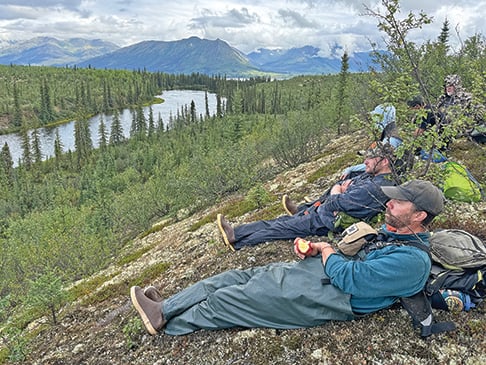
Watching a hefty fish battle my 6-weight fly rod, I chuckled at my good fortune:
“Sometimes it pays to be the old guy.”
The first to exit the campfire ring and march to my sleeping bag the evening before (at a still bright 10:30 p.m.) I awoke before anyone at 5:30 the next morning. That was partially because the Alaska sky already beamed bright overhead, and partially because, well, this 50-something doesn’t sleep like he did 20 years ago.
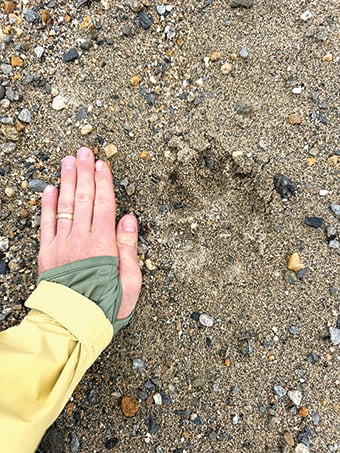
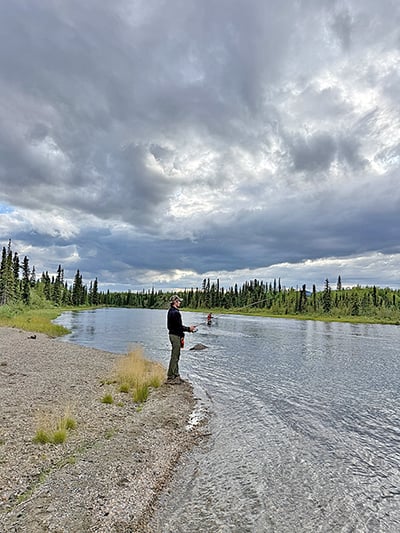
But instead of lamenting sore muscles, I climbed into cold chest waders, grabbed two fishing rods – one fly, one spinning – and hustled along fresh wolf tracks down the sandy shore to the outlet of 14-mile-long Walker Lake.
For most of four days, I’d share this bountiful stretch with my six companions, but for 90 glorious minutes, this slice of public water at the foot of the Brooks Range belonged to me and me alone.
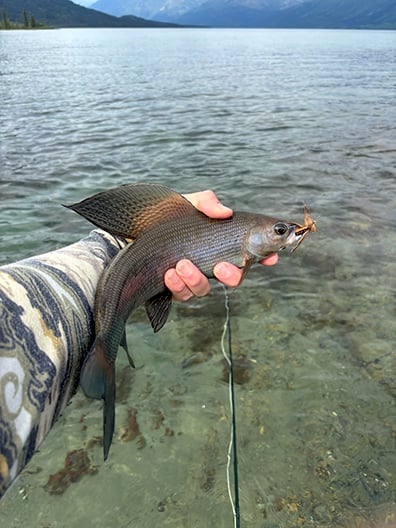
Thick in the shallow, fast-moving current were abundant Arctic grayling, those whitefish-like, almost-blue members of the salmon family with their distinctive sail-like dorsal fin. My brother and I caught one each in Glacier National Park in 1995, but I hadn’t seen any since.
Grayling existed across a swath of the northern Lower 48 historically (including some Lake Superior tributaries), but they demand cold, pure water – a life-giving compound in short supply today.
So if you want to catch a grayling, you need to travel north – in my case to the Arctic Circle and a personal bucket-list wilderness destination: Gates of the Arctic, the nation’s most remote national park.
First protected by President Jimmy Carter in 1978, Gates of the Arctic became a national park and preserve under an act of Congress in 1980. The park and the adjacent preserve contain 8.5 million acres – eight times the size of the Boundary Waters Canoe Area – and zero roads. It’s one of the wildest places left in America where interior grizzly bears, wolverines, wolves, caribou, and surly moose rule.
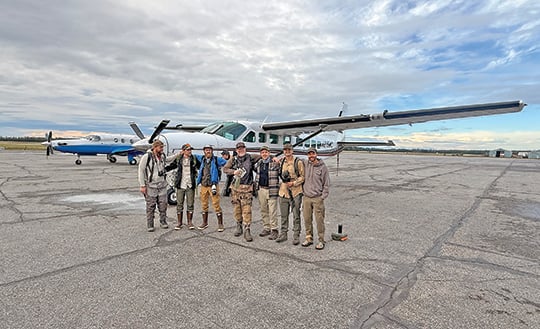
My companions included five other outdoors scribes and communicators from around the country at the invite of American Hunters and Anglers. We were there to experience one of the nation’s last great untrammeled landscapes before possible construction of the federally authorized – but not yet built – 211-mile Ambler industrial road. The road would pass south of Walker Lake and cross 26 miles of Gates of the Arctic National Preserve.
MORE COVERAGE FROM OUTDOOR NEWS:
A quick chat with retired U.S. Forest Service chief Mike Dombeck
Outdoor Insights: We don’t need more roads in wild places
Do more sightings outside core range equal hope for Minnesota’s moose?
Our first evening after drop-off via float plane, we’d collectively caught and released probably 20 leaping grayling. This morning however, with few insects hatching in the cool air, the grayling weren’t rising. But something else lurked in that current – something willing to strike and capable of surprising this Minnesotan.
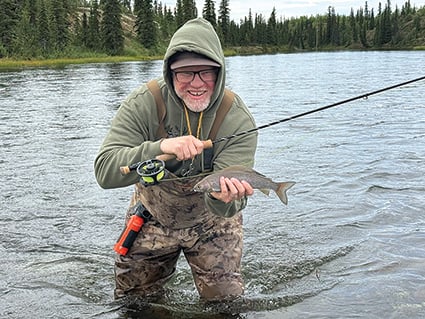
When one of these denizens of the deep emerged from the shallow outlet the previous evening, the successful angler howled: “Arctic char!”
This scribe sloshed over for a closer look: White spots on dark body, beautiful orange belly, no jawline kype… a beautiful specimen indeed… but a lake trout.
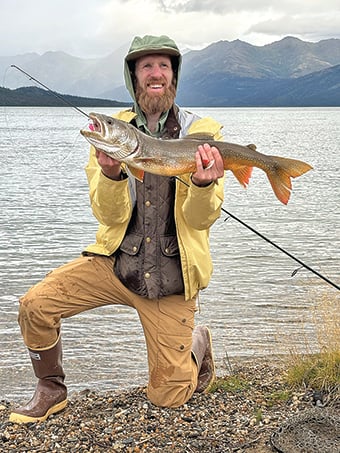
“Guys, I’m pretty sure that’s a laker,” I told the group, whose faces cast doubt on my ID skills.
“No way, lake trout are all out in deep water. This can’t be more than six feet and it’s moving water,” one of my companions replied.
With little experience in the region and having never seen an Arctic char before, I began doubting myself. Thirty minutes later, however, having brought the fish back to camp for an evening dinner fry, we got the official report:
“Lake trout, I think they’re spawning in there,” said our camp guide, Andrew George.
OK, so I can ID my fish, but George’s explanation didn’t fully track. We cleaned the laker and saw a small egg sac, not an ample skein of pre-spawn roe. And even in Alaska, it was early August: Lake trout spawning had to be weeks out.
That solo morning, I caught and released two lakers, both in the 6-pound range, one via a woolly bugger streamer and one with the spinning outfit on a jig and grub. Having only caught lakers before from a boat in deep, border country Ontario and Minnesota lakes, tangling with them in three feet of rushing water was bizarre.
Why were they shallow? An unlucky 9-inch grayling offered a clue. Reeling the grayling in via a dry fly, I watched a big laker, 25 inches easy, try to grab the grayling off my line just three feet from my waders. Two of my fishing companions later confirmed similar predatory behavior from the lake trout.
Few anglers will ever witness what happened at my feet – river-run lakers feeding on Arctic grayling – because so few places contain the recipe for that spectacle: cold, clean water and a remote, wild landscape.
The Ambler Road effect
The Ambler Road, a controlled-access industrial road, would pass just a few miles south of where we fished. Opponents, including local groups and national ones like American Hunters and Anglers and Backcountry Hunters and Anglers, say it’ll have a massive negative effect on the region.
For starters, the solitude we enjoyed dozens of miles from any development? Gone.
The Bureau of Land Management’s 2024 Final Supplemental Environmental Impact Statement details the project’s scale: 2,932 water crossings, including thousands of culverts and 49 bridges; 15 million cubic yards of gravel for construction; and another 220,000 cubic yards annually for maintenance.
The project footprint would cover 4,524 acres, including 332 acres managed by the NPS, but it would interrupt hundreds of thousands of acres. Once operating, the private road will carry hundreds of truck trips per day, with mining companies paying access tolls.
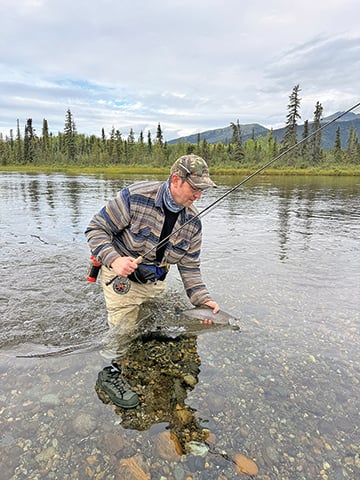
The grayling we caught, released, and admired – the fish that offered us a glimpse of one of America’s great cold-water ecosystems? Their habitat and migration routes would face risks that don’t exist today.
Road crossings can impede fish passage, increase sedimentation and alter stream hydrology – not only affecting grayling but also those lake trout preying upon them.
Interviewing Alaskans, we heard dozens of reasons why the Ambler Road would be at best another expensive “bridge to nowhere” boondoggle. We spoke with Iniakuk Lake Wilderness Lodge owner John Gaedeke whose clients visit his property for solitude – a respite that road-building will shatter.
We spoke with tribal community members who rely on caribou and fishing in the Yukon River tributaries who have seen industrialization damage their subsistence way of life. Ambler would accelerate that.
The Western Arctic caribou herd has declined by roughly 70% during the past 25 years, and the road would create another migration route obstacle. (For a fine interview on the topic of worldwide caribou declines, listen to Mark Kenyon’s Aug. 5 Future Wild podcast with Jim Dau, a recently retired Alaska Department of Fish and Game caribou biologist.)
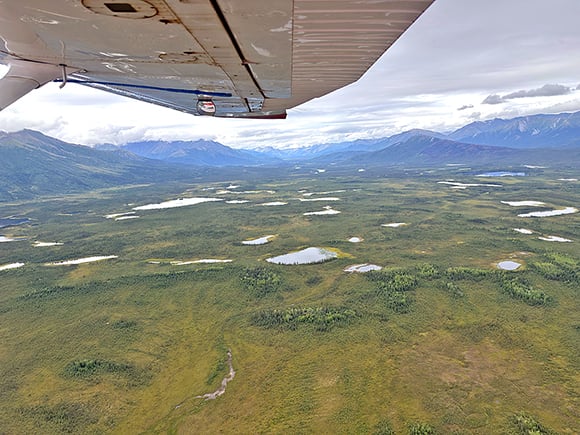
As for economics, it’s one thing to build a road through a forested upland landscape. But looking down from our bush plane at the corridor, all we could see was water. Muskeg. Tundra. Dozens of rivers oxbowing right and left. Lakes and ponds. It’s quite simply a terrible place to build a road.
Mining companies like Australian-owned Trilogy Metals might turn a profit from the mineral deposits at the end of the $2 billion road, which the state of Alaska mostly is financing, but taxpayers? They won’t access the private road, and when the cleanup costs come due, they’ll likely get the bill.
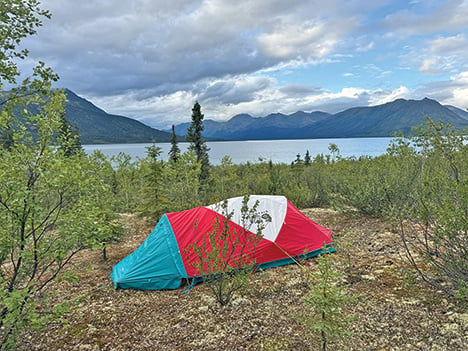
Then there’s the simple, old-school environmental argument. This isn’t an empty landscape frozen in time. Indigenous people have lived here for thousands of years and still depend upon its fish and wildlife.
What remains remarkable is its ecological continuity: rivers following natural courses, caribou crossing an unbroken landscape, and fish moving through watersheds largely free of industrial barriers. That is too rare and precious to pave.
Greed aside, how do folks not get that? Maybe it’s because as a society, we don’t stop and witness the obvious. Yours truly might be Exhibit A.
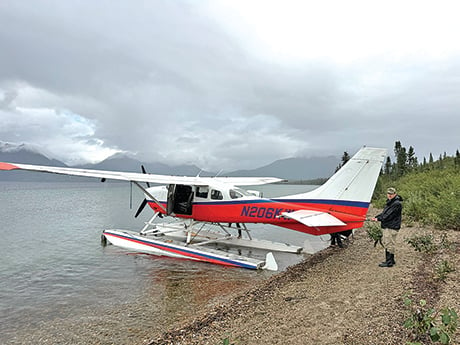
On Day 1, after our float plane dropped us off and returned to Coldfoot Camp 97 miles away, I started tackling chores and gear-hauling. As the last ripples from the plane settled at our feet and aircraft sounds disappeared to the east, guide Andrew George stopped me.
He demanded that I pause and view the unbelievable landscape that I’d traveled two days to reach. Admiring the foothills of the Brooks Range and the pristine water, I silently scolded myself and my innate unwillingness to slow down and smell the blueberries.
And I marveled at George, a Texas native who has lived in Alaska and guided hunters for 20-plus years, yet doesn’t take places like the south shore of Walker Lake for granted. Later, as a group, we asked him why he opposed the road.
“Because I know it’ll be there.”
“That’s enough of a reason?” someone asked.
“That’s enough.”
Later, considering the myriad of terrible impacts the Ambler Road will unleash on the region, I chose my reason: Because I know those grayling and lake trout – and the intact system supporting them – likely will be gone.
That’s enough, too.
Learn more at:
https://morethanjustparks.com/ambler-road/
www.americanhuntersandanglers.org
A first-hand account of trying to obtain a 2026 Minnesota black bear permit
In 1992, I harvested my first black bear in Zone 31 near Babbitt, Minn. I was hunting with Mike Bisonette
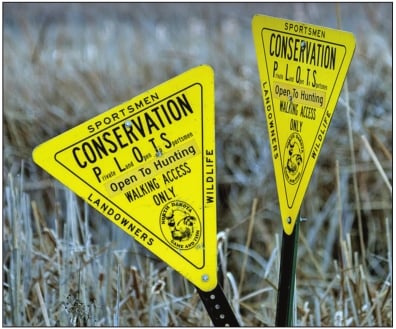
Understanding North Dakota’s ‘Private Land Open to Sportsmen’ program
What started as a visionary idea to bridge the gap between private landowners and public hunters has grown into a
Something big is coming from Minn Kota, Humminbird this fall
Two of the biggest names in fishing — Minn Kota and Humminbird — have spent decades on the water together.
