




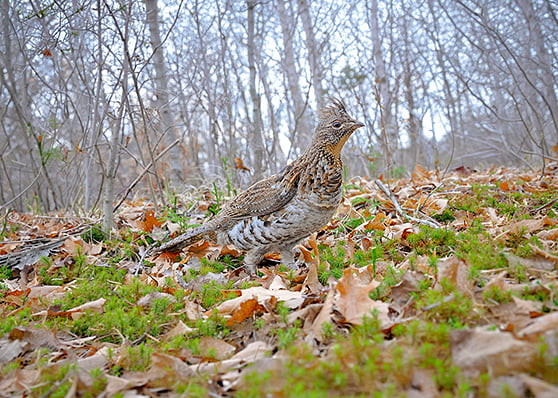
Upper Midwest bird hunters focusing on ruffed grouse may see a slight decline in the population of this iconic game bird this fall, but that doesn’t mean opportunities won’t be available for those who put in the time.
Spring drumming surveys from the states that still conduct such surveillance indicate a slight decline from last year, following the traditional eight- to 11-year cyclical pattern.
Here’s a closer look at what primary ruffed grouse states predict for this fall.
Michigan
According to Michigan DNR grouse biologist Adam Bump, this fall looks as good as – and maybe better – than last year.
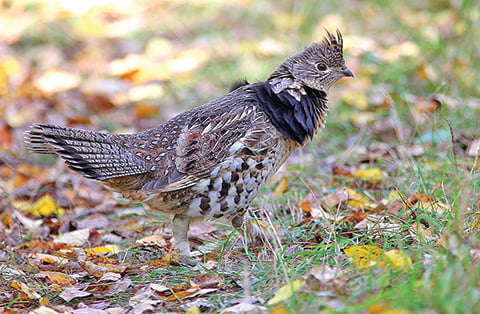
“Our grouse drumming survey results are up just a little bit from last year. This is good news since we anticipated a decline in the drumming rates as we are likely on the lower end of the population cycle,” Bump said.
“However, the increase was quite small, so I expect hunters to see a similar season in 2026 as we saw in 2025, possibly slightly better. Spring weather in most of the state seemed reasonable for production. Some areas in the Upper Peninsula had a long winter with snow that extended into spring, but I believe conditions should have been decent by the time nesting and broods hatched,” he said.
“Hunters should focus on dense young aspen or lowland brush areas with good food production. If we have a dry fall, finding these sorts of cover types near rivers and low areas may produce more birds. When the season gets underway, I’d encourage hunters to visit our grouse and woodcock cooperator dashboard. This allows you to submit information about your flush rate in the counties you hunted, providing near real time comparisons across the state. Last year was the first year we had the dashboard available and we had a great response for a new tool,” Bump said.
Overall, as their sister states Wisconsin and Minnesota have seen, grouse populations have been declining in the marginal habitat areas, but hunters can expect to have action in the better counties.
The Michigan DNR’s grouse and woodcock dashboard shows hunters reported 285 grouse and 631 woodcock harvested in 2025, with an average of 1.2 grouse flushes per hour of hunting when using a dog, although this only reflects the results of hunters using the dashboard system. The Upper Peninsula and northern Lower Peninsula hold the most birds, although they’re fairly widely distributed in “The Lower.”
New York
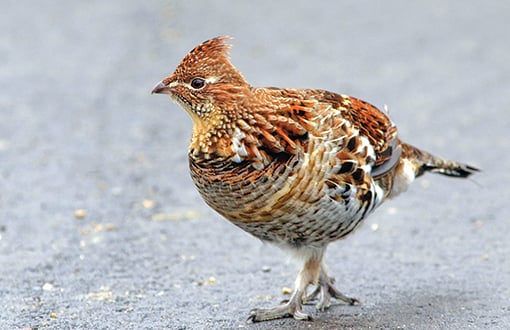
The New York State Department of Environmental Conservation (DEC) has elected to monitor their ruffed grouse populations by using the citizen science model. The state asks spring turkey hunters to record the number and locations of drumming grouse heard while they’re chasing gobblers.
In addition, the DEC uses the Ruffed Grouse and American Woodcock Hunting Log system, where hunters record the number of birds flushed per hour of hunting effort. Most of the grouse hunting in New York is in the northern part of the state, where there’s still some good grouse habitat available. The central and northern Adirondacks have traditionally reported the highest drumming rate, with about 3.5 flushes per trip.
As seen in other grouse hunting states, grouse populations remain depressed because of habitat loss and the maturation of forests, although pockets of young forest habitat in regions of upstate New York continue to hold localized, huntable numbers of grouse.
UPLAND BIRD COVERAGE FROM OUTDOOR NEWS:
North Dakota releases annual prairie grouse survey results
Wisconsin DNR announces closure of sharp-tailed grouse hunting season in 2026
Outlook optimistic for Minnesota’s 2026 pheasant hatch
Pennsylvania
Haley Keff, Pennsylvania wildlife biologist, wasn’t optimistic that the 2026 season would set a new record on flushes, but she felt there would still be some decent hunting opportunities.
“It’s hard to say at this point, but I would anticipate a below-average season for 2026. In 2025, we had a wet spring and the highest West Nile virus (WNV) vector index since the WNV-induced population crash in 2018,” Keff said.
“Grouse are highly susceptible to WNV-related mortality, and last year’s wet spring likely further reduced productivity. Combined, those factors may have suppressed recruitment and contributed to the lower flush rates observed during the hunting season. At 0.82 flushes per hour, last year’s flush rate was the lowest observed in the past five years. I don’t have all the results from our statewide grouse summer survey for this June yet, but it seems spring conditions were more favorable this year. Hopefully grouse are capitalizing on good nesting and brood rearing conditions.”
Illinois
Illinois no longer has a ruffed grouse season due to population declines that are directly related to disappearing habitat.
Iowa
Iowa’s season begins Oct. 3 and runs through Jan. 31, 2027, with most of the hunting interest primarily focused in the more heavily wooded Driftless Area in the northeast corner of the state.
Iowa’s grouse population is also in the declining phase of the natural 10-year cycle, as mirrored by other grouse hunting states. The daily bag limit is three birds, with six in position.
Ohio
The Ohio ruffed grouse hunting season is essentially banned for the public because of long-term population declines and habitat loss, which resulted in the placement of grouse in the sensitive watch list. There will be limited controlled hunts for grouse on several designated areas through a lottery and permit application process.
Minnesota
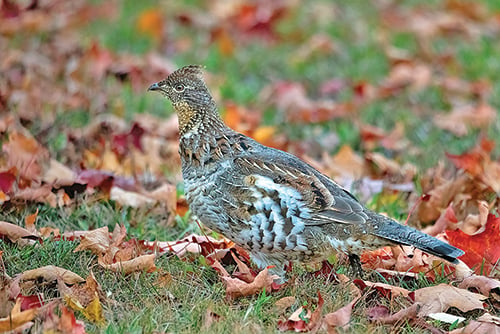
The Minnesota Department of Natural Resources’ (DNR) latest ruffed grouse counts found that the state’s spring 2026 population declined from its peak in 2024. Ruffed grouse drums per stop were 1.7 statewide, which is down slightly from last year.
Drumming is a low sound produced by males as they beat their wings rapidly and in increased frequency to signal the location of their territory and to attract females ready to begin breeding. The populations were surveyed by counting the number of male ruffed grouse drums heard while traveling established routes throughout the state’s forested regions.
The DNR and its partners have conducted grouse surveys to monitor the state’s breeding population for 75 years.
Through decades of surveys, researchers found that grouse populations tend to rise and fall in a cycle that ranges from eight to 11 years.
“Drumming counts alone are not an accurate way to predict the birds that will be present during the fall hunting season,” said Charlotte Roy, DNR grouse project leader. “Nesting success and chick survival during the spring and summer are contributing factors that influence that number. These factors can be reduced by heavy rain during June, when nests hatch and chicks are vulnerable,” she said.
Roy was also appreciative for the help she received this spring.
“In a typical year, we’ll have 13 cooperating organizations helping us count grouse drumming,” Roy said. “We’re grateful to our partners for their assistance in completing these routes.
“We saw variable weather throughout the state, with a very dry May for most of Minnesota, followed by a wetter than average June. Precipitation’s OK if it isn’t a torrential downpour, so looking for areas that escaped these heavy rains in June should be helpful to hunters.”
Avid upland bird hunter Mike Bartz, a Grand Marais, Minn., resident, is cautiously optimistic about the fall season.
“I heard good numbers of birds drumming this spring, and nesting conditions around here seemed to be favorable. Last fall most of the birds that went into the bag were adults, and these birds are smarter and more difficult for pointing dogs. Usually, juvenile birds make up more than half the birds I bag,” Bartz said. “One has to be an eternal optimist to be a grouse hunter. I’m looking forward to this fall.”
The 2026 ruffed grouse survey report can be found here.
Wisconsin
The Wisconsin DNR’s annual roadside grouse drumming survey showed an 11% decrease statewide compared to 2025.
“The largest declines were in the Driftless Region (southwestern Wisconsin) and the Central Forest Region. This was anticipated, since the low points of the 10-year population cycle typically occurs in years that end in four, five, and six,” said Alina Roth, the DNR’s ruffed grouse specialist. “We likely observed higher abundance estimates in 2024 and 2025 due to exceptional nesting and brooding conditions in the prior years.”
Jared Elm, the Ruffed Grouse Society’s forest conservation coordinator for Wisconsin, was optimistic about what hunters should find this fall.
“I think it’s fair to say many people anticipated this small decline from last year’s drumming based on reports from the woods. Numbers were spotty and likely reflected the impacts of heavy localized rains in June of 2025, and many hunters I’ve talked to ran into a lot of adult birds and not as many young-of-the-year around. That was coming off a great year in 2024,” Elm said.
“It does seem like we have good nesting and brooding conditions this year, so I’m optimistic birds will be available this fall. I saw a brood today that already had big, strong fliers, and that’s an indication of an early successful nesting season.
“When looking at the data, habitat conditions are good throughout the public lands in the northern part of the Wisconsin based on aspen age-class diversity and available habitat, but declining in the central counties due to changes in forest cover type and market availability. I’ll add that RGS, in partnership with Wisconsin County Forest Association, is updating the Ruffed Grouse Management Area maps available on the county forest association’s website. These should be live and updated by the time grouse season rolls around and can be a great resource for those traveling from out of state or long distances to have a starting point.”
The Douglas County town of Clevedon is on the southern coast of Lake Superior. With a population of only 247, it’s not surprising that residents wear different hats. Eric Sarri, the fire chief, also is the heavy-equipment operator who keeps the rural roads well maintained, meaning he spends a lot of hours on the township’s gravel roads. This workload allows him to keep track of the local wildlife populations.
“I’ve only seen one brood of grouse so far this year and turkey broods have been sparse, too,” Sarri said.
Pennsylvania’s hunting license sales down so far this year
Hunting license sales are down nearly 4.5% at the end of August, although Pennsylvania Game Commission officials believe there is
Origin of road-killed armadillo in southwest Ohio a mystery
An armadillo found as roadkill in southwest Ohio has researchers scratching their collective heads wondering from where the non-native mammal
Bowhunt gets started in Ohio with additional opportunity in CWD surveillance area
Hunters in Ohio’s chronic wasting disease (CWD) surveillance area have additional dates this season to pursue white-tailed deer. The Ohio
