


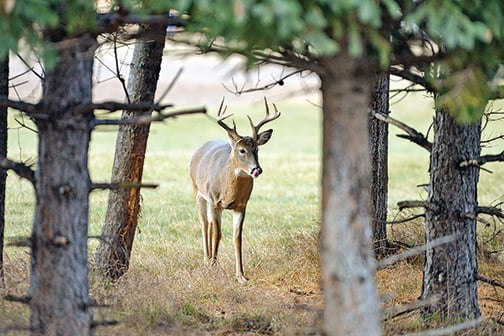
We all know we should sit all day, but how many of us actually do it? Most hunters follow a predictable pattern when it comes to their sits, and predictability is what the bucks use to keep us from killing them.
It’s pretty simple, really. But it requires us to think about life from the perspective of a prey animal. If you were a deer and you wanted to avoid a ride in the back of a side-by-side during the season, you’d figure out when to move and when to hole up. You’d also be acutely aware that the time window to pass on your genes is rapidly closing.
The solve, at least for a lot of deer, is to go nocturnal, but also to move carefully when the fewest hunters should be in the woods. That often means midday is the least risky time for them to move, and if you’re willing to be out there, you might just get your shot.
Low odds vs. no odds
It’s cliched, but true: You can’t kill them from the couch. If you’re not out there in the woods with them, you’re not going to fill your tag. That rule applies to deer hunting across the board, but can also apply to the hours during the day when most folks are back at camp taking a snooze or munching on some pancakes.
The influx of people into the woods before first light, and then in the early afternoon, influences deer behavior. But there is a sweet spot in the middle of the day when the fewest hunters will be out, and the deer know it. You know it, too. But it’s not just as simple as staying in your favorite blind from 10am to about 2pm, because it’s not just about the time of the day. As with all deer hunting success, location matters here, a lot.
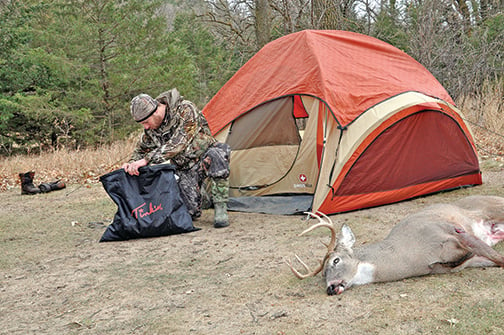
Cover wins, always
If you’re looking to ride out the lunch shift on the edge of a picked cornfield or maybe on a fresh clear cut, you’re probably going to watch far more songbirds than cruising bucks.
The name of the midday game is cover, and it should be obvious why that is. Mature bucks, and really most deer, when the hunting pressure ramps are, are clued into what’s going on.
They aren’t going to risk their necks by traveling out into the open nearly as much as they would just a couple of weeks earlier. A lot of hunters take this as evidence that there is no daytime movement happening, but that’s just not the case.
MORE WHITETAIL COVERAGE FROM OUTDOOR NEWS:
Josh Haiar: How’s the South Dakota pheasant hunt? And EHD spreads in Dakotas
New York’s youth deer hunters, mentors enjoy solid weekend
Solve for where the bucks are pre-rut, and tag out before the chaos kicks in
The deer will still move, but their movement will often be condensed to thicker cover. If you’re in farm country, this might be the kind of thicket you’d hunt cottontails in, or it might be a cattail slough. It might just be an overgrown fenceline in a woodlot, that offers a soft edge back in the timber.
For big wood’s hunters, it gets a little more complicated. Timber isn’t in short supply, which means cover is everywhere. Alder thickets, swamps, and just brushy, shrubby, nasty cover is a different story.
Deer that hole up in thick cover seem untouchable, but they aren’t. They’ll move when they can, whether that’s to check a scrape or maybe just browse a bit. But they will move, and the hunters that are there for it can capitalize on that, even if it means sitting when the odds seem really low.
They are, but they aren’t zero, which is important.
Midday mastery
When you think about it, the days right now are not very long.
You might have 12 hours or so in total between getting to your stand, all of the daylight hours, and then getting out of your stand. Sitting for three hours in the morning and three hours in the evening means you’re taking advantage of roughly have of the available hours.
Bring snacks, pack a sandwich and some extra coffee, make sure you have handwarmers, a book, whatever you need to ride out the slow midday hours. You’re not likely to be snowed in with deer just because you stay out there and are on stand at noon, but the one deer you do see moving is likely to be the kind of deer you really want to shoot.
After a scorching start, Minnesota’s pheasant prospects heat up
Worthington, Minn. — The defining narrative of the first three weekends of Minnesota’s pheasant-hunting season has been the… weather.
Gretchen Steele: Let’s talk about ‘things that go bump in the Southern Illinois bottoms’
There are things in the southern Illinois river bottoms that will make a grown person reconsider every brave thing they’ve
WI Daily Update: Muskie madness is here
Tim Lesmeister says the best time of the year to be fishing for muskies is upon us. He explains why
