




Home » Nature Page & Night Sky » Minnesota Mixed Bag: DNR seeks pine cone collectors ahead of anticipated bumper crop
Minnesota Mixed Bag: DNR seeks pine cone collectors ahead of anticipated bumper crop

Akeley, Minn. — The DNR is asking the public to collect red pine cones and has increased its payment to $95 per bushel for clean, closed cones. This year’s crop is expected to be the best the state has seen in a decade. Cones will be ripe from September through October.
The red pine is Minnesota’s state tree. It produces a good seed crop every few years but only has a true bumper crop like this year about once every 10 years. The DNR needs help from Minnesotans this season to collect as many ripe, closed cones as possible to build a strong red pine seed supply for plantings in future years. DNR processes the cones it purchases to extract seeds, which are sown into nursery beds at the State Forest Nursery in Akeley. Annually, the DNR reforests roughly 2,000 acres of red pine, which takes nearly 1 million seedlings.
The University of Minnesota, in collaboration with the DNR and other partners, is hosting several in-person workshops throughout the state to train seed collectors. For more information, including how to register as a supplier, find a buying station location, learn about other tree seeds the DNR needs, and locate in-person training workshops, visit the DNR’s “Cone and seed collection” webpage.
MORE COVERAGE FROM MINNESOTA OUTDOOR NEWS:
Trump’s EPA pitches more Clean Water Act rollbacks
Minnesota moose numbers stable as bands prepare for hunt
Minnesota’s 2026 roadside survey shows a 20% jump in pheasants
WISCONSIN DNR WILL STOCK FEWER PHEASANTS
Poynette, Wis. — The Wisconsin DNR has announced a reduction in the number of ring-necked pheasants that will be stocked this fall. Due to budget constraints within the WDNR’s Wildlife Management Program, the recent stocking goal of 75,000 pheasants over 82 state-owned properties will be reduced to 65,000 birds.
An additional cost-saving measure for the 2026 pheasant stocking includes shortening the stocking season to end on Nov. 19, 2026. The late season stocking that is normally scheduled for late December will not occur this year. The pheasant hunting season remains unchanged and will run from Oct. 17 through Jan. 3, 2027.
The WDNR says rising costs of supplies and labor are major contributors to this decision. For example, in 2021, the cost to raise a pheasant was $6.91 per bird; by 2025, that cost had increased to $9.80 per bird. Similarly, the cost of supplies needed to replace a pheasant pen increased from $3,060 in 2021 to $6,915 in 2025.
Pre-stocking efforts will begin the week of Oct. 12 to ensure birds are on the landscape for the pheasant hunting opener on Oct. 17.
GROUP: USFWS LOST 36% OF STAFF SINCE 2024
Portland, Ore. — The Center for Biological Diversity issued a press release last week declaring that the U.S. Fish and Wildlife Service has lost 36% of its staff under the Trump administration, dropping from 9,957 to 6,333 total staff between 2024 and 2026.
The Center obtained staff rosters for the USFWS for 2024 to 2026 through the Freedom of Information Act. The 36% loss of staff is double what CBD reported last year. That increase likely reflects staff who accepted early retirement offers in spring 2025 but who were still paid through last September and thus still found on last year’s roster.
National wildlife refuges that were already under-staffed are being neglected, harming wildlife and their habitats, the CBC said. Per the release, the agency lost more than 1,900 scientists, including fish and wildlife biologists, foresters and fire managers.
COURT BLOCKS BLM ORDER TO REMOVE AMERICAN PRAIRIE BISON FROM PUBLIC LANDS
Great Falls, Mont. — A federal judge last Friday granted American Prairie’s request for a preliminary injunction, blocking the Bureau of Land Management from enforcing its order requiring American Prairie to remove its bison from three federal grazing allotments in northeastern Montana while the organization’s lawsuit proceeds.
The ruling by U.S. District Judge Brian Morris allows American Prairie’s bison to remain on the three allotments in Phillips County, where they currently graze while the court considers the underlying legal challenge. The injunction does not resolve the case on the merits, but Judge Morris found that American Prairie has demonstrated a likelihood of success on its claims.
At the center of the case is whether the Taylor Grazing Act limits federal grazing permits to livestock operations focused on commercial production of food and fiber. BLM relied on that interpretation when it revoked American Prairie’s bison permits in May, and ordered the nonprofit to remove its bison from federal public lands. The court rejected that interpretation at this stage, finding that American Prairie’s bison qualify as livestock under the Taylor Grazing Act.
COMPANIES, NONPROFITS SUE TRUMP ADMINISTRATION OVER BEARS-EARS
Denver — Patagonia, tribally-led groups including Utah Diné Bikéyah and A’Nuche, as well as archaeology, outdoor recreation, and conservation groups filed to reactivate a lawsuit over the shrinking of Bears Ears National Monument last week. They are asking a federal judge to reopen their dormant 2017 case challenging Trump’s first dismantling of Bears Ears and to fold in new claims against a July 2026 proclamation, which stripped monument protections from 91 percent of the landscape.
“Slashing Bears Ears and dismantling the Bears Ears Commission is a betrayal of tribal sovereignty and needlessly throws away years of effort to create the first tribal co-management structure of a national monument in U.S. history,” Patagonia CEO Ryan Gellert said.
A separate coalition of conservation groups, including the Natural Resources Defense Council, the Southern Utah Wilderness Alliance, and The Wilderness Society, also asked the court to reopen their dormant 2017 challenges to the reductions of both monuments and to fold in claims against Trump’s recent proclamations, which stripped protections from roughly 3 million acres in total. Judge Tanya Chutkan stayed the original cases in 2021 after Biden restored the monuments, and they never reached a final ruling. — Center for Western Priorities
SUBSCRIBER CONTENT
Read this article now.
Create a free Outdoor News account.
Create a free account below to get instant access to this article, thousands of Outdoor News stories, and our digital editions. Your 1-month trial starts the moment you sign up.
No credit card required
No credit card required
Subscriber? Login Here.
Share on Social
Hand-Picked For You
Minnesota Cuffs & Collars: K9 Molly helps hunter find lost gun
Steve Carney: Minnesota fall turkey tag filled, and a great walleye bite on big minnows
EHD drives North Dakota deer season changes
Minnesota 16-year-old injured while duck hunting
Minnesota’s Voyageurs National Park has new leader in Jennifer Onufer
Minnesota DNR seeks input on WMA, AMA plans
Related Articles
Minnesota’s Outdoor Calendar
A look at upcoming outdoor-related events from across Minnesota published in the Oct. 23, 2026 edition of Outdoor News.

Minnesota Cuffs & Collars: K9 Molly helps hunter find lost gun
Minnesota cuffs and collars are field reports from DNR conservation officers. These reports are from the Oct. 23, 2026 edition
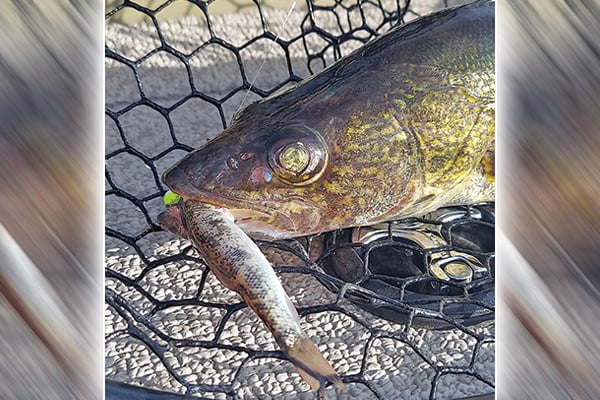
Steve Carney: Minnesota fall turkey tag filled, and a great walleye bite on big minnows
Fall turkey hunting is a matter of chance.
Our Minnesota population is excellent, and turkeys remain the game bird
