Washington, D.C. — On September 4, the Environmental Protection Agency and the U.S. Army Corps of Engineers announced more potential changes to the definition of “waters of the United States” under the Clean Water Act, putting safeguards against pollution for a majority of America’s wetlands and streams on the chopping block and triggering a new 30-day public comment period.
The Supplementary Notice of Proposed Rulemaking expands on a hotly contested proposal from November 2025 that would significantly narrow which waters qualify as “WOTUS” under the CWA, a landmark bill that regulates pollution in America’s waters. The earliest version of the CWA first emerged in 1948 as the Federal Water Pollution Control Act. An amended version passed as the Clean Water Act in 1972.
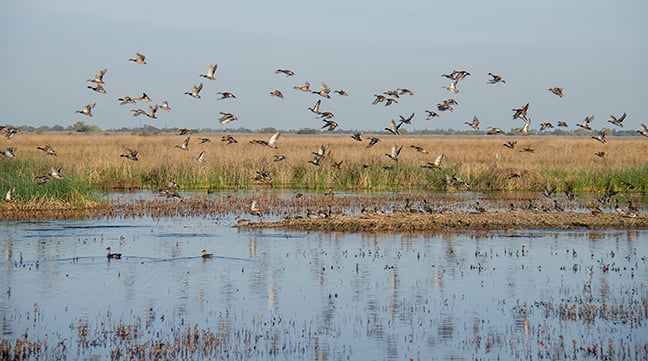
If the Trump administration’s new proposal goes through, millions of acres of wetlands would lose the CWA protections they have long enjoyed. Some estimates put the portion of America’s wetlands that would lack safeguards under the new CWA at 94%, due to one part of the proposal that would limit CWA protections to wetlands with standing water during a “wet season,” a phrase that opponents say would introduce more uncertainty.
MORE COVERAGE FROM OUTDOOR NEWS:
Minnesota moose numbers stable as bands prepare for hunt
Minnesota’s 2026 roadside survey shows a 20% jump in pheasants
Commentary: An informed, nuanced view of the end of the deputies programs in Pennsylvania
In the announcement, the Trump administration chalks up the proposed changes to their duty to implement the 2023 U.S. Supreme Court’s ruling in Sackett v. EPA, which established that the CWA only applies to “relatively permanent, standing, or continuously flowing bodies of water” and wetlands with a “continuous surface connection” to those waters.
Since that decision came out, the Trump administration argues, phrases like “relatively permanent” have caused confusion for ranchers, farmers, landowners, homebuilders, and various industry actors, and the updated language would provide greater clarity.
In the supplemental proposal, the administration suggests defining “relatively permanent” as “perennial,” or “having standing or continuously flowing water every day of the year during ordinary conditions,” with exceptions for one drought or dry spell lasting 30 days or less per year. But conservation groups argue that such a definition would leave millions of miles of streams and tributaries that don’t have water year-round, also known as non-perennial streams, exposed.
“This proposal declares open season on the nation’s waterways,” says Jon Devine, director of freshwater ecosystems for the Natural Resources Defense Council. “It denies federal protection to virtually all wetlands and more than three quarters of our streams, endangering drinking water supplies and flood-prone communities.”
The 30-day public comment period will open once the supplemental proposal is published in the Federal Register.