




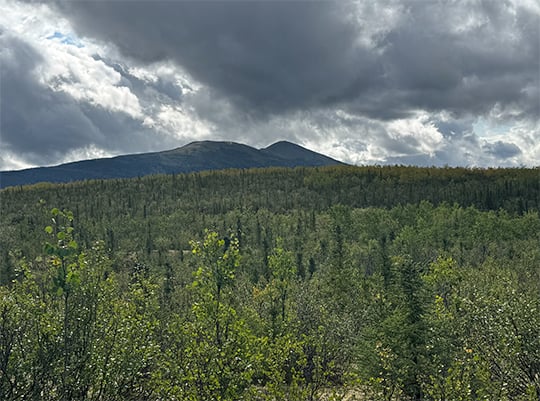
Washington, D.C. — The U.S. Forest Service filed a proposed rule Tuesday to eliminate the 2001 Roadless Area Conservation Rule nationwide, a policy shift that would reopen nearly 45 million acres of national forest land to road construction and active management for the first time in a quarter century.
Outdoor groups immediately condemned the proposal as a threat to some of the country’s best hunting and fishing habitat.
Agriculture Secretary Brooke L. Rollins framed the rescission as a response to worsening wildfire conditions on federal land. “Our forests can’t afford another decade of inaction,” Rollins said, citing “overgrown stands, insect outbreaks and disease” that she said have turned “healthy landscapes into tinderboxes.”
She said the rescission would “restore authority to local forest managers.”
The administration’s action comes after Sen. Mike Lee, R-Utah, backed legislation to repeal the Roadless Rule back in early June via an amendment to the bipartisan wildfire-fighting bill. That amendment ultimately failed.
MORE COVERAGE FROM OUTDOOR NEWS:
Walz signs order halting sulfide ore mining outside Minnesota’s Boundary Waters
Fisheries highlighted in New York DEC’s new Hudson River estuary plan
Patrick Durkin: Sonar expert Rick Krueger solved Wisconsin’s 45-year mystery of two missing men
The original rule, enacted in 2001 during the final days of the Clinton administration, barred road construction and restricted management activity across roughly 45 million acres of the National Forest System’s 193 million acres – territory largely concentrated in the West.
Speaking to Outdoor News last summer, Clinton’s USFS Chief Mike Dombeck noted that the rule followed an 18-month public review process that accepted 1.8 million comments. Now retired and living in Wisconsin, Dombeck said, “It’s withstood challenges including 11 court cases and Supreme Court review that kept lower court decisions.
We did our homework in implementing this rule with more than 600 public hearings. Reviewing 1.8M comments is very labor intensive, and 90% of those comments were supportive of the rule, and in fact most comments wanted more restrictions on roads, not less.”
Current USFS Chief Tom Schultz said the restriction has left much of that land vulnerable: more than 40% of inventoried roadless areas, he said, carry high or very high wildfire hazard potential, yet only 5% have received fuel-reduction treatment since 2014.
Schultz noted that more than a quarter of the affected acreage – 11.3 million acres – already sits near existing roads.
BHA responds
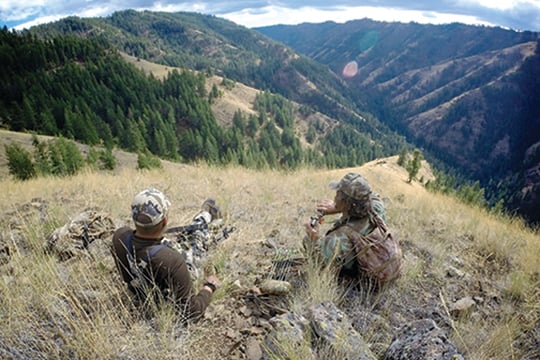
Backcountry Hunters & Anglers, a Missoula, Mont.-based public lands advocacy group, wasted no time condemning the announcement, calling the rule a direct threat to “some of the country’s most productive hunting and fishing habitat.”
“This isn’t a bureaucratic footnote – it’s the wholesale elimination of protections for the backcountry habitat hunters, anglers, wildlife, and rural communities depend on,” said Ryan Callaghan, BHA’s president and CEO. “The Roadless Rule works. It provides quality habitat for big game, keeps trout streams cold and clean, and keeps taxpayers from footing the bill for thousands of miles of new roads that the Forest Service can’t afford to maintain.”
BHA pointed to the Forest Service’s existing road system – more than 370,000 miles, over eight times the length of the entire U.S. Interstate System – and a maintenance backlog the group says has topped $10 billion, arguing that adding new roads would deepen a financial hole the agency is already struggling to climb out of.
Devin O’Dea, BHA’s Western Conservation and Policy Manager, framed the rescission as undermining a system that already benefits rural economies. “Roadless areas pay for themselves through hunting, fishing and recreation dollars flowing into gateway communities every year,” O’Dea said. “This isn’t fixing a broken system – it’s bulldozing one that already works, putting productive fish and wildlife habitat at risk while undermining the outdoor recreation economies they support.”
State reaction
The announcement drew different responses from Republican governors in states with large tracts of affected land.
Montana Gov. Greg Gianforte said the rule had “hindered Montana’s ability to properly manage wildfire risk and road development” on nearly 60% of the state’s Forest Service acreage.
Utah Gov. Spencer Cox said rescinding the policy “restores the flexibility to make thoughtful decisions based on the needs of each forest and each community.”
Wyoming Gov. Mark Gordon called it a step toward “locally-driven, durable planning.”
Scope of the change
USDA says more than 95% of the nation’s inventoried roadless areas lie in 10 Western states: Alaska, Arizona, California, Montana, Nevada, New Mexico, Oregon, Utah, Washington and Wyoming.
The rule would not apply in Colorado or Idaho, which operate under their own state-specific roadless regulations negotiated separately from the national rule. BHA put the scope slightly differently in its own release, describing the rule as having conserved backcountry “across 37 states” since 2001 – a reference to the jurisdictions covered by the national rule, as opposed to Colorado and Idaho’s separate state-specific rules.
What’s next
The Forest Service filed a draft environmental impact statement alongside the proposed rule in the Federal Register. USDA’s release did not specify an opening date for the public comment period; BHA’s release said the comment period is expected to open Aug. 20 and run through midnight on Sept. 21.
Both organizations agreed additional materials, including the draft EIS, were expected to be posted Aug. 19. Comments can be submitted through Regulations.gov, and additional details are expected on the Forest Service’s Roadless Areas webpage.
onX Roadless Rule Report
A recent report from onX maps entitled “The Roadless Rule: By the Numbers,” examined recreational opportunities roadless landscapes provide for hunters, anglers, off-roaders, hikers, climbers, and backcountry skiers. The findings include:
• Recreation opportunity: Roadless Rule Areas are home to over 17,700 miles of hiking and biking trails, nearly 1,500 miles of mapped backcountry ski routes, and nearly 3,000 climbing areas. These areas currently support significant recreation infrastructure and changes to the Rule could affect how these lands are managed going forward.
• Wildlife habitat: onX analyzed habitat and migration corridors for three game species, and found that the Roadless Rule Areas provide intact habitat for wildlife. For example, in Wyoming, 99% of Roadless Rule acres serve as elk habitat; in New Hampshire, 97% serve as black bear habitat, and in Arizona, 96% serve as mule deer habitat.
• The link between wildfire and roads: Wildfire is one of the most complex challenges facing public land managers today, and is cited in the current debate over the Roadless Rule. The onX analysis reveals that 3% of the country’s historical wildfire ignition points over the past 50 years occurred within areas inventoried by the Roadless Rule. The Rule explicitly allows for wildfire suppression and fuel reduction, including road construction in emergency situations. Studies have also shown that 90% of all wildfires start within a half-mile of a road, likely due to increased human interaction.
Illinois’ nuisance-deer permit rules win extension for language fixes
Illinois wildlife officials were given a 45-day extension to clean up rules governing a new system designed to give farmers

Illinois Mixed Bag: Trapping Permit Drawing Set for Shelbyville
DNR has scheduled a public drawing for handing out trapping permits at the Shelbyville State Fish and Wildlife Area.

Illinois Letters to the Editor: Deer hunting has changed for all of us
Reader-submitted letters to the editor published in the Oct. 2, 2026 edition of Illinois Outdoor News.

5 thoughts on “Trump administration moves to end roadless rule on national forests”
Every person who considers themselves sportsman or woman needs to contact their reps and let them know we DO NOT support this land grab by Trump and his cronies. Wild life need refuges these roadless areas afford.
Idiots.
Leave the roadless rule just the way it is.
We need wilderness lands just like those, mother nature will maintain itself perfectly. It always has, long before we were here.
There’s something’s more important than your profit from timber sales.
Let’s just have the forest get old and have uncontrollable forest fires. How stupid can you be. Just look at the boundary waters of minnesota
Let’s just have the forest get old and have uncontrollable forest fires. How stupid can you be. Just look at the boundary waters of minnesota