




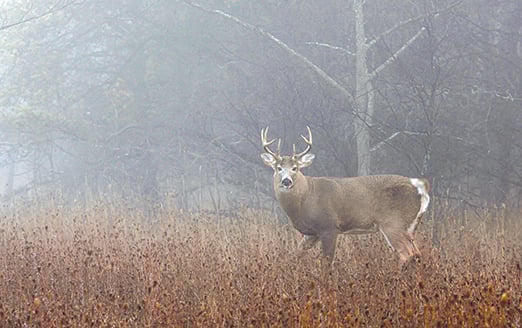
Ever hear of the National Deer Association (NDA)? If you haven’t and you’re kind of a deer nerd, you might want to give them a Google. The NDA folks always have some interesting information on their website, even if you do nothing more than guess the age of the buck in a pictures they post periodically.
Well, recently NDA’s communications officer, Lindsay Thomas, Jr., posted an interesting review of a survey of Wisconsin deer hunters conducted by Meghan Henry, of UW-Madison. Henry asked Wisconsin deer hunters about how they make their decisions to pass up or shoot a buck. Henry did the survey as part of her master’s degree project back in 2022 and 2023. She now works for the Wisconsin Department of Natural Resources (DNR) in the agency’s Social Science Research Unit. We hired a UW graduate – excellent.
 (An aside – I’m kind of wondering how Lindsay Thomas got onto this story without us hearing about it first, especially considering that she started the project in 2022. Looks like I have to work on developing more sources at UW-Madison. But, I bet if I asked Christine Thomas about it she’d say all the important wildlife research occurs at UW-Stevens Point’s College of Natural Resources anyway, so as long as I’m connected there that’s all that matters.)
In the fall of 2022, Henry mailed a questionnaire to 3,000 deer hunters prior to the nine-day, November firearms season. Henry received an outstanding response – a total of 1,994 hunters returned the survey (all resident gun hunters), along with their reports from spending 7,668 days afield with a buck tag. (She asked them to maintain a daily hunt report with details like number of hours hunted, deer seen, and shots taken each day).
From that total, 1,820 daily reports were by hunters who told Henry they had at least one good chance to shoot at a buck that day, but didn’t. The hunter still held a valid tag.
Interestingly enough, Henry found that many hunters – even a majority – passed up shots at bucks. Maybe even more surprisingly, a good number of hunters passed up shots at bucks later in the season than they did early in the season.
“On a given day, 33% of hunters with a shot opportunity on a buck decided to take the shot,” Henry told Thomas.
That means 66% (roughly – no math in On the Trail) of hunters who had a chance to shoot at a buck decided not to squeeze the trigger.
MORE COVERAGE FROM WISCONSIN OUTDOOR NEWS:
Wisconsin DNR has process allowing transfer of bear ‘kill tags’
Wisconsin’s conservation patron license defies trends, gains buyers
Wisconsin sport shop in Spooner loses beloved yellow Lab ‘Babs’ to likely accidental poisoning
Overall, 28% of the Henry’s hunters reported seeing a buck on a given day, and 84% of those hunters believed they had a good shot opportunity (and these hunters had 1.7 shot opportunities on average). In the end, on a given day, 33% of hunters with a shot opportunity on a buck decided to take the shot. For those who took a shot, 79% recovered a buck, Thomas wrote.
Some variables Henry asked hunters about had no significant effect on a hunter’s decision to shoot or pass a buck.
For example, the sex and age of the hunter, their concern for herd management and deer disease issues, use of bait, sightings of coyotes or wolves, and a few other factors had little influence over buck-harvest decisions. But other factors were important.
Hunters were asked to rank the importance of “harvesting a mature buck” on a 1 to 5 scale from very unimportant to very important.
Each increase in importance reduced a hunter’s odds of taking a shot opportunity by 13%. So, a hunter who indicated “very important” was 52% less likely to take a shot than one who chose “very unimportant.”
Scouting effort and trail-camera use seem significantly related to a hunter’s odds of taking a shot or passing a shot for bucks. Hunters who own and use trail cameras were more likely to pass on shots at bucks. Trail camera users were 23% more likely to pass a buck harvest opportunity than non-trail camera users.
The more effort a hunter put into scouting to prepare for the season, the more likely they were to be selective and pass up shot opportunities.
“Each hour spent scouting increased a hunter’s selectivity by 1%,” said Henry, but this doesn’t mean hunters who scouted more were less successful. It means they were more choosy about shooting bucks when they saw them.
“Two other variables identified by the survey had a significant influence on selectivity, and one of these was day of the season,” Thomas wrote. “Hunter selectivity varied depending on which day of the nine-day season they were hunting. Keep in mind that Thursday in this season was the Thanksgiving Day holiday. Days with the most significance were opening day (a Saturday), the fourth day (a Tuesday), and the ninth and final day (a Sunday). To quote from the published research: ‘Respondents were the most likely to take an available buck harvest opportunity on opening day, when most (94%) respondents were afield, and respondents were the least likely to take a buck harvest opportunity on the last day of the season, when the fewest respondents (26%) were afield.’
“This seemed backward to me,” Thomas wrote. “On opening day, with eight more days of hunting to go, I would tend be more selective because I’ve still have plenty of season left and more opportunities for a possibly older buck to come along. By the last day, I would guess more hunters would be less selective because time is running out. Of course, as a Georgia hunter, I’m accustomed to almost three months of firearms hunting. It’s clear Wisconsin firearms hunters had different motivations than me. Meghan said the researchers looked at this not as a function of time remaining but of hunting pressure: How many other hunters are in the woods on the same day?
“If I see one of my target bucks on opening morning, I’m probably gonna shoot it, because the next week is high pressure and bucks are going to seek out heavy cover and disappear,” he wrote.
“On opening day, they may be more concerned that if they don’t take that shot, another hunter will,” Henry said. “After that, hunting pressure generally declines as folks go back to work and there are fewer hunters in the field. It may also reflect the types of hunters afield on each day. Folks who have the ability to hunt on Tuesday might have more comfort with passing an opportunity.”
Another part of that “no shoot” decision on the last day for some hunters might be connected to the idea that, with few hunters still in the field at that point, that buck could likely make to next season and come back as a more mature buck with a larger rack.
There’s much more in the results of Henry’s survey than we have room to review here, but head to the NDA website to read more.
Bait sites versus food plots: Michigan study helps assess deer disease risks
The Michigan Natural Resources Commission spent time at its October meeting reviewing research on deer behavior at bait sites and
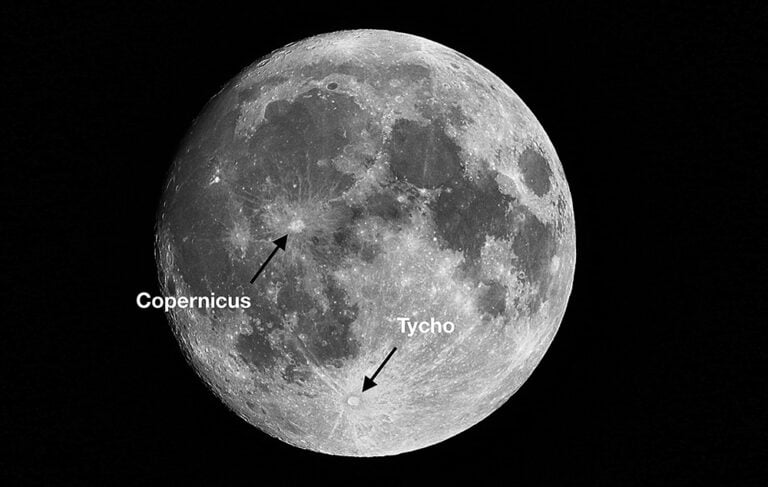
Star Watch: Naming the moon’s craters
What would you have to do to get a crater on the Moon named after you? First you would have
Fishing regulations lifted on several northern Pennsylvania lakes
The Pennsylvania Fish & Boat Commission is alerting anglers that effective immediately, a temporary change in regulations has been enacted

1 thought on “Dean Bortz: Why, or when, do our Wisconsin deer hunters squeeze the trigger?”
First year I used a cell trail camera. Other guys in the group have been using them for years. First time in 5 years we recorded 3 mature bucks that weren’t just passing through. First time in 5 years I saw a “shoot-able” buck. It was the young one we’ve been recording. Came in it at the end of shooting hours. Now my assistant (you may know him) is getting older and had to work the next day. I figured the buck needed to mature and didn’t shoot. And that was because of the cameras. You should come out to our shack sometime.