




Home » Pennsylvania » Highlights from meeting of the Pennsylvania game commissioners
Highlights from meeting of the Pennsylvania game commissioners
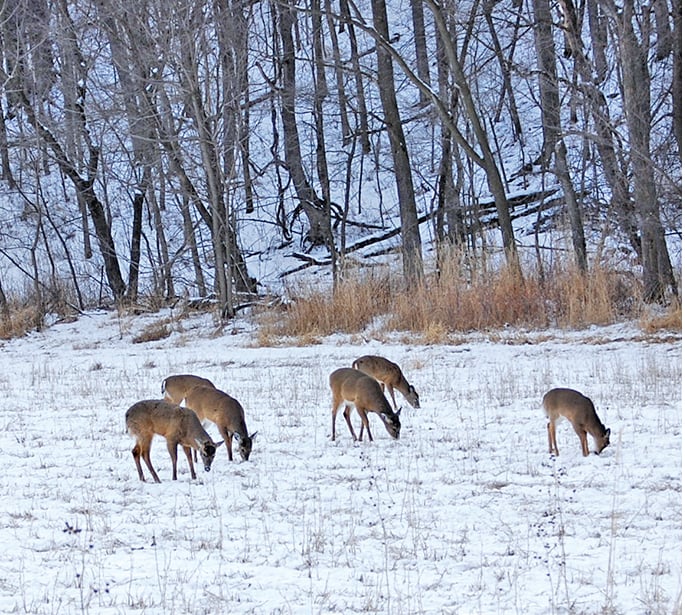
Harrisburg — Pennsylvania game commissioners at their April 11 meeting took the following actions:
Certified hunter program
The commissioners voted to adopt regulations that will guide the agency’s Certified Hunter Program, which connects hunters and landowners as a means of addressing crop-damage concerns.
The Certified Hunter Program launched last year in the Southwest Region and is expected to expand statewide.
For hunters, the program provides an opportunity to access productive hunting grounds and harvest antlerless deer to help landowners meet deer-management goals on their properties.
Participating landowners retain full control of their properties and enjoy peace of mind knowing the hunters there have met the program’s qualifications.
The regulations adopted by the Board of Commissioners establish eligibility for participants and other program parameters.
Certified Hunters will need to have held a hunting license in at least four of the past five years and pass a specialized course before being accepted into the program.
Annual background checks will be required, and any applicant convicted of recent Game and Wildlife Code violations or other crimes will be ineligible for a permit.
Certified Hunters also will be required to report their deer harvests electronically within 24 hours, unless out of service.
MORE COVERAGE FROM PENNSYLVANIA OUTDOOR NEWS:
Pennsylvania Game Commission allots 12% more doe tags
Pennsylvania Game agency OKs final 2026-27 hunting seasons
Parents charged after toddler slips into wolf area and gets hurt at Pennsylvania zoo
CWD regulations amended
The Game Commission adopted changes to regulations regarding chronic wasting disease, adjustments made to better protect the state’s white-tailed deer and simultaneously help hunters.
Hunters no longer will be prohibited from transporting harvested deer – including high-risk deer parts – between any two locations.
But hunters statewide would be required to dispose of high-risk deer parts through their commercial trash pickup, and expressly prohibited from disposing of high-risk parts on the landscape after a deer is moved from the harvest site.
Other changes include eliminating the regulatory prohibition on the use of cervid urine-based attractants in any outdoor setting – state law already was changed to make these attractants legal – and providing the commission’s executive director with the discretionary authority to establish targeted restrictions on feeding deer and other wild cervids in relation to CWD.
These changes will become final upon publication in the Pennsylvania Bulletin, which usually takes about six weeks.
Firearms Ag Tag control
The Agricultural Deer Control Program, commonly referred to as Ag Tag, not so long ago only allowed hunting during periods when other deer seasons were closed.
As crop-damage complaints escalated, however, the program was adjusted to allow hunters with Ag Tag permits to hunt and harvest antlerless deer during all established deer seasons where they hunt, better serving the program’s purpose.
During overlaps with other deer seasons, though, Ag Tag hunters previously were limited to using the sporting arms approved for those seasons.
When only archery season was open, for instance, an Ag Tag hunter needed to use lawful archery gear. That now has changed.
Game commissioners gave final approval to allowing Ag Tag hunters to use any devices authorized for hunting deer in the regular firearms deer season. That said, landowners would maintain authority to restrict the use of any devices and methods on their own lands.
The Agricultural Deer Control Program enables landowners to enlist the aid of hunters in removing deer from agricultural lands. Only antlerless deer may be taken with Ag Tags.
SE baiting regs
In the Southeast Special Regulations Area, where it’s legal for deer hunters to use bait on private land, the Game Commission adopted changes intended to make hunters more effective in harvesting deer, while simultaneously simplifying the rules.
Previously, deer hunters in the area – which takes in Bucks, Chester, Delaware, Montgomery and Philadelphia counties, as well as Tyler and Ridley Creek state parks and other publicly owned lands – were able to use bait on private or municipal property.
The bait used had to be limited to shelled corn or protein pellet supplements distributed through an approved feeder, with no two bait sites closer than 250 yards apart.
The amended regulations, adopted by commissioners, eliminate the minimum distance between bait sites, allow bait to be distributed via feeder or just placed on the ground, and expand the list of allowable bait to include apples and natural agricultural products, excluding mineral blocks and mineral supplements.
Commissioners also adopted regulations to include federal lands among those where baiting is permitted in the Southeast Special Regulations Area.
Along with those changes, hunters will have to display a tag or label including the full name and address of the landowner, or an individual authorized by the landowner to administer bait at that location, in the immediate vicinity of the bait site.
Limits on bait accumulation at any one site remain unchanged at no more than 5 gallons.
SUBSCRIBER CONTENT
Read this article now.
Create a free Outdoor News account.
Create a free account below to get instant access to this article, thousands of Outdoor News stories, and our digital editions. Your 1-month trial starts the moment you sign up.
No credit card required
No credit card required
Subscriber? Login Here.
Share on Social
- Tags: Hunting, Pennsylvania, Whitetail
Hand-Picked For You
Illinois Mixed Bag: Youth waterfowl hunts to be held in south
Duck seasons open with low counts on Illinois River
County Board member in Illinois cited in deer poaching case
Ohio’s early deer season continues torrid pace
Illinois cuffs and collars: Anglers caught fishing in restricted area
Illinois letters to the editor: It’s time to protect small game by upping bobcat harvest quota
Related Articles

Think outside the box to catch up with pressured bucks
Rustling leaves can be deceiving… another squirrel. A stick snapping signals something much heavier. The rhythm in the leaves causes
Duck seasons open with low counts on Illinois River
Mallards and other ducks have been slow to arrive on the Illinois and Mississippi rivers, with the latest aerial survey
Tom Pink: Hunting Michigan’s small game is no small endeavor
Duck season has been open for nearly a month, and normally that’s about all I’m thinking about or doing at
