




It was a cold winter’s night in 1992.
My money clip was fat. I had finally saved enough random $10 and $20 bills for a purchase I had been pondering for months. A purchase, mind you, that would transform my outdoors life.
The short backstory: Two years before, I had burned through “A River Runs Through It,” the classic novella by Norman Maclean, in less than a week.
The book left an indelible impression. It planted a seed and stoked my imagination about a different, more intriguing way to fish. After years of conventional Midwest-style fishing, I was more than ready to snub the walleye gods of my Minnesota homeland, the Land of 10,000 Lakes, sky-blue waters and tackle boxes equally fat with bottom bouncers, crankbaits and lead-head jigs.

Enter John Edstrom. At the time, Edstrom worked at Burger Brothers, an iconic outdoors retailer in the Twin Cities that would eventually become Gandar Mountain.
Today, Edstrom runs the fly shop at Cabelas in Rogers, Minn., and is a highly-respected fly-fishing guide and owner of Headwaters Fly Fishing Company. He specializes in smallmouth bass and muskies.
Thanks to Edstrom’s incisive questions and wise counsel, I left Burger Brothers that cold night with a five-weight fly rod (St. Croix), a reel (Courtland) and a fly line (Scientific Anglers). The rig set me up to fish for stream trout – my primary desire – as well as panfish and even some bass. I still use the rod today.
Years later, I’m grateful for the purchase. It’s one of several I’ve made over the years, some more expensive than others, with all having specific fishing applications. How best to proceed if you’re looking to buy a fly rod, perhaps even your first?
There is no shortage of rod manufacturers opting for your hard-earned money. And, over time, rod quality has, with a few exceptions, only improved. But even veteran anglers continue to refine their rod preferences (I can attest to that), so it’s understandable that those new to fly-fishing can find the entire purchasing process challenging, if not overwhelming.
TROUT COVERAGE FROM OUTDOOR NEWS:
Citizens groups battle to protect iconic Cumberland County trout stream in Pennsylvania
Commentary: It’s time to remove the Imperial Dam on New York’s Saranac River
Tips for timing the patterns of trout under the ice
Edstrom has sold hundreds of rods over the years. He asks individual anglers some basic questions, most notably which species (panfish, trout, bass, steelhead, muskies, etc.) do you wish to target and where you do you plan on fishing most often (streams, rivers, lakes, etc.)?
“These are essential questions to consider before making a purchase,” he said. “In doing so, you can significantly narrow your choices.”
For example, over the years, I’ve fished a lot of stream trout, from small spring creeks to big western rivers. I like a three- or four-weight rods for smaller water and larger weights (five or six) for bigger rivers, especially if I’m going to cast heavier streamers.
Generally speaking, bigger fish require bigger rods. Edstrom prefers an eight-weight for smallmouth bass, while I prefer a seven-weight stick. He likes 9-foot rods and I do too – even on smaller trout water, where some anglers prefer shorter units.
Most guides and seasoned anglers agree that a graphite six-weight, nine-foot rod is the most versatile for new anglers.
Lastly – and this is probably the biggest consideration for most anglers – how much should you spend on a new rod? You can spend a ridiculous sum on a new graphite rod from a time-honored manufacturer.
High-performance rods, as they’re often called, are expensive. A grand or more isn’t out of the question. Edstrom believes that you can purchase a quality rod – one that you can use the rest of your life, assuming you take good care of it – for roughly $200, give or take.
“Everyone talks about price – and I completely understand that,” Edstrom said. “But if you don’t know how to cast well, the most expensive rod isn’t going to help you catch fish.”
In the end, do your homework and figure out your budget. Go to your local fly shop, ask questions, and test-cast as many rod brands as possible. Check on their warranty plans, too.
Learning to fly-fish changed my angling life for the better. Perhaps it will change yours, too. Good luck.
Below are a few of several fly-rod offerings to consider.
Orvis
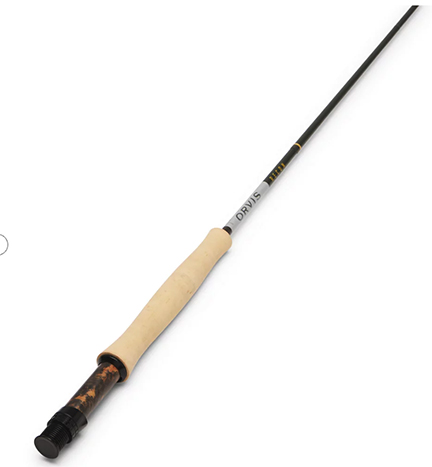
The Vermont-based rod company is a blue blood in the fishing industry.
The new Recon rod is an ideal choice for anglers seeking a super-durable, high-performance rod that shines in a wide range of fishing scenarios, said Chris Hong, associate PR director for Orvis. He said the Recon features “purpose-built tapers,” from the versatile 10-foot three weight for so-called Euro rigs and dry flies to the powerful eight-foot, nine-inch 11-weight offering for big fish in tight cover.
The new rod line has several lengths and rod weights for both saltwater and freshwater angling. All are four-piece rods with Orvis’ 25-year guarantee. Price: $698.
For more information: www.orvis.com.
Limit Creek
Jim Wernimont has been the owner of Limit Creek Fishing Rod Company since 2014. That’s when he purchased the company, which is located in Spring Valley, Minn., deep in the heart of trout country in the state’s Driftless Area.
Wernimont’s motto is simple: providing quality at an affordable price. “My goal is to provide extremely sensitive, high-quality rods that are dependable, while also being affordable enough for the average angler,” he said. “I know how much it costs to build a fly rod. I also know how much the mark-up is.”
While Limit Creek doesn’t have any new rods for 2026, it does have a wide selection for all types for angling, from trout to bass to muskie. All are four-piece rods and come with a carrying sleeve and case.
The company has several offerings, starting with an 8-foot, four-weight rod for fishing smaller spring creeks.
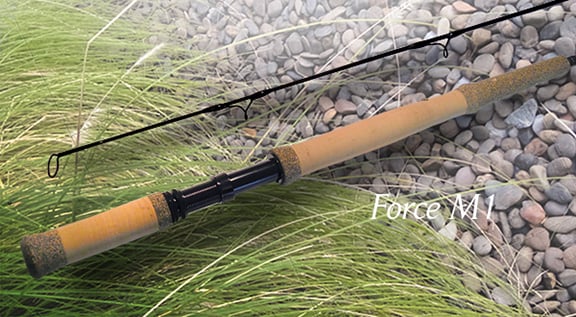
In addition to its four-, five-, six- and eight-weight rods, Limit Creek also carries a popular, specially made muskie rod – a rod, mind you, that some Midwestern guides (Edstrom included) rave about. The nine-foot Force M1 is a fast-action rod made of “carbon blended graphite.” The rod has both an extended fore and rear grip, allowing the rod to be cast one or two-handed.
“It’s a painstaking process building a muskie fly rod,” he said. “But we have come up with one that anglers really like. It’s very popular.”
For more information: www.limitcreek.com.

St. Croix
It’s a new day for St. Croix fly rods, with an old series of rod making a comeback.
The Legend Elite is a legacy series for St. Croix that went away in 2018. At the time, it was the company’s highest-priced premium fly rod.
“When we brought it back late last year, our goal was to offer fly anglers the best-possible rod in the ultra-popular and competitive $500-$700 retail range,” said Josh Lantz, corporate communications manager for St. Croix. “It’s the best Legend Elite ever…and we believe anglers will love it.”
Lantz said the new Legend Elite employs St. Croix’s top rod technologies to make the rod’s action “smoother and stronger without added material and weight.”
There are twelve fast-action models in the new series, from a 7’9 three weight to a 10-foot eight-weight. The series, which includes three different handle designs, is made in Park Falls, Wisconsin. It comes with an aluminum tube, rod sock and St. Croix’s 15-year transferrable warranty.
For more information: www.stcroixfly.com.
Sage
Sage has been a fixture in fly-fishing circles for decades. Its rods are synonymous with performance – and, at least for me, casting small dry flies to ravenously feeding trout.
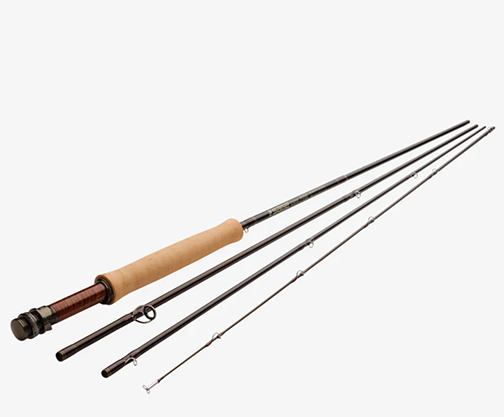
The new Sage Classic R8 is another performance dry-fly rod to consider. In fact, it was awarded the best new freshwater fly rod by Fly Fisherman magazine, as reviewed for its 2026 gear guide.
From the review: “The moderate action and very specific performance parameters of accuracy, range, and pace coincide perfectly with dry-fly fishing for trout. Sage used its Revolution 8 graphite material to create a deep-loading rod with a great amount of feel and feed-back while casting and fighting fish.”
The rods come in weights three through six with seven models in lengths eight through nine feet. Price: $1,100.
For more information: https://farbank.com/pages/sage.
H2Ohio wetland to benefit St. Marys
As part of Ohio Gov. Mike DeWine’s H2Ohio Initiative, the Ohio DNR (ODNR) and the city of St. Marys held
USFWS announces new duck season framework process
The Department of the Interior recently announced that the U.S. Fish and Wildlife Service (USFWS) is finalizing a streamlined process
Making sense of this year’s waterfowl report for Ohio hunters
For some duck hunters, the early September U.S. Fish and Wildlife Service (USFWS) annual fall waterfowl flight forecast is an
