




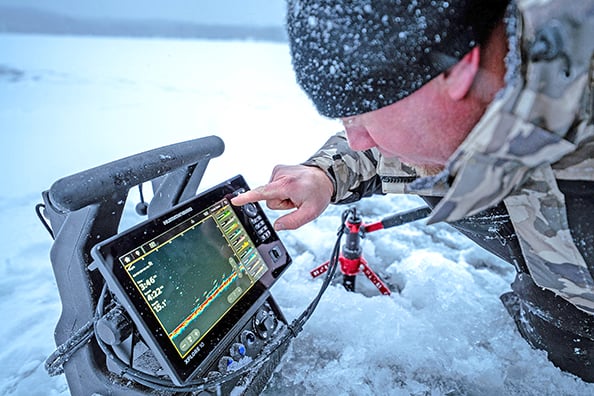
Buying your first forward-facing sonar can be a bit intimidating and expensive. All brands have their version, but what should a person consider beyond where their electronic loyalties reside regardless if it’s Humminbird, Garmin or Lowrance?
Tom Huynh, of Wolverton, Minn., has dominated walleye tournaments the past few years with almost Jedi-like use of FFS stacking up win-after-win. Fellow FFS wizard Brad Hawthorne has been a guide for 25 years on Minnesota’s Mille Lacs, and uses the technology for fun and his clients.
An angler can spend $3,000 for a modest unit and the FFS transducer, but everyone knows that anglers like to upgrade their electronics often. So, why not save money and buy a barely used model from someone upgrading?
“I know money is a factor, and technology can be expensive,” Huynh said. “From my experience with a lot of other anglers across the country, I would say go with the most current technology because most people who go with previous models end up upgrading soon after anyway because they aren’t getting the quality they see being advertised.”
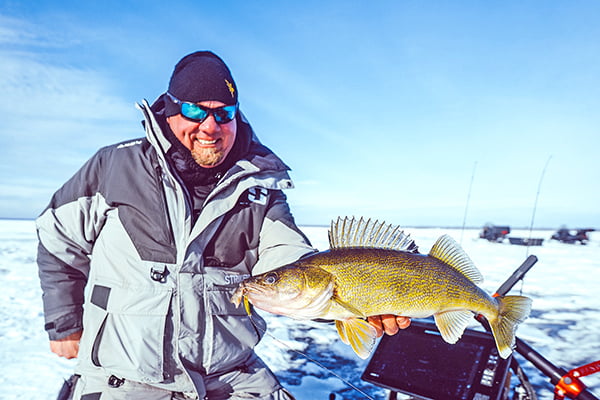
Hawthorne, who runs Humminbirds, agreed that the most current generation of FFS is the technology to own, but also encourages used options.
“It depends on the price,” he said. “If you can get into a unit at a good deal and you can flip it a year later and not lose much money, go for it. An angler will want to upgrade to the newest model when its financially possible but if all you can afford is a unit a couple years old it is better than not having FFS at all.”
ICE FISHING COVERAGE FROM OUTDOOR NEWS:
Examining the finer details of tip-up fishing
Patrick Durkin: Homely, but tasty, burbot gaining respect
Jeremy Smith: Perch action thriving again this winter on Minnesota’s Lake Mille Lacs
One thing anglers must consider is the power needed to run FFS units. You can’t have one without the other and expect the results you see on TV shows. Hawthorne said pure power is 100% a must when using FFS units.
“Never, ever consider using FFS without dedicated power,” he said. “I always go heavier on the gauge of wire that is suggested when rigging a boat for FFS. I don’t use the standard wiring of the boat. Having dedicated power also is great because it helps a person troubleshoot quickly if a problem occurs.”
Anglers also need to know that some FFS units continue to draw power even when the units are turned off – so dedicated power switches directly to your FFS wiring are a good thing to consider, although Huynh said his Garmins do not require the extra switch.
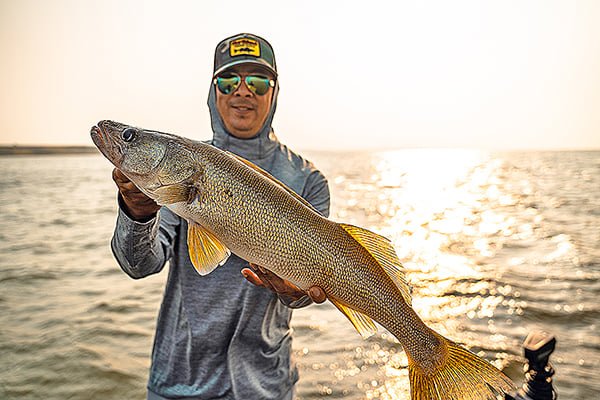
Both anglers prefer mounting their transducer on the trolling motor instead of running it on a bracket of some type that mounts to the side of the boat.
“I use the Garmin factory mount that comes with their Livescope transducer,” Huynh said. “I have never used an aftermarket mount and done just fine. The engineers who created this tech are brilliant. Use what they designed.”
Hawthorne prefers a trolling motor mount despite some people arguing that such mounts can be a problem when running Spot Lock in terms of not being able to scan as well when on Spot Lock versus having a bracket on the side to manually direct.
“No way,” he said. “The people who make the most out of FFS have the transducers mounted to the trolling motor. If you are on Spot Lock and the boat is swinging a bit, you can still use that to your benefit and keep scanning. As long as you are good with boat control and know how to address current, mount it on the trolling motor. I do, however, have a unit mounted on a pole in the back of my boat because my clients like to watch their own FFS from the back of the boat.”
Hawthorne said that ice anglers should consider the hard-water, too, when buying a first unit. Shuttle bundles are great ideas, he said.
“They have dedicated power.
Nothing really to worry about. You can buy a bundle and in 15 minutes you take the transducer from your bundle and with just a couple turns of a hex bolt, mount it on your boat’s trolling motor and exchange the head units out. I do see people running the ice bundles right off their boat, too. While I like the transducer on my trolling motor, the ice bundle lets them have very user-friendly options, with dedicated power, and a pole mount of some sort on the side.”
Huynh has similar advice for ice anglers.
“Make sure to get a shuttle that is easy to transport on and off the boat,” he said. “My preference would be to disassemble the ice bundle and mount the equipment to the boat for open water. It is just less bulky that way, however, not necessary at all.”
Everyone wants a bigger screen, but what’s the minimum these guys would recommend? For boat use, Huynh starts with a 12-inch screen.
“For ice, maybe a 10-inch. In my experience, people who go with a 9- or 10-inch will soon upgrade to a 12, so it’s best to save up and buy the largest screen you can,” he said.
Hawthorne said he agreed that buying the largest screen is best. Most guys who buy a 9-inch unit for FFS will be wanting a 12-inch by the end of the year.
“I get that a 12-inch unit is big for ice, but you will want that size once you get to know your FFS and you mount it on the boat,” he said.

Pennsylvania Mixed Bag: Docks removed early at Lake Wallenpaupack
The Pennsylvania Fish & Boat Commission recently announced that public boat docks at the Mangan Cove Access on Lake Wallenpaupack,
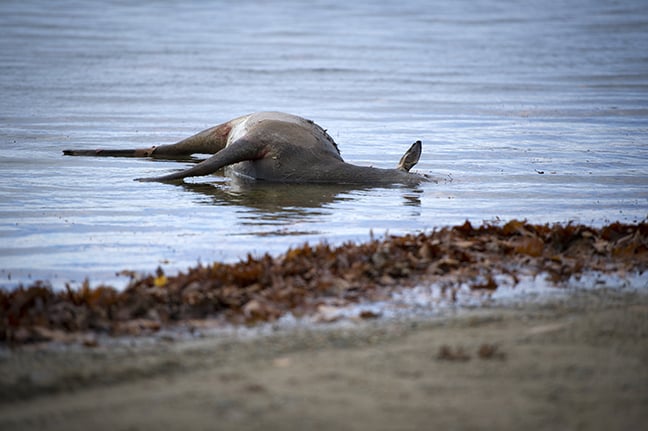
EHD in Michigan’s deer herd concentrated to four counties so far
The Michigan DNR has confirmed epizootic hemorrhagic disease in four counties so far in 2026, with plenty more tests pending
Dan Small Outdoors Radio: Show 2138
Indiana hunter scores a huge black bear in northern Wisconsin. Jeff heads to Cass Lake, Minn. for a Masters Walleye
