




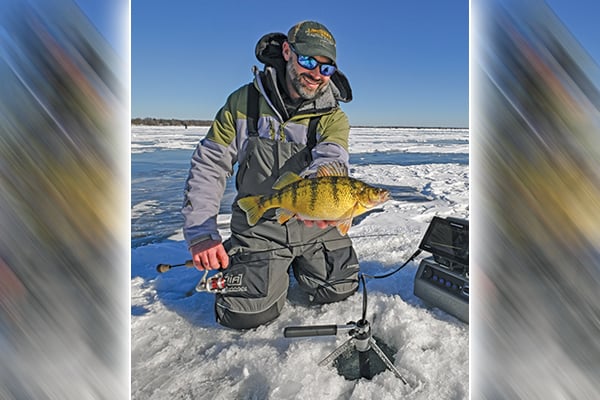
Perch are important species across the Ice Belt.
Not only are they one of the main forage species for a number of larger fish species, but their economic impact also is huge in comparison to many other game fish. Anglers, particularly those of the ice-fishing variety, will travel far and wide in search of a good perch bite. Look at the Dakotas, for example. The yellow perch populations have been a huge draw there for many decades.
 Minnesota anglers who lived through the 1980s, ’90s, and early 2000s probably can recall the incredible perch bites that occurred on lakes such as Winnibigoshish, Leech, and Mille Lacs. Anglers visited these areas by the thousands in search of perch. Many of them left with buckets of jumbos spilling over the brim.
Unfortunately, many of these premier perch fisheries have fallen off the radar – that is, until recently. Lake Mille Lacs is Exhibit A. The lake was an incredible destination for years, but there essentially was a void in fishable perch populations for the better part of a decade or more. Many of the locals knew what was brewing under the surface, then last year, things officially bubbled over the top.
The Mille Lacs area saw a spike in human population for much of the winter, simply due to the incredible perch bite.
While the populations are healthy, setting out in search of these tiger-striped specimens can still be a daunting task. Generally speaking, the perch of Mille Lacs are found primarily roaming the soft-bottom basins of Minnesota’s second-largest inland lake. Those familiar with the 132,000-plus-acre body of water know exactly how much water that can be.
MORE ICE FISHING COVERAGE FROM OUTDOOR NEWS:
How to crack January’s mid-season walleye code
Tricks from days gone by still put pike on the ice
Listen to the ice and prioritize these winter fishing tips to stay safe
An angler could certainly find some perch with traditional sonar, but there’s no question that the introduction of forward-facing sonar has changed the game. It’s still not a “gimme,” but these tools drastically have increased the ability to find perch.
The best approach is to cut and scan until you locate perch. It’s important to note that there are a lot of walleyes and ciscoes in these areas as well, so it’s important to scan slowly and focus on finding schools of perch. Make large moves initially, but once you find areas with perch, shorter moves are necessary.
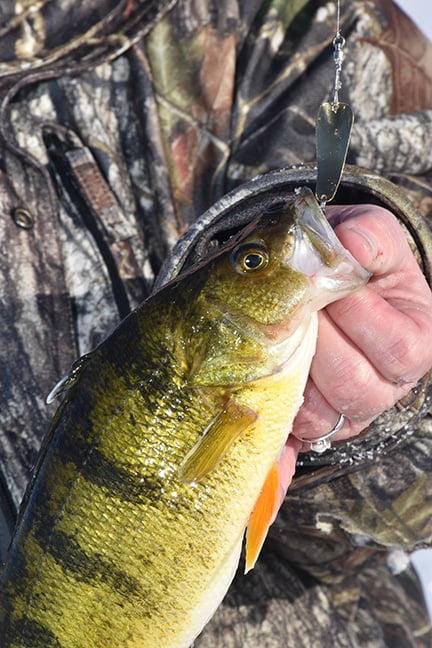
Perch anglers on Mille Lacs generally subscribe to one of two different methods: run and gun or sit and fish. The choice fully depends on the day and mood of the fish. If jumbos are on your agenda, you’ll want to be prepared to fish fast and aggressively, as well as slowly and methodically. Consider their mood, because sometimes they’re super aggressive and sometimes they’re downright finicky.
On the aggressive side of things, it’s hard to beat baits that sink fast and fish fast. Take the VMC Tungsten Torpedo Spoon (affiliate link) for example. While it doesn’t have much action, it’s the best bait-delivery system because it gets down so quickly. Another great option is the Rapala Jigging Rap (affiliate link); it sinks fast and can be fished sans bait.
When it comes to more finesse options, a small tungsten jig tipped with meat is a top option. Beef up your hooks by loading them with wax worms or spikes.
In terms of rods, my personal favorite for these applications is the St. Croix Rods Perch Seeker. It’s tailor-made for these situations – stout enough to fish a range of baits, yet soft enough to detect the lightest of bites.
After quite the hiatus, Mille Lacs perch are back. Populations are in good shape, but don’t expect it to be easy. You’ll need to put in some work, employ the right tools, and be prepared to fish in a variety of ways.
A friendly reminder to not over-exploit these resources, as we don’t want history to repeat itself. The DNR implemented a winter 2025-26 daily limit of 10 perch on Mille Lacs. That’s down from the statewide limit of 20 but higher than the emergency limit the state placed on the late last winter of five.
Pennsylvania’s hunting license sales down so far this year
Hunting license sales are down nearly 4.5% at the end of August, although Pennsylvania Game Commission officials believe there is
Origin of road-killed armadillo in southwest Ohio a mystery
An armadillo found as roadkill in southwest Ohio has researchers scratching their collective heads wondering from where the non-native mammal

Bowhunt gets started in Ohio with additional opportunity in CWD surveillance area
Hunters in Ohio’s chronic wasting disease (CWD) surveillance area have additional dates this season to pursue white-tailed deer. The Ohio
