





Michigan has a long history of creating rules and regulations designed to increase opportunities for hunters, anglers, and other outdoor lovers.
Most recently, the Michigan Natural Resources Commission expanded the places where underwater spearfishing for walleyes, northern pike, and lake trout will be allowed. Good for them! Michigan has often been the leader when it comes to fish and game regulations and now they are showing the way by promoting participation in this little-known fishing adventure.
 Only about half of the states allow underwater spearfishing at all. Why not more? I’m sure there are several reasons. Many, I suppose, have never had much demand for it. Scuba diving and snorkeling are “background” recreational activities in most inland states and only a portion of the participants of scuba or free-diving want to spear any fish while they are underwater.
Those states that do allow underwater spearfishing mostly restrict it to spearing “rough” fish – usually carp, suckers and others. Catfish? Some places yes, some no. Hardly any states allow spearing or arrowing what most people call game fish – the ones anglers like to angle for and the ones most people enjoy eating. Again, why not?
Perhaps the rule-setters think spearfishing is unsporting or too easy. There could be places where spearfishing would be like shooting fish in a barrel. When I’m fishing with conventional tackle, I like to cast a lure into those “fish in a barrel” hotspots. Would spearfishing there be too easy?
I don’t think so, but what do I know. I’ve only done it once and that was on a saltwater reef teeming with fish.
Most fish swam away out of range. Some turned to look at me presenting a tiny target. I barely speared enough for lunch.
MORE COVERAGE FROM MICHIGAN OUTDOOR NEWS:
Michigan’s Mark Sak heading into Fishing Hall of Fame
Michigan’s Upper Peninsula bear take is above goal
Perhaps the rule-setters think spearfishing would lead to overharvest of game species. Really? There are hundreds of thousands of conventional tackle anglers in most of the states that allow spearfishing (over 800,000 in Michigan.)
Most spearfishing-legal states don’t require a special permit. Michigan does, allowing the DNR to track effort and success. In the past few years, fewer than 5,000 underwater spearfishing permits have been issued each year. How many fish are a few thousand spearfishers going to harvest compared to hundreds of thousands of boat and bank anglers? Not many.
Spearfishers have been required to report their efforts since 2022 when they were first allowed to target walleye, northern pike and lake trout and report how many of these game fish they harvested.
What’s your guess of the total harvest?
In the first three years an average of 430 walleyes per season were speared, 19 northern pike, and five lake trout.
Most days, most spearfishers go home empty handed.
RELATED STORY FROM OUTDOOR NEWS:
Wisconsin’s Brett Leable spreading word on free-dive fish spearing
From 2022 to 2025 spearfishing has been allowed in Lake Huron from the mouth of the St. Clair River to the south pier of the Thunder Bay River. In Lake Michigan it’s been allowed from Grand Haven south to the Michigan/Indiana state line. There are closed areas in these zones, most notably within 150 feet of designated swimming areas, boat docks, boat access sites and other areas.
Weather regulates spearfishing activity much more than it does conventional tackle fishing. Even if spearfisher-folks fished as much as anglers, and if they were able to harvest a limit every time they fished, the spearfishing harvest would be insignificant.
Realistically, most spearfishing participants targeting lakers, walleyes or northern pike consider getting one fish a good outing. A conventional angler can choose to release a fish caught with a hook or lure if it’s undersized or they just don’t elect to keep it.
There’s no catch-and-release with spearfishing. Being skewered by a spear is a death sentence for a fish. Doesn’t that make it different? Certainly, but remember, a conventional angler has little control over what species of fish bites his hook or the size of the fish.
Spearfishing participants have to be able to see the fish in order to spear it. They can pass on unwanted fish, fish illegal to harvest, or fish of certain sizes, just as hunter can choose to not shoot if they encounter an animal not legal to harvest or not up to their personal standards.
The NRC voted to expand underwater spear fishing beginning in April of 2026 to include Lake Superior and Lake Erie. Good for them!
The Michigan DNR’s 2026 Fishing Guide and the DNR’s eRegulation website will detail these changes and other pertinent information long before the spearfishing season opens.

Iowa’s upland wildlife researcher Todd Bogenschutz receives career award
National group recognizes his uplands work
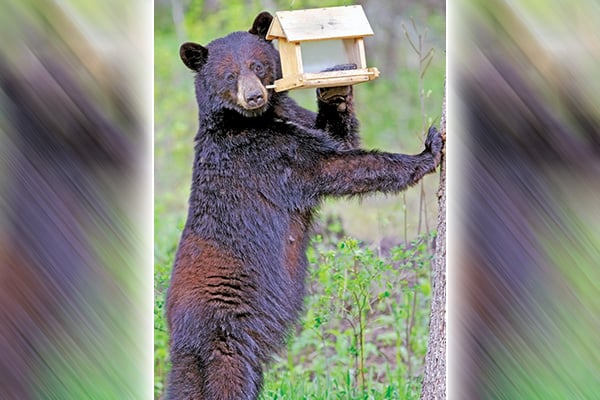
Minnesota man defending his dog from black bear attack sustains minor injuries
A bear attack occurred the morning of Oct. 5 in Solway Township, Minn., after a man confronted it for attacking

Minnesota Mixed Bag: Zebra mussels confirmed in Traverse, two other state lakes
The Minnesota DNR has confirmed the presence of zebra mussels in Traverse Lake, near Browns Valley in Traverse County.

3 thoughts on “Mike Schoonveld: Game fish spearing expanded in Michigan… Hooray!”
Mike, as always you bring up good food for thought however there is one point that you skirted over. Namely the “They can pass on unwanted fish, fish illegal to harvest, or fish of certain sizes, just as hunter can choose to not shoot if they encounter an animal not legal to harvest or not up to their personal standards.”
It has been my contention in the spearing discussion that spearfishing does not provide an accurate measurement of a fish being targeted. As we all know, the scrutiny that hook and line anglers are under in slot or minimum size requirement body of water is that of “zero tolerance” Meaning your either in the slot or over the minimum… Period. with no way to accurately say what is a 25″ vs even a 26″ walleye (if 25″ is the slot) the spearfishing odds of killing an illegal slot fish are massive.
The situation that we need to ponder was brought to my attention several years ago in a SD fishery. We were trolling a sunken tree stand break line and catching good fish. The next day the spearfishing guys moved into the area and basically prevented us from fishing it as their marker floats warning of divers were all over the same break we had fished. There was no way to come even close to the same spot so we had to go elsewhere. Do any of us own the water…no, but as hook and line anglers we can fish together and make things work. Not so on the spearfishing route.
With that I say, the slots are finite and not negotiable, and as you said, the spot is catch and kill, what then is the recourse for those that are taken illegally (under or out of slot). When coexisting is not possible, meaning -where there are divers, anglers cannot fish the area, what does the public opinion say, regardless of how small the participation numbers are.
Lastly, Walleye in the Midwest is a prized game fish and can have heated discussions in harvest, methodology (1 or 2 lines) and slots. Would expansion of this sport not even further complicate the optics regardless of the (as mentioned before) participation?
Food for thought and as always keep up the great work!
Eric Olson
The Valley Outdoors Radio
Thanks for your comment on this article. When I write a column such as this, I hope it makes readers “think” about the laws and restrictions they deal with and perhaps shed a bit of light on the thought processes (or lack of them) when it comes to regulatory agencies setting the rules.
So far, in all the time I’ve spent fishing on Michgan’s Great Lakes (or in other states on the Great Lakes, I’ve only encountered diver-down flags a very few times. I doubt any of these were spearfishing.
I’ve fished in SD both on the Missouri Reservoirs and the NE pothole lakes. I’ve also hunted extensively on public lands in SD and elsewhere. Often, it’s the early-bird that gets the worm, or in this case the fishing spot. When I’d find a group of hunters in the area where I wanted to hunt, I would move to another spot, just as you did on the walleye fishing spot.
Michigan spearfishing is restricted to Great Lakes, which almost guarantees there will always be another spot available.
With the low success rate, I doubt hook and line angler and spearfisher conflicts will be very rare.
As far as size limits, while I wouldn’t condone removing the size limit on Walleyes to accomodate spearfishers, I would guess they would try to avoid sublegal sized walleyes, period. (I don’t like hooking undersized fish and often toss back “barely” keepers hoping for something larger will come along.
To my knowledge there is currently no slot limits so mistaking a 25-incher for a 26-incher isn’t an issue.
Again, thanks for reading and commenting. I’m glad I got you thinking enough to be concerned.
Mike Schoonveld
I meant Hook anglers and spearfisher conflicts will be very rare or uncommon.
MikeS