





Outdoor News may earn revenue from products shown on this page by participating in affiliate programs. Click here to learn more.
The weedless spoon is a beautiful classic, yet its simple, engaging luster shines much brighter than a mere show-only, mothballed antique. The single-hooked, plated metal lure stirs in me some thrilling memories and warm, nostalgic thoughts when gazed upon and knotted to a line.
My aunt introduced them to me, doling out a few Johnson Silver Minnows to her rookie nephew for catching redfish in the tidal rivers of South Carolina, 30-some years ago. I quickly became a weedless spoon fan, and its magic easily translated to freshwater fish in Pennsylvania.
By then, Louis Johnson’s masterpiece had legions of fans spanning several generations.

A lure maintains a following for over a 100 years, not due to slick marketing or fashion, but because it catches fish. The weedless spoon currently ranks among my most productive baits for the pot-bellied largemouths of early spring.
Just last April, for instance, from the weed-choked bays of Yellow Creek Lake, that century-old creation of a retired foundry worker brought to net my heaviest daily tally of the season.
The weedless spoon was designed for and remains most productive amid aquatic vegetation, especially in shallow water. That is precisely where largemouth sows are voraciously feeding and preparing to spawn in waters around the commonwealth.
Typically, as water temperatures settle into the 50s, the big bass of early spring are found in water less than 3-feet deep, surrounding their bulk within the stalks and leaves of submerged vegetation whether in tiny waters like (Little) Keystone Lake or larger reservoirs, such as Lake Arthur and Pymatuning.
Find a lake with a quality largemouth bass population along with shallow, weedy bays and flats, and there a weedless spoon will shine.
A ½- to ¾-ounce silver or gold spoon and trailer, tied to heavy line, spooled on a baitcasting outfit is my early spring bassing standard.
MORE FISHING FEATURES FROM OUTDOOR NEWS:
New York stripers on the fly just what the doctor ordered
James Lindner: Catfish and whitefish are great options on late ice
Glenn Sapir: There was something special about a New York trout opener

Today’s weedless spoon-fishermen combine the vintage lure with modern refinements: present-day rods and reels assist in casting and desired retrieval speeds; endless line options, such as braid usage in vegetation, and spoon pairings with soft plastics lift this classic to another level.
In mentioning the wonderful blend of old with new, I must say the DIYers of YouTube display some extremely clever methods for attaching plastic trailers to weedless spoons, definitely videos worth watching for game-changing techniques.
Soft plastic trailers such as grubs and jerkbait-bodies partner perfectly with weedless spoons. When the weather is stable, bay temperatures rising, and bays seem teeming with life, a single-tail grub in pearl completes my favorite pairing.
This tandem covers water, though lazily, tickling a bass’s instinctive trigger to engulf an easy meal. Even at slow speed or paused descent, the ribbon-tail grub flails provokingly and prevents the spoon from sinking too quickly. Glimmering and slithering its way through vegetation, this combination grabs nearby feeding bass.
While those warm, sunny days of spring activate bass, early-season anglers realize the Keystone State has its share of unpleasant weather. Sometimes, even seemingly ideal days have largemouths surprisingly sluggish. Now, the spoon shows another facet of its charm, perhaps the most useful for fickle vernal weather: it elicits a superb reaction-type bite.

For this, the trailer needs bulked up a bit and I tend to choose a black or dark-colored spoon, rather than the Yukon Cornelius-standards of silver and gold.
A chunky, single-tail grub in green pumpkin or brown is my favorite trailer for this style. Double-tail grubs are a solid choice too, specifically around shorelines, since frogs and toads are stacked around bays trilling their spring songs.
Of course, there are many retrieval variations for reaction-bite fishing, but nearly all employ pauses or complete stops and abrupt re-starts. I have caught an unusual percentage of largemouth bass in early spring on the cast – the initial fall of the spoon. This seems to be pure reaction by a bass that has been surprised or disturbed by something that fits in its mouth.
Otherwise, I generally try to elicit that wild reaction throughout the retrieve: reel the spoon a few feet, let it fall. Then, snap it up, reel a few more feet, stop it to weakly wobble downward again, rip it up, etc.

The retrieve that tends to be most successful is that sort of yo-yo style, whether reeling and stopping or more of a jigging motion, merely using the rod to pull the spoon up and forward while proportionally winding in slack line.
A spoon retrieved in a steady, swimming motion usually gets whacked like a spinnerbait, not much subtlety to it. More obvious when yo-yoing a spoon back to the boat, bass will often explode on an ascending lure near the surface (fairly common in skinny water), which is a mega-adrenaline rush and battle between the brain and muscles to refrain from setting the hook until the weight of the bass is felt.
However, detecting bites on a paused or descending spoon can be quite difficult. Extra attention needs to be paid to line movement and any sort of quick bump or tick felt. Early spring biters are tentative at times, but set the hook on those dubious takes, as they’ll sometimes turn into 5-pounders.
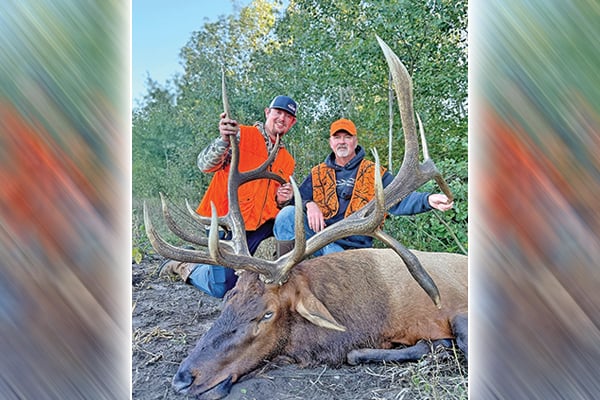
Minnesota’s 2026 elk harvest reaches nearly half of allocated tags during early season
As the first half of the elk season winds down in northwestern Minnesota, nearly half the tags have been filled

Upper Herring Lake offers western Michigan bass anglers a legitimate fall option
Bass can be widely distributed through the vegetation, but cooling water often triggers more active feeding.
Michigan’s Outdoor Calendar
A look at upcoming outdoor-related events from across Michigan published in the Sept. 25, 2026 edition of Outdoor News.
