




Home » Home Page News » Lake Erie lake trout reintroduction well underway
Lake Erie lake trout reintroduction well underway
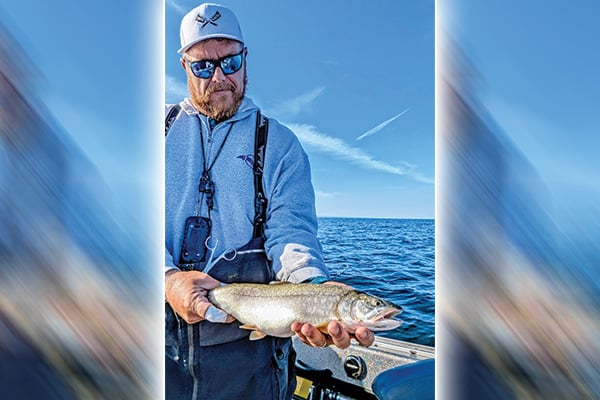
Sandusky, Ohio — Upper Midwesterners understand better than anyone else how the Great Lakes are both big and old. I mean really, really big and equally really, really old.
The Great Lakes were filled some 11,000 years ago and hold an estimated six quadrillion gallons of water. That’s about one-fifth of the world’s fresh surface water supply and nine-tenths of the U.S. supply, according to the Great Lakes Fisheries Commission.
At its retreat, those 11 millenniums ago the waters filled with all kinds of fishes, which were very fruitful and multiplied. In Lake Erie alone, there were/are, perhaps about 140 species, among them being the lake trout.
While Indigenous peoples utilized lakers, the two co-existed. That all changed in 1815 when commercial fishing began on Lake Erie, according to a 1970 U.S. Fish and Wildlife Service document.
Then in 1850, Lake Erie commercial fishing expanded beyond being a near shore enterprise. Not quite 25 years later the Province of Ontario’s commercial take for lake trout alone was 171,000 pounds. By 1885, the figure was 107,700 pounds by all entities, not just Ontario.
MORE COVERAGE FROM OHIO OUTDOOR NEWS:
Ohio group gets backing of senator in elk reintroduction
Division of Wildlife, Ducks Unlimited celebrate Ohio waterfowling
Ohio Insider: Training kicks in for wildlife officer Jesse Janosik in life-saving incident
However, in 1899 – just 84 years after commercial fishing began on Lake Erie – the lake-wide harvest of lake trout plummeted to just 32,324 pounds.
“After that,” the service’s document reads, “the lake trout was of little or no importance in the commercial fisheries…” while by 1930, “Few, if any, (lake trout) were seen or positively identified…”
This disappearance held sway for around 54 years when something of a haphazard effort was made to restore lake trout to Lake Erie. The task was daunting, complicated by several factors, said Travis Hartman, Lake Erie Fisheries Administrator with the Ohio Division of Wildlife.
Hartman said environmental factors led to the degradation of the trout’s traditional near-shore spawning grounds along with over-harvesting by commercial fishing interests.
Equally meaningful, if not more so, said Hartman, was the invasion of the sea lamprey, which was able to evade the insurmountable Niagara Falls via the 27-mile-long Welland Canal. The canal’s fourth incarnation was completed in 1932 – or about the same time the lake trout “all but disappeared.”
Since the commercial fisheries imploded and killed itself, it likewise took a few generations to improve Lake Erie’s water quality. The sea lamprey thing was more complicated since the invasive species whacked the native stock of lake trout.
Launched from modest beginnings, a 12-year plan took shape in 2008. This was followed by the current 10-year plan that kick-started in 2020. Now, fisheries managers in Ohio, Pennsylvania, New York, Ontario, and their respective national/federal counterparts have forged a recovery plan that is beginning to genuinely bear fruit, Hartman said.
“Things were different a century ago,” Hartman said, noting that environmental conditions are not the same and which has required a look for fish elsewhere.
Such outside-the-box genetics are not unusual in rehabilitating a once lost species. Ohio’s wild turkey strain largely came from Missouri while its river otter origins are transplants, are but two terrestrial examples. The same is true for fish.
So why not lake trout?
As Hartman puts it: “Every stocking situation is unique.” Enough so that fisheries scientists began trolling on their own, looking for a lake trout strain that would work in Lake Erie.
“By far, the best results we’ve found are fish that come from (New York’s) Finger Lakes. We don’t fully understand the mechanisms, but this strain appears to be less susceptible to predation by sea lampreys, and offers the best opportunity for successful recovery,” Hartman said
So, eggs are stripped from lake trout captured in the Finger Lakes and then transported to the U.S. Fish and Wildlife Service’s fish hatchery located below Pennsylvania’s Kinzua Dam on the Allegheny River at Warren, Pa. From this federal hatchery comes the lake trout that will go to Ohio, Pennsylvania, and New York, Hartman said.
“We use a rotation program of 80,000 or 120,000 fish, and in 2023 we used the larger figure,” Hartman said.
Hartman notes, too, that the total lake-wide stocking in U.S. waters is about 250,000 fish ranging in size from 6 to 8 inches. Plus, Ontario stocks about 80,000 lake trout. In all, on the U.S. side of Lake Erie, stockings are conducted in Ohio at Fairport Harbor, at Erie in Pennsylvania, and at Dunkirk in New York.
“We tried at Catawba once, but we weren’t seeing any results,” Hartman said.
And those results are measurable since fingerlings are fitted with microscopic wire tags. The results for Ohio – and elsewhere – have proven encouraging, said Hartman.
“During a 2023 November gillnet survey for whitefish off Fairport Harbor, the U.S. (Geological Survey) found that 97 of the 100 lake trout it incidentally caught originated from Fairport,” Hartman said.
Even more affirming was that also beginning in 2021, New York’s Department of Environmental Conservation has netted lake trout fry, a sure sign of natural reproduction. Furthermore, increasing numbers of adult lake trout – those fish aged five years and older – are being seen, scientists are saying.
So while stakeholders would prefer seeing more success, Hartman said, the ongoing agenda remains “a low-cost, valuable program” where abandonment is a nonstarter and one in which “everyone wants to be a contributor.”
“Lake trout are a native, Lake Erie heritage species, and I really do believe that anglers are once again beginning to understand just how great the fisheries can be,” Hartman said.
SUBSCRIBER CONTENT
Read this article now.
Create a free Outdoor News account.
Create a free account below to get instant access to this article, thousands of Outdoor News stories, and our digital editions. Your 1-month trial starts the moment you sign up.
No credit card required
No credit card required
Subscriber? Login Here.
Share on Social
Hand-Picked For You
Confirmed cougar makes an even dozen sightings over 25 years
Illinois bow season opens Oct. 1 with few changes
Illinois’ statewide fishing report on Sept. 25, 2026
Dan Small Outdoors Radio: Show 2139
Fish passage project in New York helps Great Lakes emerald shiners
Mixed conditions, but more ducks greet Minnesota’s opener this Saturday
Related Articles
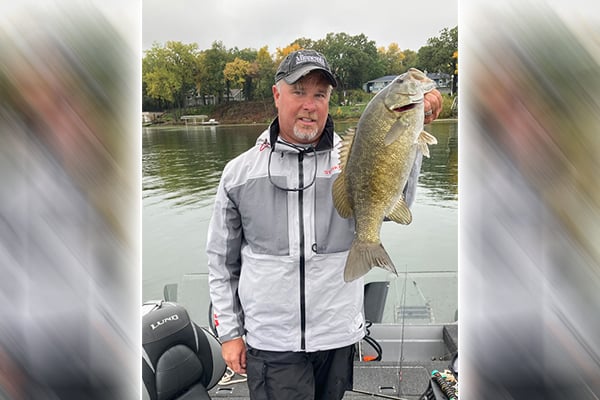
Three tactics to take advantage of this early fall smallmouth bite
It is that special time of the fishing season when summer and fall merge. There’s give and take, compromise, and
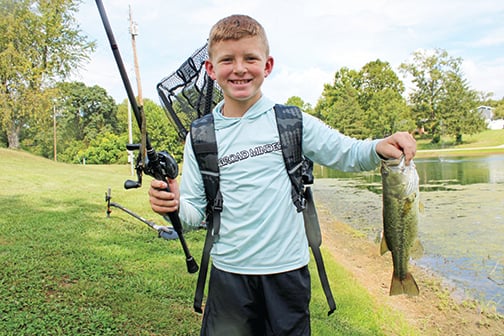
A ‘Bronx’ tale from a memorable day fishing
“Bronx is eaten up with fishing! You should come see for yourself.” My brother, Curt, was not describing the angling
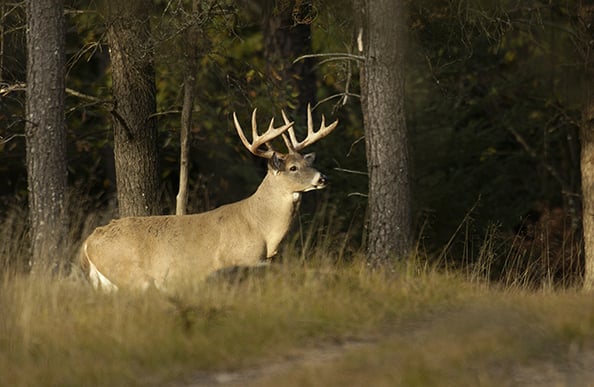
Wisconsin DNR reviews CWD, EHD situations as fall hunting seasons get going
The Wisconsin Natural Resources Board (NRB) received updates on the two biggest white-tailed deer health concerns – chronic wasting disease
