Thursday, November 13th, 2025

Breaking News for

Sportsmen Since 1968

Search
Thursday, November 13th, 2025

Breaking News for

Sportsmen Since 1968

Wisconsin DNR confirms EHD in Jackson, Chippewa, Waukesha counties

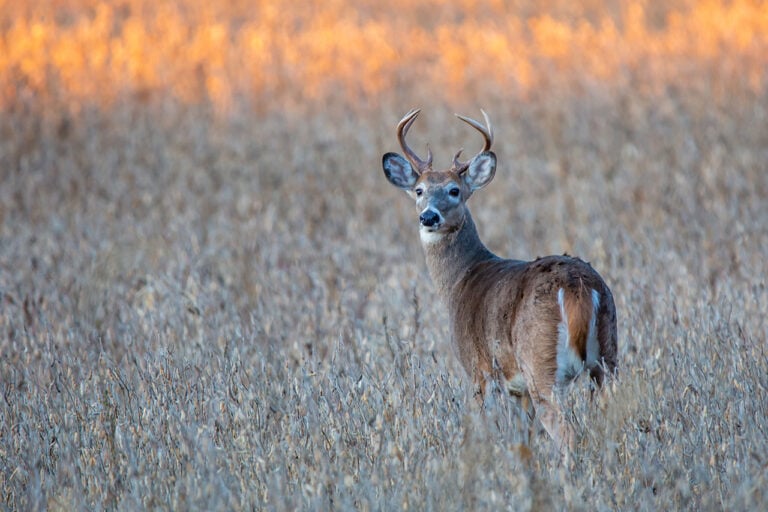
The dreaded epizootic hemorrhagic disease (EHD) has been confirmed in three Wisconsin counties – Chippewa, Jackson, and Waukesha – through reports from landowners. EHD was last seen in Wisconsin in 2021. (Stock photo) 

Madison — The Wisconsin Department of Natural Resources (DNR) confirmed that tissue samples collected from one deer in Chippewa County, two deer in Jackson County and one deer in Waukesha County have tested positive for the virus that causes epizootic hemorrhagic disease (EHD).

The disease was detected after landowners reported healthy-looking, dead deer near ponds on their properties. The DNR is investigating similar reports in additional counties.

The virus that causes EHD is spread between deer by midges, which are small flies also known as biting gnats or no-see-ums. The virus does not infect humans, even if a person handles infected deer, eats venison from infected deer or is bitten by infected midges.

Clinical signs of EHD in deer often include excessive salivation, foaming around the nose and mouth, and appearing weak or approachable by humans. Carcasses found in or near water sources also may be a sign, as infected deer will often lay in water to cool down or drink.

MORE COVERAGE FROM WISCONSIN OUTDOOR NEWS:

Wisconsin DNR says recent wolf incidents involving encounters with people not part of a trend

Wisconsin’s Washburn County bear hunter loses three dogs to wolves

Decision on a possible sandhill crane hunting season in Wisconsin due Nov. 13

Report sick, dead deer

Anyone who observes a deer that appears to be displaying clinical signs of EHD or is found dead in or near water is encouraged to contact the DNR quickly. To report a sick or dead deer, email dnrwildlifewwitchboard@wisconsin.gov or call (608) 267-0866. Callers must leave a message for wildlife management staff to return the call. Reports of sick or dead deer are important to gaining a better understanding of the disease.

If reporting a suspected case, callers should provide details about the number of deer, the body condition of the deer/carcass(es), the exact location (including the county) and contact information. Cases where EHD is suspected may be investigated, and fresh samples will need to be collected within a day or two of death in order to detect the virus. The DNR will only test deer for EHD if the report is in a new county or a separate location from where the disease is already confirmed.

EHD is not transmitted through carcasses or the environment after decomposition. Thus, the DNR will not collect or remove deer that are suspected to have died from EHD. The DNR also advises against handling any found deer carcasses because other harmful pathogens could be present.

About EHD

EHD is common across the southern and western United States, occasionally showing up in the Midwest. It can be fatal to deer, especially in populations that have limited previous exposure to the virus, such as in Wisconsin. The disease is typically short-lived, as the flies that transmit the disease die with the first hard frost. When deer die of EHD, it typically happens within seven days of infection.

EHD has previously been identified in Wisconsin, generally with minimal localized impacts on deer. The first outbreak was identified in 2012 when approximately 380 deer in Dane and Columbia counties were suspected of dying from the disease.

The most recent outbreak was identified in 2021, but less than 20 deer were reported in each of La Crosse and Juneau counties. Until the two confirmed cases this year, EHD had not been detected in Wisconsin deer since 2021.

Share on Social

Facebook
Twitter
LinkedIn
Email

Hand-Picked For You

Related Articles

PLEASE READ

Accessing Your Full Subscription Just Got Easier. Introducing Single Sign On.

 We’ve simplified things. Now you only need one password to access all your Outdoor News digital content.

Here’s how it works:

  1. Click Continue below.
  2. You’ll be taken to the OutdoorNews.com sign-in screen.
  3. Don’t have an account yet? Create one—it’s quick!
  4. After signing in, click the E-Edition Login button again. When the pop-up appears, just click Continue.
  5. You’ll either:
    1. Land on the e-edition selection screen (you’re in!)
    2. Be sent to a help page if we didn’t detect a subscription.

If you hit the help page, follow the directions so you don’t miss out on any of our great content.

One login. Every edition. Easy.

Let’s get you reading!

PLEASE READ

 We’ve simplified things. Now you only need one password to access all your Outdoor News digital content.

Here’s how it works:

• Click Continue below.

• You’ll be taken to the OutdoorNews.com sign-in screen.

• Don’t have an account yet? Create one—it’s quick!

• After signing in, click the E-Edition Login button again. When the pop-up appears, just click Continue. You’ll either:

  1. Land on the e-edition selection screen (you’re in!)
  2. Be sent to a help page if we didn’t detect a subscription.

If you hit the help page, follow the directions so you don’t miss out on any of our great content.

GET THE OUTDOOR NEWS DELIVERED TO YOUR INBOX

Sign up for the Outdoor News Weekly Newsletter and get 6 months of FREE access to OutdoorNews.com – packed with hunting, fishing, and conservation news. No Catch.

This offer includes digital access only (not the printed edition)

Email Address(Required)
Password(Required)
Name
What outdoor activities interest you?(Required)

Help Shape the Future of OutdoorNews.com!

We know you love the outdoors—now we want to make OutdoorNews.com the ultimate destination for all things hunting, fishing, and conservation.

Take our brief 3 minute survey to share your thoughts, and help us build the best outdoor website on the planet. As a thank you, we’ll send you a special offer!

Together, we can make OutdoorNews.com even better.

Introducing The Outdoor News Foundation

For a limited time, you can get full access to breaking news, all original Outdoor News stories and updates from the entire Great Lakes Region and beyond, the most up-to-date fishing & hunting reports, lake maps, photo & video galleries, the latest gear, wild game cooking tips and recipes, fishing & hunting tips from pros and experts, bonus web content and much, much more, all on your smartphone, tablet or desktop For just a buck per month!

Some restrictions apply. Not valid with other promotions. $1 per month for 6 months (you will be billed $6) and then your subscription will renew at standard subscription rates. For more information see Terms and Conditions. This offer only applies to OutdoorNews.com and not for any Outdoor News print subscriptions. Offer valid thru 3/31/23.

Already a subscriber to OutdoorNews.com? Click here to login.