





Madison — While a Wisconsin sandhill crane hunting season would easily fit into the federal framework for managing cranes in the eastern population flyway, the decision to draft such legislation still remains with the Legislative Study Committee on Sandhill Cranes.
That committee met for the third time on Oct. 1, with a decision on a possible sandhill crane hunting season coming as soon as the committee’s next meeting on Wednesday, Nov. 13.
Oct. 1 speakers included: David Scott, U.S. Fish and Wildlife Service (USFWS) Mississippi Flyway representative; Benjamin Sedinger, assistant professor of wildlife ecology at UW-Stevens Point; Jeb Barzen, of the Nelson Institute for Environmental Studies at the University of Wisconsin; Jennifer Lazewski, executive director of the Wisconsin Society for Ornithology; and Bruce Ross, Wisconsin Waterfowl Association executive director.
The USFWS’s Scott said if a Wisconsin hunt is created it would start as an experimental season with a limited number of permits. The experimental designation would likely continue for three to four years. If a final report shows no major problems, a maximum of 5,100 permits could be issued annually for future Wisconsin seasons.
MORE COVERAGE FROM WISCONSIN OUTDOOR NEWS:
Cost of wolf-killed livestock, pets up this year in Wisconsin
Wisconsin DNR seeks 2% ‘housekeeping’ hike in budget
Know what scrapes are worth hunting over to shoot an October buck
Alabama, Kentucky, and Tennessee have sandhill crane hunts now. They issue 5,950 tags combined. The maximum number of tags allowed in the flyway is 12,300. If Wisconsin were to issue 5,100 tags, the combined total of the four states would remain below the flyway maximum.
Scott said the annual harvest rate from Alabama, Kentucky, and Tennessee amounts to about 1% of the sandhill crane population in the flyway. Any additional harvest from a Wisconsin season would not be detrimental to the flyway’s sandhill crane population.
A potential season could run for a maximum of 60 days between Sept. 1 and Jan. 31, Scott said. A fall hunt would not change the ability of farmers to receive depredation permits to kill sandhill cranes causing crop damage.
The Wisconsin Department of Natural Resources will be required to submit an annual report that includes a harvest survey, Scott said. Provisions would have to be made to protect the 65 whooping cranes that spend spring and summer in Wisconsin before migrating in fall. The provisions might include identification training for hunters and a prohibition of hunting in specific areas used by whooping cranes.
Barzen presented information on the population growth of cranes and the effect hunting would have on the population. He said a harvest of 3% to 4% could initially stabilize the population and could eventually lower the sandhill population long term. In his opinion, a hunting season for cranes is more of a social issue than a population control issue.
Lazewski is opposed to a sandhill crane season. She said there is not enough data available to have a hunt because Wisconsin is a breeding ground for cranes.
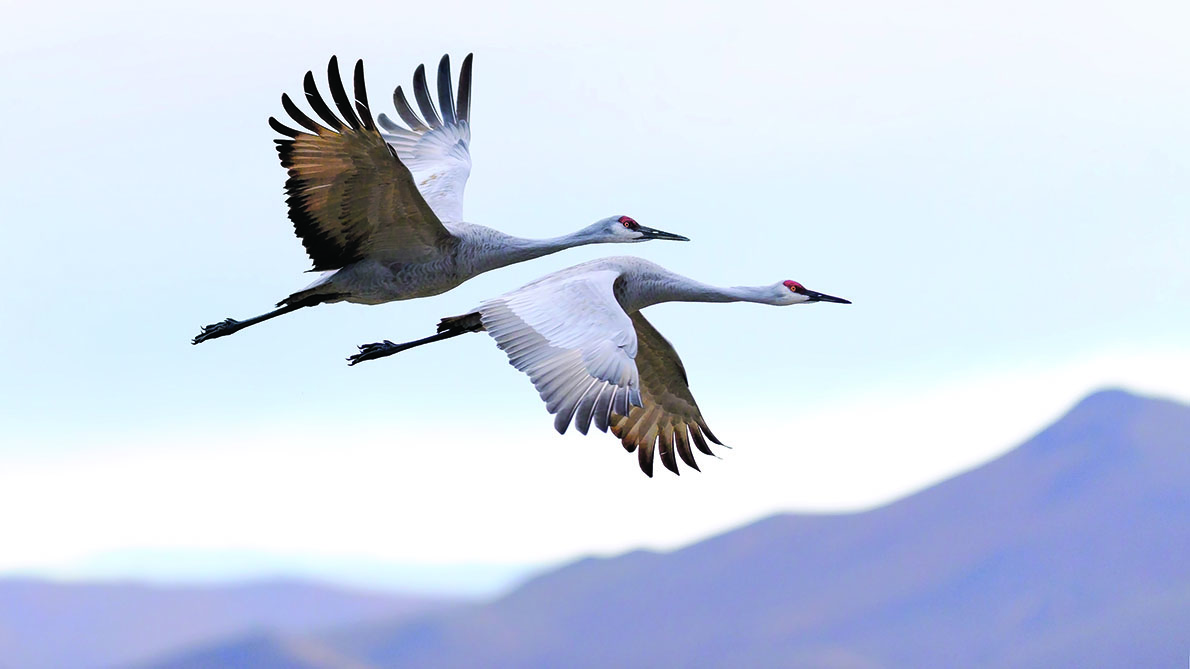
Ross said there is overwhelming support for a sandhill crane season from members of the Wisconsin Waterfowl Association and the Wisconsin Wildlife Federation. He advocated a sustainable and ethical sandhill crane season that would not be detrimental to the population.
“This should not be a circular firing squad between birding conservationists and hunting conservationists,” Ross said. “That’s kind of where it’s headed. That’s unfortunate, but it doesn’t have to be that way. I’m very excited about this group (the committee) that is looking beyond the superficial talking points and getting to the issues that really can be addressed.”
He said Horicon Marsh is an example where eco-tourism and hunting coexist.
If a sandhill crane season is created, farmers would be eligible to receive compensation for crop damage from cranes. It is not expected that revenue from permit application and license fees would be enough to fund crop damage compensation.
Sen. Mark Spreitzer (D-Beloit) is a member of the committee. He recommended the committee consider writing a separate bill to create funding from another source to solve the crop damage compensation issue. Spreitzer said even if there is no hunt, a way must be found to compensate farmers for crane damage.
Rep. Paul Tittl (R-Manitowoc, committee chair) said the USFWS and the DNR have a responsibility to manage wildlife populations and providing hunting opportunities is part of that.
“This is not something that just a bunch of hunters wanted to bring forth,” Tittl said. “All we would be doing is allowing legislation to enable them to develop a hunt.”
The committee’s next meeting is scheduled for Nov. 13. At that time information from the three previous meeting will be evaluated and the committee will make a recommendation on whether a sandhill crane hunting season bill should be drafted. If drafted, the proposal should be available for review by the committee before the end of the year.
If approved, a Wisconsin sandhill crane season will probably not take place for several years. The bill or bills would require passage by the state assembly and senate, federal approval and a signature from the governor.
Previous bills to create a sandhill crane season were introduced to the legislature in 2011 and 2021, but did not get enough support to pass. A new bill might have a better chance because it will be created by the committee authorized by the legislature, Tittl said.
Who should manage Pennsylvania’s insects? Study aims to find out
Efforts underway in Harrisburg could bring stronger protection to Pennsylvania’s butterflies, bees, fireflies, spiders and countless other native terrestrial invertebrates,
Behind the Scenes: Illinois native Brodie Eddington gained valuable experience as Farm Bill biologist
Western Illinois native Brodie Eddington is turning a lifelong passion for the outdoors into a career protecting Illinois’ wildlife resources.<br
Retired couple maintains commitment to Illinois Natural History Survey’s insect collection
What began as volunteer work became something more: a family commitment to preserve one of North America’s oldest and largest

6 thoughts on “Decision on a possible sandhill crane hunting season in Wisconsin due Nov. 13”
I don’t see a reason for it only see a few every year plenty of others to hunt.
I live in north central Wisconsin and the cranes are out of control in this area. You plant 40 acres of corn and they will pull out thousands of small stalks to get to the sead. This is long over due. It’s about time the legislater did it’s job.
I live in Adams county and have seen fields with several hundred cranes if not thousands. More every year
Ribeye in the sky
I grew up in Fond du Lac County and my family owned land in Green Lake County. Forty years ago it was a rarity to hear or see sandhill cranes in GL County and they were never seen in FDL County. Now they seem to outnumber Canada Geese. I fully support a science-based permitted hunting season.
The geese fly away has changed dramatically in the past 15 years due to the cranes being overpopulated in Northwest Wisconsin. Used to be able to see of flocks and flocks of geese nightly and now all it is is annoying cranes