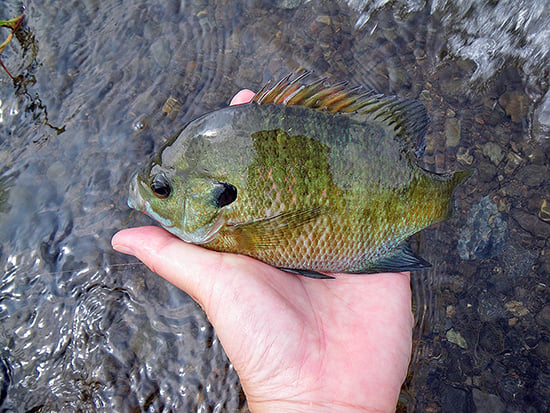
A bounty on bluegills? In Japan, our humble American panfish has become a feisty aquatic invasive species
In Japan, our humble American panfish has become a feisty aquatic invasive species





In Japan, our humble American panfish has become a feisty aquatic invasive species
Over 20 aquatic invasive species have challenged fisheries management in Minnesota, from Eurasian watermilfoil to zebra mussels.
Considerable concern was raised when zebra mussels were first documented in Minnesota in 1995; they have since been found in over 700 bodies of water according to Minnesota DNR. Zebra mussels, or zebes for short, quickly expand in numbers, and their water-filtering lifestyle leads to major changes in lake clarity.
A concept known as the shifting baseline syndrome (SBS) is pivotal to our understanding game and fish species and how they are managed.
SBS refers to the phenomenon in which each generation accepts the condition of the natural world they grow up in as “normal,” even if ecosystems have significantly declined over time. In 1995 a fisheries scientist named Daniel Pauly coined the SBS term to illustrate how people underestimate long-term environmental loss because they compare present conditions to their own memory rather than to historical abundance.
Bob Zink: Examining the shifting baseline syndrome in hunting and fishing Read More »
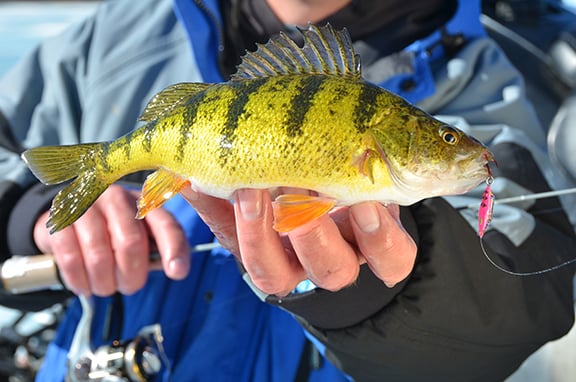
Tori McCormick’s June 5 news story in Outdoor News summarized the recent study in the journal of the American Fisheries Society that reported that anglers in Minnesota take home about 80 million pounds of fish annually, whereas an earlier DNR estimate came in at 30 million pounds.
That seems like a major underestimate, although Brad Parsons, Minnesota DNR fisheries chief, thinks the 80-million pound estimate is inflated, but did not say by how much. There are at least two issues that might temper the new study, the data, and the consequences of the findings.
The Minnesota fish harvest debate: Are we taking more fish than we thought? Read More »
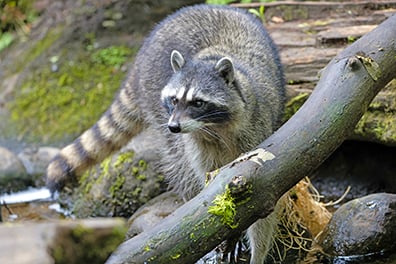
Other than making a sporty hat (think Daniel Boone or Davy Crockett), what is the significance of the banded tail on our familiar raccoon, aka dumpster diver?
I, like nearly everyone, have seen this native North American mammal for my entire life, but I never wondered about the tail banding, until now.
Why are raccoon tails banded? There’s plenty of theories on that Read More »
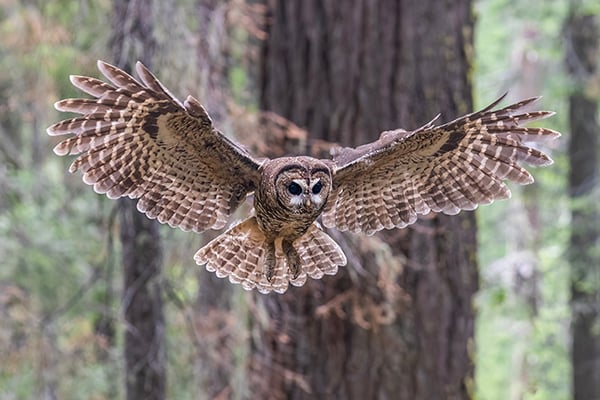
When populations of a species decline to perilous levels, efforts to forestall extinction can take many forms. Under the nation’s Endangered Species Act, it is common to designate “critical habitat,” allowing a species to recover on its own, given adequate space, resources, and implied protection from whatever caused its original decline.
One widely cited example of a critically endangered species is the spotted owl of the western U.S.
Is killing native owls to save native owls a good thing? Read More »

In case you weren’t sure (because every boat leaves a wake), a wakeboat is, as its name suggests, a large, heavy boat that sits deeper in the water than the average boat, and creates a large wake for those wanting to “surf” behind it – known as “wake sports.
Should we leave wakeboats in our wake in Minnesota? Read More »
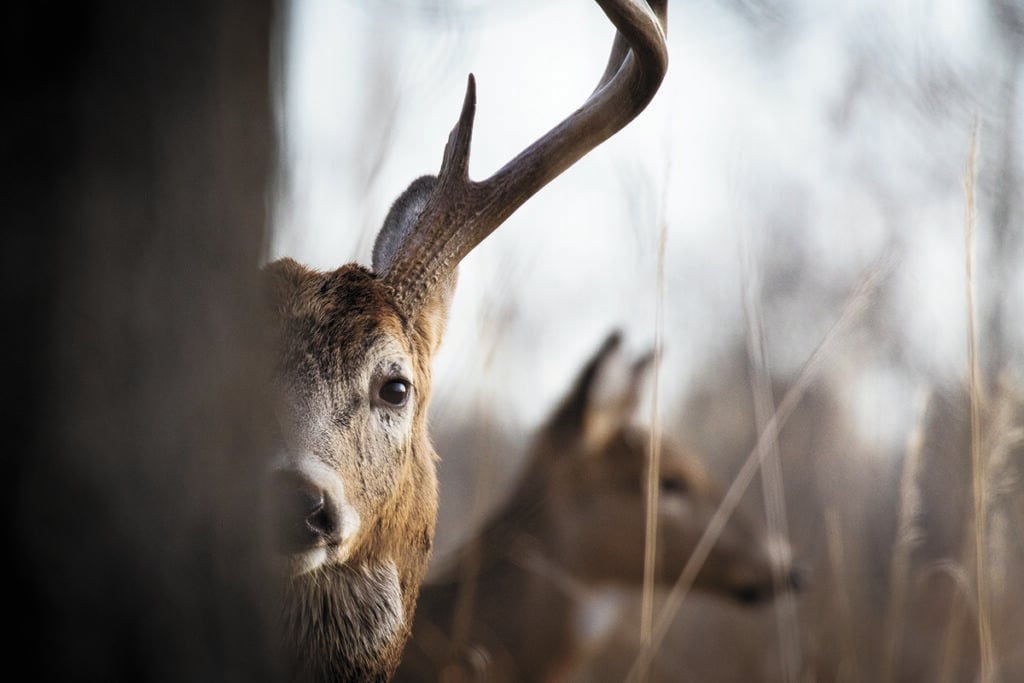
I split my time between northern Minnesota and east-central Nebraska. I recently was asked when the whitetail rut occurs in Nebraska, and I guessed it would be later than it occurs in northern Minnesota, because it would be colder sooner in Minnesota than in Nebraska.
I decided that guessing was lame, and so I did some digging. My idea was to consider temperature, day length, and timing of the rut along a south-north transect from Louisiana to Manitoba.
Considering the whitetail rut: Looking at day length and temperature Read More »

What exactly are deer keds?
Deer keds are highly specialized flies, also called louse flies or, for good reason, flat flies. Four species occur in the United States. These flies have a fascinating life history. These insects are obligate parasites (they rely on their hosts to survive and to reproduce) that feed on the blood of their hosts.
To be a ked on the wall or, more likely, a whitetail Read More »
