




I usually don’t care too much about what other states do when it comes to hunting and fishing regulations.
When it comes to the outdoors, Pennsylvania is so unique – and blessed – that we rarely need to follow the lead of another state.
 But there are times when we need to pay attention, because there are things that could be done somewhere else that impacts the things we enjoy here.
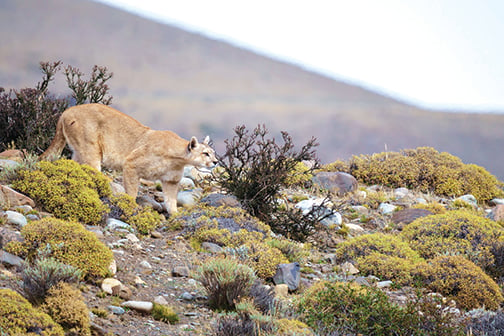
For some reason, it seems that there’s always a push, or support, in Vermont to reintroduce mountain lions. It’s not an effort from the biologists at the Vermont Fish and Wildlife Department, but rather nonprofits.
Why should we care about mountain lion reintroduction in Vermont? Because it’s really not that far from Pennsylvania – New York is all that stands in the way.
Currently there’s a push by the nonprofit Mighty Earth to have Vermont Fish and Wildlife conduct a feasibility study examining mountain lion reintroduction in the state. The organization even claims it can cover the estimated $200,000 cost of the study through philanthropic funding sources.
Mighty Earth also has indicated its mountain lion plan isn’t limited to Vermont, and it’s part of a campaign to “rewild eastern North America” and “bring balance to eastern forests,” starting in Vermont.
And that isn’t a surprise. When it comes to efforts, or just rumors, to bring back mountain lions, Vermont always seems to be in the conversation.
MORE COVERAGE FROM PENNSYLVANIA OUTDOOR NEWS:
Accessible launch to be built on Pennsylvania’s Conestoga River
Can lab genetics save American chestnut trees?
Pennsylvania bill would allow Game Commission to set license fees
In 2015, a wildlife researcher with another nonprofit based in Vermont said it was only a matter of time before mountain lions return to the northeast part of the country.
The researcher also said if they do return, that’s a good thing because mountain lions will eat deer and help improve forest health.
That kind of reasoning is exactly why I find fault with many of the reasons given by groups that want to see mountain lions in the East. Often, the rationale is based on simplistic thinking – lions eat the deer that eat the forest – but that’s not how wildlife management works.
I see similar rationale in Mighty Earth’s justification for bringing back mountain lions. According to a release on the group’s website from CEO and founder Glen Hurowitz, reasons for reintroducing mountain lions include: balancing Vermont’s ecosystem; the state’s past successes of restoring other species in the past (beaver and turkey); and the mascot for the University of Vermont is a mountain lion, and there’s a 200-mile ski trail in the state called the Catamount Trail.
Essentially, Hurowitz was trying to build on Vermont’s historical connection to the large cat as a reason to bring them back.
But there’s too much at stake when it comes to mountain lions to just rely on nostalgia. A mountain lion return would present an entirely new set of challenges to biologists, hunters and residents.
Problems could easily arise with livestock, human safety and prey species such as deer. And those problems most likely wouldn’t be contained within Vermont’s borders. The challenges could pour into nearby states, such as Pennsylvania, and that needs to be considered.
Fortunately, the Vermont Fish and Wildlife Department is telling everyone to slow down on the mountain lion restoration hype. Before a feasibility study can be considered, there needs to be comprehensive research and dialogue with other states.
Hopefully, reasoning prevails over rushed hopes and Vermont takes a very long look at the ramifications of mountain lion reintroduction.
And as far as Mighty Earth’s campaign to rewild eastern North America, please don’t look at Pennsylvania as the next host for a mountain lion return. I know we have a couple of college football teams named after lions and panthers, but those are simply mascots and by no means an indication we want to have the real thing roaming our woods one day.
Besides, it wasn’t that long ago when a proposal to reintroduce martens back into the state unleashed a flood of opposition.
Imagine the reaction if mountain lions are next?
Minnesota’s Circle Lake Wildlife Management Area grows via 103-acre island addition
As many flocked to Northfield for the 2026 Governor’s Pheasant Opener, the Minnesota DNR and its partners celebrated a new

Lake Amelia’s walleyes stealing the panfish spotlight in this Pope County, Minn., water
Pope County’s Lake Amelia is the southern-most basin in a chain of three lakes, which includes lakes Levin and Villard.
Minnesota’s Outdoor Calendar
A look at upcoming outdoor-related events from across Minnesota published in the Oct. 16, 2026 edition of Outdoor News.

6 thoughts on “Tom Venesky: Vermont’s mountain lion return plan seriously flawed”
Leave well enough alone. It seems to me there is always an ulterior motive.
Nearly everywhere mountain lions have been intensively studied for their effects on forests and wildlife, the benefits have far outweighed the “challenges.” Lions act as stabilizing forces on ungulate populations such as deer, and mid-sized predators such as coyotes. They provide sustenance for a host of scavengers. There is evidence that their presence also reduces deer-vehicle collisions. A far greater wildlife challenge for Pennsylvania is the ongoing overabundance of white-tailed deer, whose browsing has brought millions of acres of Pennsylvania timberlands to reproductive arrest, and helped the state to it’s unfortunate status as perennial U.S. leader in deer-vehicle collisions (which annually account for roughly 200 human fatalities countrywide and more than a billion dollars in property damage). The miniscule threat to people (average one death per decade across North America) and livestock (death by disease and weather are far more prevalent than predation by lion), and a proven track record of co-existence with deer stretching a million years (absolutely not a threat to those who like to have deer to shoot), all suggest that fears of mountain lions are largely unfounded. And that Pennsylvanians would be blessed to once again have mountain lions inhabiting and enhancing their forests.
Tell me you want your outdoor experience to resemble a trip to a game farm without saying it out loud.
Signed,
Ex-Granite Stater who has heard and seen evidence of mountain lions in NH
How stupid can a human be in this day and age? And why would elected officials even consider this as a realistic proposal? Who voted for these people? Over 60% of the mountain lions potential range is inhabited by tax paying humans. The government is charged with protecting its citizens. Then protect them. From those whose intention is to do harm.
Ken Porter
The unintended consequences of reintroducing a predator of that size in Pennsylvania could be tragic. Imagine th outrage when the first pet or child is lost to their appetite.
If the game commission thinks the lions will eat deer they will be all for lions