




Outdoor News may earn revenue from products shown on this page by participating in affiliate programs. This comes at no extra cost to you. Click here to learn more.
Summer patterns officially are in full swing across much of the Midwest.
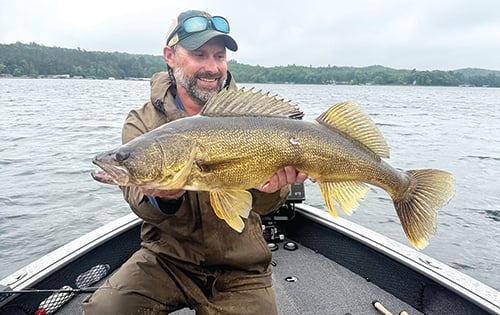
When it comes to walleyes, conventional thinking says to head deep – seek out mid-lake structure, deep points, rocky areas, and so forth – and in some cases, that makes sense. In all honesty though, there’s some incredible walleye fishing happening in much shallower areas, and many of us having been cruising right past it.
 Think about how many times you were fishing a weed line for bass, crappies, or bluegills and you stumbled onto a big walleye. I’m as guilty as anyone else in thinking “what was that walleye doing in this area?”
The more time I’ve spent targeting summertime walleyes, the more I’ve learned. One of most eye-opening things to me was just how much time walleyes spend in and around the weeds.
We’ve known that they’re here for portions of the year, but the truth of the matter is that some walleyes remain shallow even throughout the heat of the summer.
While these shallow water specimens get some attention, we don’t talk about them enough. As technology gets better and better, we’ve learned that walleyes don’t always head deep. Tools, like side imaging and forward-facing sonar, completely have revolutionized fishing – and walleyes are no different.
In terms of summer walleye patterns, there’s a lake type element worth evaluating. The bigger, more traditional walleye fisheries tend to hold summer fish in the more conventional walleye-like spots that so many of us recognize.
Smaller lakes, on the other hand, set up differently. In many of these lakes, especially those that are stocked, walleyes are more commonly found in and around the weeds.
While cabbage is certainly the “crème de la crème” it terms of walleye weeds, you can’t completely ignore other weed types. I’ve got countless examples of finding walleyes in and around coontail, milfoil, and others. Regarding vegetation, the top priority is always health.
It’s important to develop an understanding of how walleyes use weeds to their advantage. In some instances, walleyes will bury themselves in the weeds, but my experience has shown that they’re often suspended. While it contradicts traditional walleye thinking, keeping baits higher in the water column is very important.
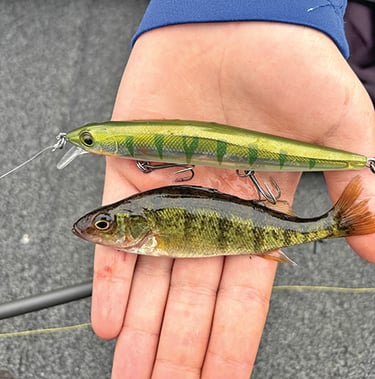
When it comes to summertime walleye baits, the options are plentiful. That being said, there’s one bait that I’ve become completely obsessed with – the Rapala PXR Mavrik 110.
This bait has led to some incredible jerkbait bites over the last couple summers. The Mavrik comes in two options – a shallow version and a deep version – the choice of which is completely dependent on exactly where the fish are located.
With a jerkbait, it’s critical to vary your retrieve. You can’t expect that the same pattern will work every day on every lake. Change up the way you work the bait, the timing of your pauses, and let the fish tell you what they want.
Keep experimenting until you find what works. An important reminder: You’ve got to work the bait on a slack line – that’s what gives it the right action.
MORE WALLEYE COVERAGE FROM OUTDOOR NEWS:
Minnesota anglers battle ‘goofy’ spring weather to get on a solid bite this year
Pro Fishing Tip of the Week: Jigging for big summer walleyes
C.B. Bylander: Minnesota shifting to a smarter approach to walleye stocking
For the rod, I’m fishing the Mavrik on a 6-foot, 8-inch to 6-foot-10 MXF spinning rod paired up with a 3000-size reel. On the line front, a 10-pound Sufix 832 braid to a 14-to 17-pound fluorocarbon leader is the deal. The heavier fluorocarbon is necessary to minimize the lure fouling up on the line.
While I have been relying heavily on the jerkbait for summertime walleyes, there are some other options that must be mentioned. Case in point, the jig and crawler. This combination has arguably put more summertime walleyes in the boat than any other lure option. If you plan to sharpshoot walleyes with forward facing sonar, there’s no better option.
Hair jigs are another option that flies under the radar.
We think about these during other times of the year, but they often get neglected in the summer. When hatches are happening, this is a great choice.
Summertime is a great time to be on the water targeting walleyes. It’s important to go into it with an open mind. While those traditional spots are likely holding fish, these underutilized areas can offer some top-notch fishing – both in terms of quality and quantity.

From eater walleyes to muskies, Lake Plantagenet has the goods in Minnesota’s Hubbard County
Any discussion that involves talk of quality fishing opportunities in the Bemidji area has to include Lake Plantagenet. This 2,531-acre
Minnesota’s Outdoor Calendar
A look at upcoming outdoor-related events from across Minnesota published in the Oct. 2, 2026 edition of Outdoor News.

Minnesota Cuffs & Collars: Hunter harassment complaint results in enforcement near Annandale
Minnesota cuffs and collars are field reports from DNR conservation officers. These reports are from the Oct. 2, 2026 edition
