




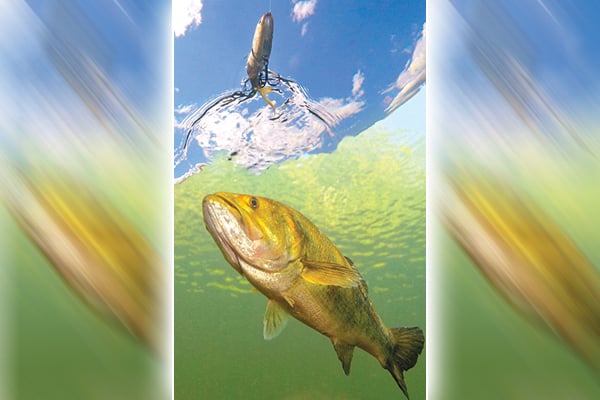
Few experiences match the excitement of a largemouth detonating on a surface lure.
The strike is sudden, violent, and visible, transforming an ordinary cast into a memorable event. While many anglers associate topwater fishing with summer mornings and evenings, the factors that encourage bass to attack surface lures are more complex than simply warm weather.
Understanding these factors helps explain when, where, and why bass choose to feed on the surface.
The most important factor is water temperature. As water warms into the low 60-degree Fahrenheit range, largemouth bass become increasingly active and willing to expend energy pursuing prey. During the colder months, bass tend to conserve energy and remain deeper in the water column.
Once temperatures reach approximately 60 to 65 degrees, however, their metabolism increases significantly.
This period often coincides with the post-spawn season, when bass are recovering from the demands of reproduction and feeding aggressively.
MORE BASS COVERAGE FROM OUTDOOR NEWS:
A quick chat with bass pro and Minnesota native Seth Feider
These seven lures will catch all the smallmouth you can handle
Now cancer-free, former Viking Randy Moss is angling for his next big catch
Light conditions also play a major role. Bass possess excellent low-light vision and often use periods of reduced illumination to ambush prey. Dawn, dusk, cloudy days, and nighttime provide ideal conditions for surface feeding.
During these periods, prey species are more vulnerable and bass can approach the surface with less risk of being detected. Many anglers have observed that a lure ignored during bright midday sun may be crushed during the first few minutes of daylight.
The abundance and location of forage are equally important. Bass are opportunistic predators and will feed where prey is concentrated. Surface activity by baitfish such as shad, minnows, and young panfish can draw bass upward.
Insects, frogs, mice, ducklings, and even small snakes occasionally become targets. When prey is present near the surface, bass often find it more efficient to attack upward than to search deeper water.
Aquatic vegetation creates another favorable situation for topwater fishing. Weed beds, lily pads, hydrilla, milfoil, and other dense vegetation provide excellent cover for bass. These areas often limit a bass’s ability to pursue prey beneath the surface, making upward attacks more practical.
Frogs, buzz baits, and weedless topwater lures excel in these environments because they can travel across cover that would snag conventional lures. Bass hidden beneath the vegetation can use the surface as a feeding zone where prey has limited escape routes.
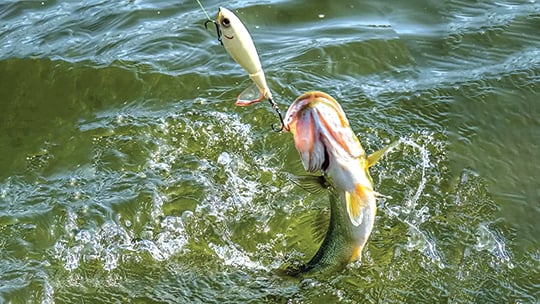
Weather conditions frequently influence topwater success. Stable weather patterns often produce predictable feeding behavior, while approaching fronts can trigger brief periods of intense activity.
Wind can be both beneficial and detrimental. Light wind breaks up surface visibility and may encourage bass to roam and feed. Excessive wind, however, can make it difficult for bass to locate surface prey and can reduce the effectiveness of many topwater presentations.
Oxygen levels and seasonal patterns also contribute. During summer, oxygen concentrations may be highest near areas with aquatic vegetation or moving water.
Bass frequently position themselves in these locations and readily attack prey near the surface. In autumn, cooling temperatures often trigger feeding frenzies as bass attempt to build energy reserves for winter.
During these periods, surface lures can remain productive even as water temperatures begin to decline.
Perhaps the most overlooked factor is competition. In lakes with abundant bass populations, individual fish often compete for feeding opportunities. When one bass rushes to the surface, others may follow.
This competitive behavior can make bass unusually aggressive and willing to strike large or noisy surface lures that would otherwise appear unnatural.
The effectiveness of specific surface lures often reflects these environmental conditions. Poppers imitate struggling prey in calm water. Walking baits mimic injured baitfish and excel when fish are actively feeding.
Buzzbaits generate vibration and commotion that attract bass from considerable distances. Hollow-body frogs imitate natural prey while traversing dense vegetation. Each lure succeeds because it matches the circumstances that encourage bass to feed upward.
Ultimately, bass do not strike surface lures merely because they are hungry. They do so because environmental conditions, prey availability, water temperature, light levels, and habitat combine to make the surface the most efficient feeding zone.
When these factors align, the result is one of angling’s most thrilling moments: the explosive topwater strike that keeps fishermen casting long after the sun has risen or disappeared below the horizon.

Illinois DNR survey captures first blue cat in Carlyle Lake
The southern Illinois reservoir continues to produce a strong crappie fishery. DNR’s 2025 survey produced 26 crappies per hour, with
Illinois’ Outdoor Calendar
A look at upcoming outdoor-related events from across Illinois published in the Oct. 2, 2026 edition of Outdoor News.

Illinois Cuffs & Collars: Illegal minibike at William Powers State Park
Illinois cuffs and collars are field reports from Conservation Police Officers. These reports are from the Oct. 2, 2026 edition
