





Albany — Turkey hunters chasing spring gobblers can once again help the New York State Department of Environmental Conservation track the distribution and abundance of ruffed grouse.
During the spring breeding season, male grouse are “drumming,” beating their wings in the hope of attracting a mate. Turkey hunters can record the number of ruffed grouse they hear drumming while afield to help monitor this game bird.
To obtain a survey form, visit DEC’s website, or call (518-402-8883. To participate in DEC’s Summer Wild Turkey Sighting Survey or other wildlife surveys, visit DEC’s Citizen Science page.
NYS Big Buck Club Seeks Measurers in Several Counties
Wingdale, N.Y. — The NYS Big Buck Club, which measures and documents both white-tailed deer antlers and black bears from New York, is in need measurers in several New York counties. While the club welcome’s potential measures anywhere in New York, they are hoping to add measurers to their roster in Cortland, Essex, Franklin, Lewis, Montgomery, Warren, Orange, Putnam, Richmond, Rockland, Seneca, and Tioga counties.
Anyone interested in learning to measure deer and bear for the NYSBBC can contact Measurer Chairman Tommy Hayward via email at: Tommyhayward0@gmail.com, or, Jim Dowd at jddowd1776@gmail.com.
For more information about the NYSBBC, visit https://www.nysbbc.com.
MORE COVERAGE FROM NEW YORK OUTDOOR NEWS:
Dan Ladd: Like or don’t like New York’s deer management proposals? Let DEC know about it
Tick season off to a fast start in the Northeast
Hunters battle chilly start to spring gobbler season in New York
DEC Seeking Walleye Heads from Three Lake Ontario Regions
Lewiston, N.Y. — In an effort to study walleyes in the Lower Niagara River, Irondequoit Bay, and Sodus Bay, the New York State Department of Environmental Conservation is asking successful walleye anglers in these areas to donate walleye heads from fish anglers are planning to keep.
The agency said it’s difficult to determine the contribution of wild vs. stocked walleye to the fishable population. Therefore, they’re utilizing otolith microchemistry to analyze at least 100 walleyes from each water to determine stocked or wild fish. From the donated fish heads, biologists will collect otoliths (inner ear bone of a fish) to be later analyzed.
DEC has strategically staged freezers at the locations for anglers to place walleye heads. Freezer locations are:
• Lower Niagara River:, Village of Lewiston Fish Cleaning Station, Lewiston, and the Fort Niagara State Park Fish Cleaning Station , in Youngstown;
• Irondequoit Bay: Sutter’s Marina, Rochester;
• Sodus Bay: Krenzer Marine, Sodus Point.
For ease of use, bags and labels will be placed at each freezer site.
Anglers should include date, body of water, approximate location of catch, and length of the fish. Anglers can fillet fish as normal, then sever the head from the spine and place into a bag.
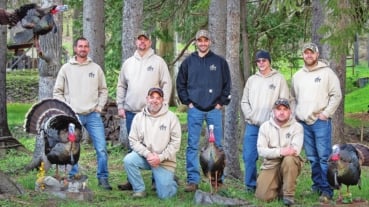
Volunteers Launch Turkeys for Tomorrow Chapter in Western New York
Warsaw, N.Y. — The nonprofit Turkeys for Tomorrow organization has a new chapter in New York. The Western New York Longbeards, the region’s newly formed chapter, launched this spring with a clear purpose: safeguard wild turkeys, strengthen hunting traditions, and ensure the next generation inherits the same opportunities that shaped so many local sportsmen and women.
Their guiding philosophy – “It’s not ours, it’s just our turn” – reflects a growing awareness that wild turkey populations across the country face mounting pressures, from habitat loss to disease to changing predator dynamics. Chapter goals include expanding access and education for young hunters. A fundraising banquet is in the works for early 2027, as are special youth hunts and also a sponsored wounded veterans turkey hunt.
“We’re here because we love the wild turkey and everything that comes with pursuing it,” Chairman Mike Carney, said. “But more importantly, we’re here because we want our kids and grandkids to experience the same excitement, the same dawns in the spring woods, the same connection to the land.”
To learn more about Turkeys for Tomorrow, visit: https://turkeysfortomorrow.org. For information on the new chapter, call: 585-201-3057 or find them on Facebook.
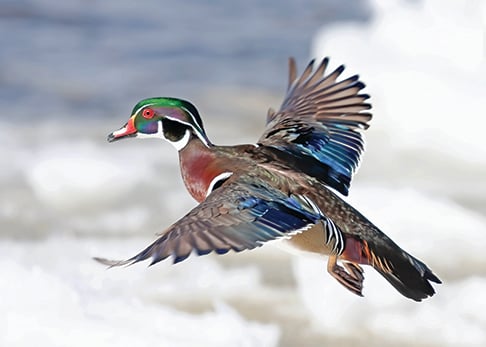
USFWS announces new duck season framework process
The Department of the Interior recently announced that the U.S. Fish and Wildlife Service (USFWS) is finalizing a streamlined process
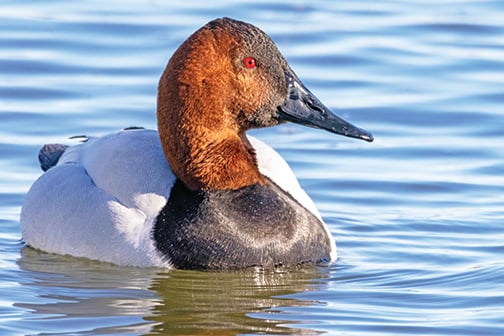
Making sense of this year’s waterfowl report for Ohio hunters
For some duck hunters, the early September U.S. Fish and Wildlife Service (USFWS) annual fall waterfowl flight forecast is an

WI Daily Update: State stamp contest winners announced
Three Wisconsin artists have earned a place on the 2027 turkey, pheasant and waterfowl stamps. Here are the winners and
