




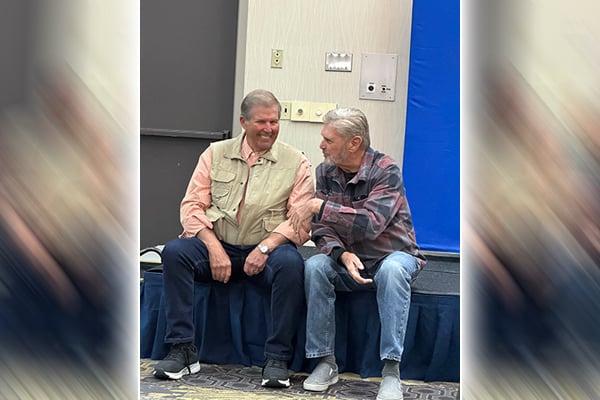
Alexandria, Minn. — Minnesota’s fishing advocacy organization, MN-FISH, hosted more than 230 people for its 2026 Angler’s Summit last Friday, April 17, with almost eight hours of programming.
It was an opportunity to celebrate fishing in the state, air concerns, learn about fisheries-related research, and discuss the role that anglers play in preserving the state’s fisheries.
“We have really good fishing,” said MN-FISH President Ron Schara in his opening remarks, “but it can be better and we can preserve it, as well.”
Schara said that the Minnesota DNR is working with fewer employees and a smaller budget than the agency had 10 years ago. This comes at a time, he noted, when fishing is a $6 billion industry in the state.
“We think we should get some general (tax) revenue,” Schara said in his closing remarks. “Your tax money should go toward fish management because fishing contributes a lot to our state funds, too. That’s a goal (for MN-FISH).”
Many DNR leaders, including Commissioner Sarah Strommen, were on hand to answer questions and take part in the conversation.
MORE COVERAGE FROM MINNESOTA OUTDOOR NEWS:
Field notes from a mesmerizing spring waterfowl spectacle
Runnin’ Minnesota rivers for spring redhorse
Tips for taking advantage of Minnesota’s new catch-and-release bass season
Al Lindner’s take
Legendary angler Al Lindner opened the program by sharing his thoughts on his 55 years of fishing in Minnesota and across the country. The only state he has not fished in is Maine.
“Minnesota is the best multi-species freshwater fishing in the entire country,” Lindner said. ”Nothing really comes close to what we have to offer.”
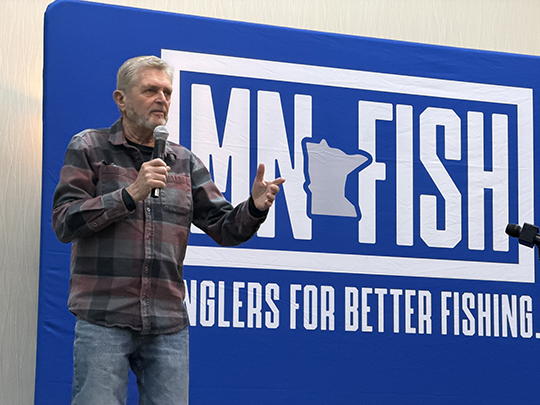
Lindner said the current walleye fishery “is pretty darn good.”
“Could it be better?” he added. “Yes. I’m a big fan of (the four-fish limit) with one over 20 (inches.)”
Lindner said Minnesota has made strides with panfish. He noted that he’s seeing more 14-inch crappies than he has in a long time, as well as some bigger bluegills. But he voiced concerns about the muskie fishery, as well as Minnesota opening year-round bass fishing statewide with the catch-and-release season that started this year.
Lindner said Minnesota is currently the best state in the country for catching 1.5- to 3.5-pound largemouths. “The reason that fishery is so good is because of the regulations,” he said. “Five years from now we’re going to look at a meeting like this and say the largemouth bass fishing isn’t what it used to be. I believe they’ve opened the door for a problem.”
His concern stems from the number of times big fish will be caught. That was a theme from multiple people throughout the day about many sportfish: “How often can we recycle these fish (before it has an impact)?”
“We are dealing with intelligent fishermen like we’ve never seen,” Lindner said. “We can’t keep doing things the same way we did it for 25 or 30 years. There’s going to be a kickback.”
Forward-facing sonar study
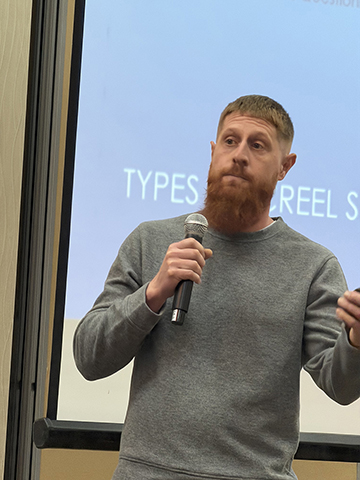
Adam Mord, president of Walleye Alliance, Inc., and John Kempe, DNR assistant area fisheries supervisor in Brainerd, presented results from creel surveys on three Brainerd area lakes.
The 2025 surveys were a collaborative effort between the DNR, Walleye Alliance Inc. and the Central Lakes College natural resources program. Interviews were conducted with anglers on Edward and South Long, both small bodies of water, in May and June, and on the larger Gull Lake in September and October.
On all three lakes, forward-facing sonar increased catch rates for those targeting walleyes, and the majority of walleyes caught were caught by anglers using FFS. The research also showed increased catch rates did not lead to increased harvest.
Key findings on each lake include:
Gull Lake
• Number of interviews: 368
• Total walleyes caught: 1,708
• Catch rate for those targeting walleye (non-FFS users): 0.45
• Catch rate for those targeting walleye (FFS users): 0.71
• Walleyes caught via FFS: 83%
• FFS users: 72% (average years using FFS – 3.6)
• Walleyes released: 89.3%
South Long
• Number of interviews: 76
• Total walleye caught: 39
• Catch rate for those targeting walleye (non-FFS users): 0.04
• Catch rate for those targeting walleye (FFS users): 0.30
• Walleyes caught via FFS: 88%
• FFS users: 42% (average years using FFS – 2.4)
• Walleyes released: 72.5%
Edward
• Number of interviews: 131
• Total walleye caught: 238
• Catch rate for those targeting walleye (non-FFS users): 0.13
• Catch rate for those targeting walleye (FFS users): 0.85
• Walleyes caught vis FFS: 68%
• FFS users: 40% (average years using FFS – 2.9)
• Walleyes released: 54.6%
The creel surveys show just how much angler mindsets have changed in terms of why many people fish. From prior creel surveys on Gull Lake, 45.6% of walleyes were released in 2013 and 37.1% were released in 1999. That’s compared to 89.3% in the 2025 survey.
Just 4.7% of anglers surveyed in 2025 on Gull said they released walleyes because the fish were too small, while 78.8% said they did so because they are catch-and-release anglers.
“We used to go fishing for fish to keep and eat and now we go fish just to fish,” said MN-Fish Executive Director Mark Holsten. “That’s a dynamic change that we’re all experiencing. Will the DNR be able to keep up with that pressure change? What are things like hooking mortality? What are things like how we handle the fish? Forty years ago that didn’t come into play. Now it is and we have to start changing and thinking about things differently, and as anglers, it’s going to fall on us.”
Responsibility of anglers
Part of the conversation at the Summit focused on the responsibility anglers have in preserving fisheries. Science is key to management, but studies and new regulations often take years before results are known.
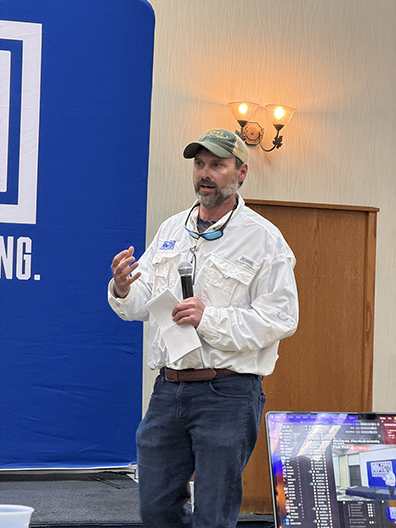
“In many situations we might not have that time,” said Jeremy Smith of Lindner Media Productions. “I’ll use muskies for example. I just don’t see how in many of our native lakes that these critters are going to be able to keep pace with the means in which we can target them over and over again. This comes back to handling, but even with the best handling practices, it’s still going to become very difficult for these fish to win.”
Marc Bacigalupi, the DNR’s Northwest Region Fisheries manager, led a discussion on hooking mortality where he said survival probability depends on the fish species, water temperature, depth at capture (barotrauma), where the fish is hooked, and handling time.
An example from a study on Mille Lacs showed that walleyes are more susceptible to hooking mortality in mid-summer as water temperatures reach about 74 degrees.
Muskie mortality is known to increase in warmer water and when handled too long.
“I fish barbless hooks for everything that swims. That includes muskies,” Smith said. “Go barbless. It’s easier on the fish and it’s easier on you. Keep the fish in the water, handle them as little as possible. Just these little things can add up.”
DNR fisheries research manager Patrick Schmalz presented research related to barotrauma from a study conducted on crappies during the winter. Barotrauma refers to trauma caused to fish by rapid changes in barometric pressure when pulled from deep water.
Results from the crappie study showed that mortality increases when fish are caught from waters deeper than 25 feet. A lack of external signs of barotrauma (bulging eyes, expanded swim bladder, hemorrhaging) does not mean the fish did not suffer internal damage.
Schmalz encouraged anglers to think of crappies caught from greater than 25 feet as a harvest opportunity instead of depths where large numbers of fish are caught and released.
A study from Rainy Lake also showed that hooking mortality for walleyes increased as fish were pulled from deeper water (8% at 30 feet of water, 18% at 40 feet, 35% at 50 feet).
“By educating anglers, helping anglers realize what the impacts are, the majority of them will make the right choices,” Holsten said.
Experimental panfish regs
Schmalz and Fisheries Section Manager Brad Parsons led a discussion on panfish where many anglers voiced that they want to see bigger fish.
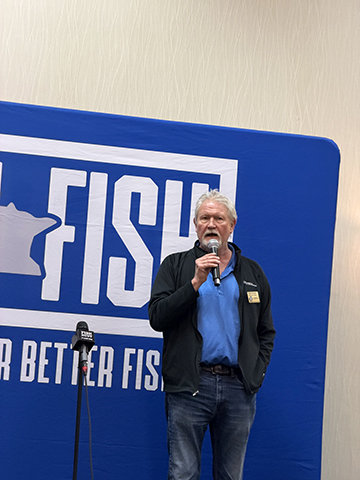
Under the DNR’s Quality Sunfish Initiative, many lakes with potential to produce big bluegills implemented reduced bag limits starting in 2021. Today, there are 285 waters with special sunfish regulations and 118 with special crappie regulations.
The goal of the Quality Sunfish Initiative is to reduce the harvest of big males, which are integral for maintaining high-quality sunfish fisheries. Large males guard nests. When their numbers are depleted in a system, competition for spawning decreases and there is less need for smaller males to devote energy to grow larger.
How long does it take before the DNR can confidently say whether regulations are working? Schmalz said about 10 years – enough time for a generation of fish to move through.
“If growth rates are faster, maybe we’ll see results a little quicker,” he said. “In that 10 year time period, we’d expect to see something if it’s going to happen.”
The DNR plans to implement an experimental sunfish regulation on a handful of lakes starting March 1, 2027.
Pending approval after a public input period, these lakes would keep the statewide 20 fish limit but only five of those sunfish could be longer than 8 inches:
- Mink and Somers, Cedar (Wright County)
- Rush, Ten Mile, German (Otter Tail County)
- Hovde (Cass County)
The DNR is looking for six additional lakes to implement the same regulations starting in 2028.
“There will be a sunset on these,” Schmalz said. “Hopefully the sunset leaves enough time for us to evaluate and then determine if it’s something we want to make into a special regulation.”
Editor’s note: Video of all of the presentations at the MN-FISH Summit can be seen at the Fish Hunt Forever Facebook page.
Patrick Durkin: Wisconsin’s Tom Tiffany can’t tell trivial from crucial on conservation issues
Unlike some politicians who pander to hunters when seeking their votes, Wisconsin gubernatorial candidate Tom Tiffany doesn’t pretend to be

Minnesota Mixed Bag: MN-Fish expands board to 20
At its October 8 board meeting, MN-FISH directors voted to add three new members, a move that aims to expand

Minnesota Letters to the Editor: Instead of ethanol, grow more wetlands-savvy cattle
Reader-submitted letters to the editor published in the Oct. 23, 2026 edition of Minnesota Outdoor News.
