




Home » Home Page News » A quick chat with Dr. Scott Petrie on efforts to shift America’s declining hunter numbers
A quick chat with Dr. Scott Petrie on efforts to shift America’s declining hunter numbers
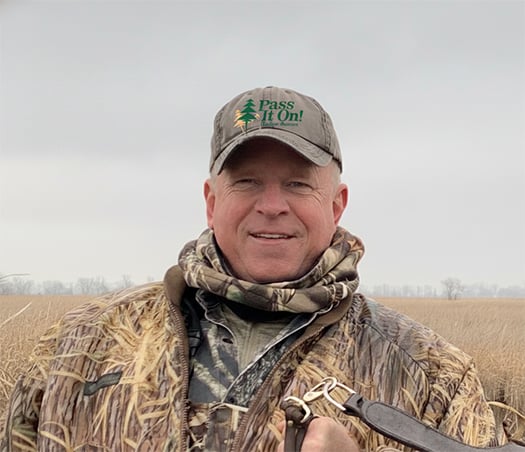
The arc of the American hunter has been bending south for a long time.
Fifty years ago, hunters were far more numerous. Today, according to government statistics, they comprise but 4.5% of adult Americans. This decline is largely due to urbanization, shifting societal views, Baby Boomers hanging up their guns and fewer nearby places to hunt, often due to less habitat or more “No Trespassing” signs.
Simply put, the trend has been fewer folks wanting to hunt. The statistical reality is that America’s population has grown by more than 80% since 1960, but the percentage of hunters has fallen about 4%. In short, young hunters aren’t replacing old hunters as they once did.
Facing long odds to help stem this decline is Dr. Scott A. Petrie. Petrie took over the reins of Pass It On Outdoors Mentors this past November. The Kansas-based non-profit has been introducing youth to the outdoors for 22 years by providing high quality and repeated mentoring experiences.
Petrie has big plans for Outdoor Mentors. He aims to grow what has been a grassroots regional operation into a professionally integrated international organization. Specifically, he envisions expanding the programming from eight states to at least 40 states and into Canada in the next four years.
So, who is this man and what’s his plan?
Outdoor News: Tell us a bit about you.
Petrie: Like many people who love conservation and the outdoors, I connected with nature at an early age. I wasn’t raised on a farm, but my grandparents owned a dairy farm and during my many childhood visits I developed an affinity for the woodlands and wetlands of southern Ontario. Also, my dad introduced me to hunting at a very young age. These repeated and wonderful experiences shaped the course of my life.
My connection to the outdoors deepened in my teens when my dad took a job in Manitoba. That’s when I experienced the incredible Delta Marsh – a vast network of shallow wetlands about an hour northwest of Winnipeg. That’s where my passion for waterfowl hunting and conservation truly took hold. That passion remains strong today, though at age 59 I don’t weather the cold like I once did.
READ MORE QUICK CHAT FEATURES FROM OUTDOOR NEWS:
A quick chat with Andrew Schmidt of Pheasants Forever
A quick chat with Shane McKenzie on research to better understand urban otters
A quick chat with Backcountry Hunters and Anglers’ Ryan Callaghan
Outdoor news: What work credentials do you bring to Outdoor Mentors?
Petrie: I’ve devoted more than 35 years to advancing wildlife research and conservation, and to introducing and engaging youth to our hunting heritage. Most recently, from 2015 to 2025, I was the chief executive officer of the Delta Waterfowl Foundation. During my tenure we grew revenue dramatically, increasing our annual budget from approximately $6 million to $24 million. This strengthened our role as a leading voice for waterfowl conservation.
Academically, I earned a bachelor’s degree and PhD in wildlife-related fields in my 20s and later completed an MBA in my 50s. This late-career business training has been invaluable in guiding the strategic planning necessary to grow and sustain conservation and hunting-related organizations.
Outdoor News: Volunteer Mentoring programs are challenging for a variety reasons, including the concern among some hunters about creating competition for their hunting spots. How do you plan to expand?
Petrie: Substantial organizational growth starts with fundraising. Outdoors Mentors has long relied on grants, raffles and philanthropic hunters to fund our work. We are now increasing those efforts by placing greater emphasis on major donors, corporations, foundations, and an increased number of fundraising events and grants.
At the same time, we continue to build partnerships with state agencies and like-minded organizations that share our mutual interests. Importantly, our program coordinators help secure and organize hunting and fishing locations for mentors and mentees, which minimizes concerns about competition and ensures quality, well-managed experiences.
Outdoor News: What states are you looking at?
Petrie: Currently we have full-time coordinators and programming in Kansas, Oklahoma, Iowa and Wisconsin, and are mentoring youth in neighboring states including Minnesota, Missouri, Michigan and Texas. Our immediate expansion targets include Pennsylvania, Idaho, Colorado, South Dakota, North Dakota, Nebraska, and Tennessee, as well as the Canadian province of Ontario.
Outdoor News: So, who is your target market? Youth? Young adults?
Petrie: Our target market is youth and adolescents ages 12 to 22. We believe young people need to spend more time outdoors, and we use hunting and fishing as tools to achieve that. We share Richard Louv’s view in Last Child in the Woods, that we should address what he calls “Nature-Deficit Disorder.” Time in nature is a critical component of healthy youth development, and our goal is to provide those experiences, especially for young people who lack access and opportunity.
Outdoor News: Have you done any research on the barriers to getting youth out hunting, and if so, how have you adapted your efforts?
Petrie: Yes. According to our participant and mentor surveys, the biggest obstacles for youth are lack of access to hunting land, uncertainty about where to hunt or fish, limited skills and knowledge, lack of gear, and confusion around licensing requirements.
We address these barriers by providing well trained mentors, securing access to quality hunting and fishing locations, helping kids understand why these places are productive, building their skills, providing equipment, and ensuring they have the proper licenses before heading into the field.
Outdoor News: How is Outdoor Mentors different from other organizations that mentor?
Petrie: For one, we are a multi-species organization. Many programs focus only on the species they’re named after, such as waterfowl, wild turkey or the like. Our mentors provide opportunities across a wide range of species, including deer, upland game birds, turkeys, waterfowl and predators.
We‘re also different in that we conduct background checks on mentors, actively involve parents, and allow kids to be mentored multiple times. We are not a one-and-done organization. We believe repeated mentored experiences are essential to recruiting new hunters and helping them understand the importance of conservation.
Outdoor News: So, what’s the end game? What do you hope to achieve?
Petrie: Ultimately, we want to ensure that more youth take up hunting while building genuine enthusiasm for the outdoors – one that reflects a deep appreciation for natural resources, a commitment to conservation and confidence in their own abilities. We also encourage young people to consider careers in natural resources. Today, many college graduates entering these fields have never hunted or fished; if we can change that, it will be a meaningful step forward.
Outdoor News: Any final thoughts?
Petrie: As we expand throughout North America, we encourage youth to sign up for our hunting and fishing opportunities, invite interested adults to step forward as mentors, and ask landowners to consider providing access to their properties so more young people can experience the outdoors.
Anyone who wants to get involved or learn more can visit www.outdoormentors.org.
SUBSCRIBER CONTENT
Read this article now.
Create a free Outdoor News account.
Create a free account below to get instant access to this article, thousands of Outdoor News stories, and our digital editions. Your 1-month trial starts the moment you sign up.
No credit card required
No credit card required
Subscriber? Login Here.
Share on Social
- Tags: Hunting, Quick Chats
Hand-Picked For You
Origin of road-killed armadillo in southwest Ohio a mystery
South Dakota Fishing Report – September 16, 2026 – video
Bowhunt gets started in Ohio with additional opportunity in CWD surveillance area
Ohio’s statewide fishing and hunting report on Sept. 17, 2026
Niagara Falls (N.Y.) Fishing Report – September 15, 2026
Michigan Fishing Report – September 16, 2026
Related Articles
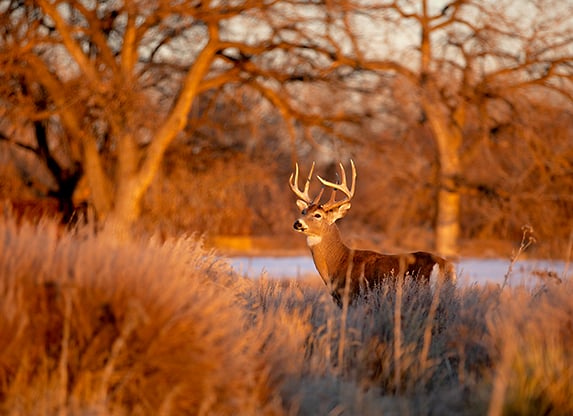
Pennsylvania’s hunting license sales down so far this year
Hunting license sales are down nearly 4.5% at the end of August, although Pennsylvania Game Commission officials believe there is
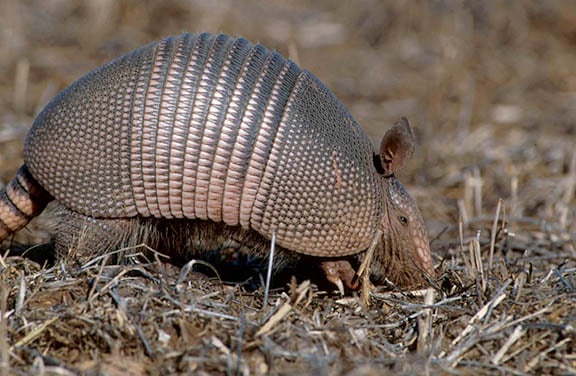
Origin of road-killed armadillo in southwest Ohio a mystery
An armadillo found as roadkill in southwest Ohio has researchers scratching their collective heads wondering from where the non-native mammal
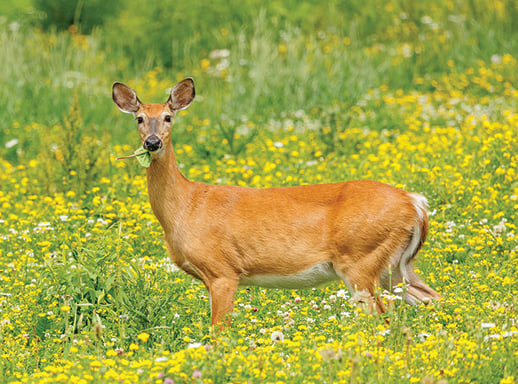
Bowhunt gets started in Ohio with additional opportunity in CWD surveillance area
Hunters in Ohio’s chronic wasting disease (CWD) surveillance area have additional dates this season to pursue white-tailed deer. The Ohio
