





A few years after I began shooting semi-automatic shotguns in the 1990s, I started taking my boom sticks to a gunsmith during the period between when summer trap leagues ended and before the bird-hunting seasons commenced.
The idea came from a friend and fellow bird hunter who is far more attentive to firearms and firearms maintenance than I am. He would routinely tear apart, clean, then lube his shotguns every year, using the owner’s manual as his guide. For those of us who either didn’t have the desire or requisite skill set to perform major surgery on our shotguns, my friend recommended spending a few bucks and outsourcing the cleaning and maintenance.
“Do yourself a favor and bring it to a gunsmith and have him do a thorough inspection, breakdown, and cleaning,” he said. “It’s well worth the price. You won’t be sorry you did.”
As the early-autumn bird-hunting seasons unfold, I hearken back to my friend’s advice and salute his wisdom. Not only were my shotguns always ready to roll for the seasons ahead (I never once had a problem in the field), the gunsmiths I’ve dealt with over the years found distressed parts that needed replacing.
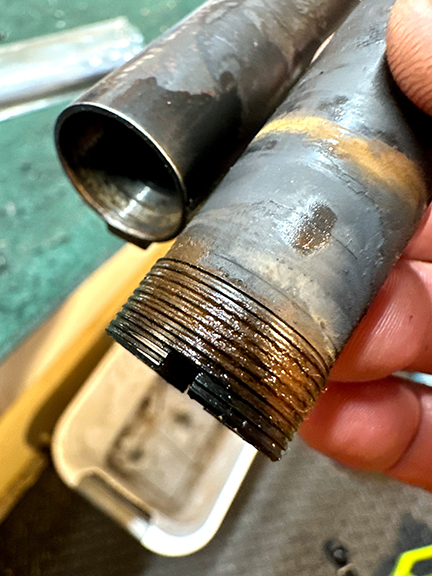
“About 80% of the shotguns I see this time of year need a deep, deep cleaning, and the other 20% need additional maintenance for something like a choke tube being rusted into the barrel,” said Todd Beck, owner of Mobile Armory Firearms Training. “The latter is never a good sign.”
A retired law enforcement official, Beck describes himself as a gun mechanic who thoroughly enjoys working on shotguns and rifles. He said he takes great pride in helping fellow shooters get their shotguns ready for the hunting seasons.
“I’m not a gunsmith, per se, but I do enjoy staying busy and I just like guns and working on them,” said Beck, who also works at the Minnesota Horse and Hunt Club in Prior Lake as a gun mechanic and shooting instructor.
Beck said this time of year is his busy season. Some hunters, for example, haven’t taken their shotguns out of their cases from last season – a huge mistake. When they do, they often realize, Beck said, they aren’t “working right” and need help.
Not only did they store the shotgun improperly (see how best below), they didn’t bother wiping it down, let alone giving it a thorough cleaning. In many cases, rust has formed throughout the shotgun.
“I’ve cleaned shotguns where I’ve found pieces of vegetation in the trigger assembly,” Beck said. “A little maintenance can go a long way before, during, and after the season. That’s a habit we should have as hunters.
Shotguns are machines, and machines need to be taken care of regularly so they perform.”
Stu Austing, a gunsmith at Iron Horse Trading Co. in Albany, Minn., agrees.
“With serious hunters, it’s generally not a problem; they’re well versed on how to take care of their firearms because they’re in the field a lot and need them to perform,” said Austing, who has been a gunsmith for nearly 30 years.
“For other hunters, that’s not always the case.”
HUNTING FEATURES FROM OUTDOOR NEWS:
Video: Adjustments lead to an early-October doe in Minnesota
Late-arriving canvasbacks make this a hunt to remember
Don’t do damage to your new crossbow; here’s how to maintain it
Both Beck and Austing say all shotguns should be inspected, cleaned, and lubed before the season.
“A lot of guys shoot trap and sporting clays over the summer and need a deep cleaning,” Austing said.
“Some guys will want to do that work themselves, although they only do what their skill set allows them to do. That’s where I come in.”
When he’s doing a full breakdown and cleaning of shotguns, Austing said he often finds parts that are either broken or in poor working order. The average hunter, he said, may not be able to troubleshoot, or fix, those problems.
“The last thing you want is a problem when you’re in the field or on a hunting trip,” he said. “Even a broken spring will work for a while. But if your tear your shotgun down before the season, that’s something you will find and can replace.”
According to Beck, one of the biggest issues for hunters is getting their shotgun barrels thoroughly cleaned.
“It’s probably the No. 1 problem I see,” he said. “And it will affect your pattern … and that’s something you don’t want.”
Indeed, the more rounds you shoot, the more “wad” plastic builds up inside your barrel, particular in its midsection. It must be removed or your shot pattern will likely have holes in it.
In extreme cases with dirty barrels, the wad can get stuck after firing a round. If you don’t recognize it and fire another round, you can do severe damage to your barrel.
“I’ve seen it happen,” Beck said. “The barrel will get a bulge in it. At that point, you’ll have to replace it.”
Best cleaning practices
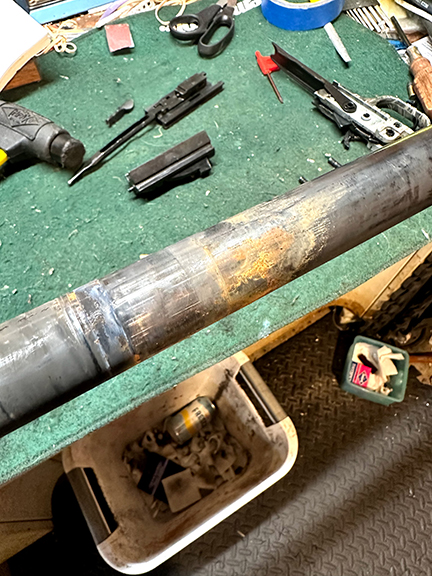
Most gunsmiths recommend a multi-step process for cleaning shotgun barrels. Some barrels require more work than do others, they say.
Begin by using a fixed cleaning rod with an attached patch soaked with bore cleaner and run it through your barrel. The cleaner will start to break down and eat away at the plastic buildup and other residue. Then use a bronze brush and run it through the barrel for a minute or two.
Last, use another larger patch (one that fits tight and has some texture so it can pick up the plastic and other residue) and run it through the barrel multiple times.
“I run it back and forth in that midsection until I feel the resistance decrease,” Beck said. “I do this until the gun barrel is clean. If it isn’t, I repeat the entire process.”
After it’s cleaned, Beck recommends running a patch with gun oil through the barrel to prevent rusting.
Both Beck and Austing recommend a thorough cleaning of all choke tubes, especially the threads at the end of the shotgun barrel. Make sure the threads are thoroughly cleaned and lubed. And never run a bore snake through a shotgun barrel that’s without its choke tube. That can damage the threads.
Austing said all shotgun bolts should be broken down and lightly oiled before the season. With gas-operated shotguns, plastic and carbon will build up in the shotgun’s ports, which can inhibit a round from cycling. That’s especially true with lighter loads.
In addition, be particularly careful when cleaning firearms with camouflage, Dura- Touch Armor Coating, and other special finishes. These surfaces can be damaged by certain chemicals. It’s preferable to use lightweight gun oil containing no solvents. A damp cloth and mild dish soap will do the trick, too.
If you don’t have the money or if you don’t pride yourself on being a do-it-yourself guy, Austing said YouTube is a great resource to learn how to dissemble (and reassemble) your brand and model of shotgun – including best practices on how to clean it. In addition, shotgun manufacturers often provide how-to videos on their websites.
“YouTube is a great resource – I even use it occasionally with new models of shotguns,” Austing said.
Store the gun properly
Both Beck and Austing say that storing your shotguns properly is paramount to keeping them “healthy” and free of rust. Always clean your shotgun after hunting or visiting the range. And never, ever store your shotgun in a tightly sealed case. Your shotgun needs proper air circulation.
“Moisture will condense and cause rust, and that’s something you want avoid like the plague,” Beck said. “When in doubt, ask questions from your local gunsmith or gun mechanic. I can’t speak for everyone, but most of us are more than willing to help.”
Beck can be reached at www.mobilearmorytraining.com. Austing can be reached at www.ironhorsetradingco.com.

$10,000 bond set for Wisconsin deputy in shooting that injured turkey hunters
Bond was set at $10,000 for the Racine County Sheriff’s Department deputy who faces four felony charges after his 3-year-old

Wisconsin Mixed Bag: DNR’s Madison service center to close
The Wisconsin Department of Natural Resources (DNR) announced that with the sale of the GEF2 building on Webster Street in

Wisconsin’s Buena Vista Grasslands and its prairie chickens entice handlers, pointing dogs
As far as John Mathys is concerned, there’s nowhere he rather be than with his dogs and horses in a
