




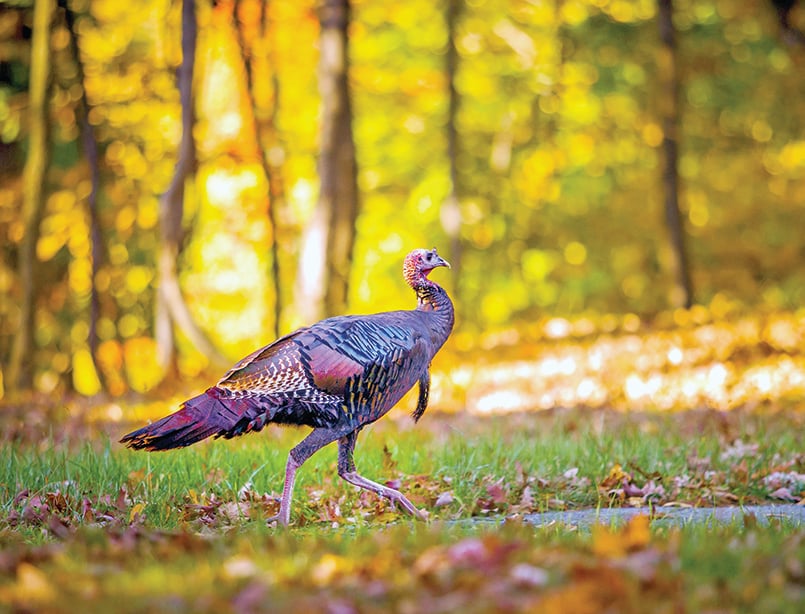
Most turkey hunters consider it a springtime game, when the longbeards are thundering on the roost and you’re calling them into shotgun range. Over the years an entire legion of obsessed gobbler pursuers has grown, some so consumed by the birds they would rather hunt them than whitetails.
But turkey hunting can be a fall game as well, with most states offering fall seasons of varying lengths, although some have been trimmed in recent years due to a downturn in turkey numbers.
And you might be surprised to learn that turkeys are often just as vocal – sometimes more so – in the fall as they can be in the spring.
Too, most states allow the harvest of either a tom or hen, and with flocks that include young-of-the-year birds it can sound like an army moving through the woods as they offer clucks, purrs, and yelps and scratch the forest floor in search of food.
And the toms even gobble in the fall. Chances are you’ve heard them sound off as you sat in a treestand, holding a bow and awaiting the arrival of a buck. Harvesting a longbeard in the fall involves a little extra effort, but it can be done.
Here are several ways to hunt fall turkeys – specifically targeting the birds, beyond the incidental encounter while you’re bowhunting for whitetails.
HUNTING FEATURES FROM OUTDOOR NEWS:
Ryan Rothstein: Three mast crops to focus on for early-season whitetails
Four reasons you aren’t having the bowhunting success you want
Hunting in comfort: Is a box blind the best option for your top deer spot?
Find the food source
Most turkey hunters bag a fall bird by identifying their food source, and scouting ahead of the season can do just that. That’s particularly true in agricultural areas where the flocks are regularly hitting cornfields.
The corn may be standing, or may have already been cut or picked. It doesn’t matter. The birds, typically hens and young-of-the-year birds, develop a daily routine, sometimes moving directly from the roost into their feeding areas.
Areas where the farmers are spreading manure – not liquid manure but the stuff with bits of corn still in it – are also an ideal setup. Often, scouting involves only a leisurely drive around the countryside, looking for birds in the fields. Rainy days often bring flocks out in the field. If you prefer to scout on foot, look for signs such as scratching in the woods or turkey droppings.
Using a blind offers a comfortable setup and allows for some movement, but can limit your ability to change locations. If you’ve done your homework chances are you won’t have to.
You can use some soft yelps, clucks, and purrs, but you may not have to call at all if you’ve got a good handle on their daily movements. If it’s a challenge getting set up without busting birds, sometimes setting up near a regular roosting area can catch birds returning from their afternoon buffet.
Scatter the flock
One of the time-tested – and exciting – ways to hunt fall turkeys is by breaking up a flock. You may even wait until the birds are within shotgun range, but don’t shoot.
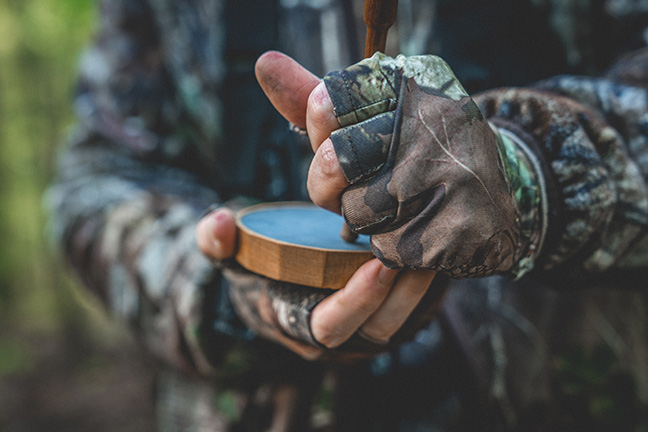
Instead, charge at them and send them flying or running in all directions. The birds will look to regroup after settling down, and soft clucks and purrs, and a kee kee call can be very effective in bringing them back.
Not sure of how to call softly? Go online – there are countless videos of turkey calling techniques, including the one below. Then practice, whether it’s with a mouth call or a friction model. Make sure you get a good scatter of the flock; if you don’t you’re just pushing them en masse and they’ll have no need to regroup and your effort will be for naught.
Go for a gobbler
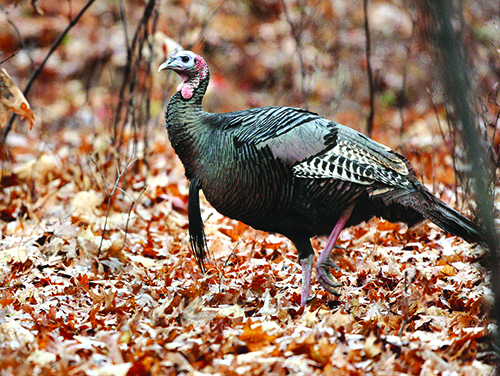
Shooting a longbeard in the fall is a real challenge; they’re typically not part of a large flock of hens and young-of-the-year birds. But with a little effort, particularly on the scouting end, you can pattern a gobbler (or several toms) and get them in shotgun range.
It won’t be easy, and your calling efforts can touch both ends of the spectrum.
Start softly, with yelps, clucks and purrs that mimic a feeding, relaxed bird. Give it plenty of time and keep your eyes open. If it isn’t working, start a fight: a fighting purr can and bring a gobbler in to see what’s going on. Don’t know how to make a fighting purr? It’s pretty easy. Go online and get some tips (watch the video below). But really, it’s pretty much about making noise with hard, loud purrs.
Go to the dogs
Many states allow fall turkey hunting with dogs, and it’s a unique and exciting way to hunt. It can also be incredibly effective and let’s the dog handle the scattering of the flock instead of risking a pulled hamstring yourself.
But don’t just take your beagle or retriever out with the expectation they can do it right. There is such thing as a “turkey dog,” and they are bred and trained to scatter the flock, return to the hunter and then, amazingly, sit quietly while you call in the birds.
Find someone who does it this way and chances are they’ll be glad to take you out. It also involves having a chunk of land where the dog can cover plenty of ground without straying onto posted property.
Three tactics to take advantage of this early fall smallmouth bite
It is that special time of the fishing season when summer and fall merge. There’s give and take, compromise, and
A ‘Bronx’ tale from a memorable day fishing
“Bronx is eaten up with fishing! You should come see for yourself.” My brother, Curt, was not describing the angling
Wisconsin DNR reviews CWD, EHD situations as fall hunting seasons get going
The Wisconsin Natural Resources Board (NRB) received updates on the two biggest white-tailed deer health concerns – chronic wasting disease
