





Off-season for hunting doesn’t mean off-season for shooting. Great riflemen and women get, and stay, that way by shooting regularly.
Ah, but ammo is expensive. Yeah, but so is coffee and beer. Fortunately, in shooting, unlike coffee and beer drinking, there are some great substitutes.
The first is dry firing, which sounds lame, but actually works. I saw it work just yesterday when my son-in-law was missing a milk jug at 10 yards with a handgun. I asked him to dry fire and watch where his sights were when the trigger broke.
He recognized how he was pushing forward and down against the anticipated recoil. When he stopped doing that, I loaded the revolver for him (only I didn’t actually put a round in) and watched him flinch for the first couple of “shots.” Then I did slip a live round in and he nailed that jug, dead-center. Dry-firing had taught him proper shooting technique.
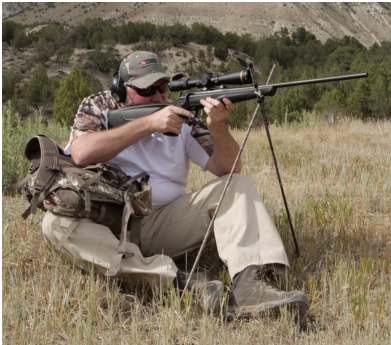
Aside from allowing you to forget about recoil and concentrate on sight picture and trigger control, dry firing builds familiarity with the gun. You can practice and modify your holds and build muscle memory untainted by loud blasts and recoil. All this helps immeasurably toward your development as a shooter, especially if you practice from field positions – off-hand, sitting, off your pack or bipod, etc. By the time you transition to live ammo you’ll already be smooth and consistent.
But eventually, inevitably, you’ll need and want to shoot for real. How to do this without breaking the bank? The .22 rimfire. This most essential rifle is every shooter’s best learning and training tool (not to mention small-game getter.) Beg, borrow, or buy a .22 long rifle in the same action type as your deer rifle (and similar weight and balance if you can get it) and you’ll be cracking off those practice shots for closer to 10 cents a shot instead of $2.
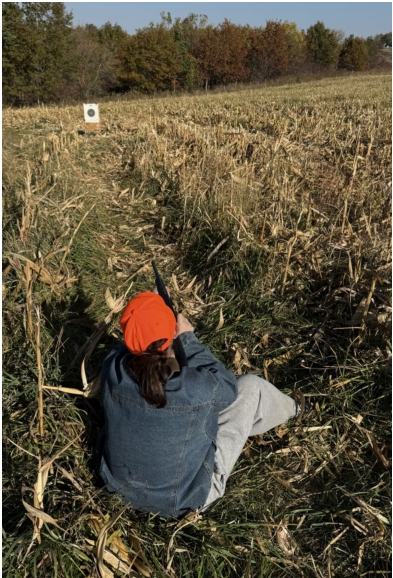
With the .22 rimfire your imagination is the limit. No, you will not be clanging steel plates at 600 yards, but you can certainly try at 100, 200, and even 300 yards. More importantly, you can engage cans, pine cones, acorns, cow pies, chunks of wood and similar safe targets at indeterminate ranges as you stroll, hike, stalk (in your imagination) through woods and fields. This is field training at its finest and most fun.
Strive for perfect, one-shot hits every time, not spray-and-pray ammo dumps. Set sensible goals and strive to meet them for maximum gain in your field shooting skills.
I like to spot potential “prey” and engage them as quickly yet smoothly as I can without “spooking” them. Obviously this requires imagination, but play the game out as you decide if that tantalizing buck pine cone will stand long enough for you to go prone or sit against a tree or deploy your tripod – or whether it requires you shoot quickly off-hand. Scenarios like this gradually will impress upon you your honest skill level and reasonable judgment calls.
MORE COVERAGE FROM OUTDOOR NEWS:
From mines to the metro, here are some hard-water opportunities for inland trout in Minnesota
Dean Bortz: Let’s move Thanksgiving out of Wisconsin’s deer season
Wisconsin 10-pointer is an antlered doe… or is it?
Of course you should do all of this plinking in a safe area using safe shooting set-ups. No livestock in the area, no skyline shots, no shooting on water (bullets skip like flat stones), etc. Safety first.
 At some point you’ll want to, and really need to, graduate to real centerfire shooting/ammo. This can be your deer rifle, but you can save significant ammo costs if you get and use a smaller cartridge, such as the ubiquitous .223 Remington. Bought in bulk, .223 Rem. cartridges cost as little as 45 cents each. (I know, the rifle/scope set up will cost a heap up front, but over time it amortizes out. Besides, everyone needs another small-caliber centerfire rifle.)
Get soft-point or hollow point ammo for your field plinking ammo. It breaks up and ricochets less than FMJ bullets. Then do as much as you would with a .22 plinking rifle/training, except start at 100 yards and extend to as far as you think you need. This will require vast acreage, so find yourself a cooperative farmer or rancher or investigate the legality of plinking on public forest lands.
BLM grasslands in the west are perfect, but some national forests and timber company lands may be off-limits to centerfire rifle shooting outside of hunting seasons. But if the coyote, rabbit, or marmot/woodchuck seasons are open … . Shooting judiciously and not leaving targets, not even paper targets, in your wake obviously is the right thing to do. Trash target shooters littering public lands are a disgrace and a major threat to our right to shoot.
Setting up for a longer range, centerfire course requires a bit of advance work. Walk your potential route and set out targets with safe backgrounds. Small cardboard boxes are ideal because they record hits from any angle and are easy to police. Water-filled gallon jugs are fun, but require a bit more work to clean up. Rocks are popular and safe at 100 yards and farther, ideally if on a slope. Bullets flatten or break up when hitting rocks.
A spotter/partner helps, but if you’re solo, concentrate on shooting technique so you can see your hits. A lower scope power helps. So does positioning so your rifle recoils straight back rather than to the side. But if you can’t see immediate hits or misses, your cardboard boxes will reveal all.
As you plink, you’ll discover the value in guesstimating ranges, using a rangefinder quickly, choosing the best shooting position, getting into that position smoothly and quickly, and getting off a good shot without rushing. Strive for one-shot “kills” every time. A few shots this way minimize ammo expense while maximizing effective training.
Finally, transition to your deer/elk rifle and repeat. It won’t require many shots. A single box of ammo can be enough to reassure you that you are ready to tackle any field shooting assignment with 100% success. Especially important will be that you’ll learn when not to take a shot. Missing those rocks and boxes due to sloppy field performance should prevent you from missing that trophy pronghorn, mule deer, elk or whitetail when the real hunting resumes.
Shooting .22 rimfire rounds is easy to set up quickly, and compared to centerfire rounds, the ammo is cheap.
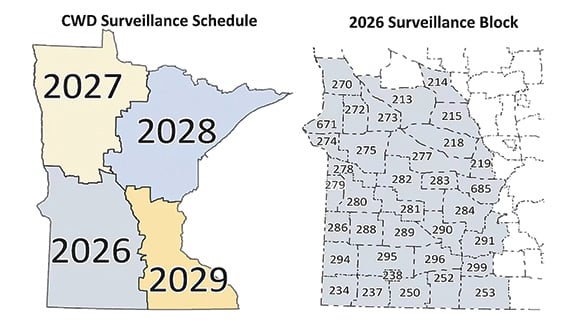
Minnesota DNR reminds firearms deer hunters to prepare for CWD sampling
Sampling is mandatory for southwest Minnesota the opening weekend of firearms deer season Nov. 7-8

Short on walleyes, but long on muskies: Beers Lake in Minnesota’s Otter Tail County
Otter Tail County’s Beers Lake is an excellent walleye fishery – nope. Beers is loaded with good-sized panfish and northern
Minnesota’s Outdoor Calendar
A look at upcoming outdoor-related events from across Minnesota published in the Oct. 23, 2026 edition of Outdoor News.
