




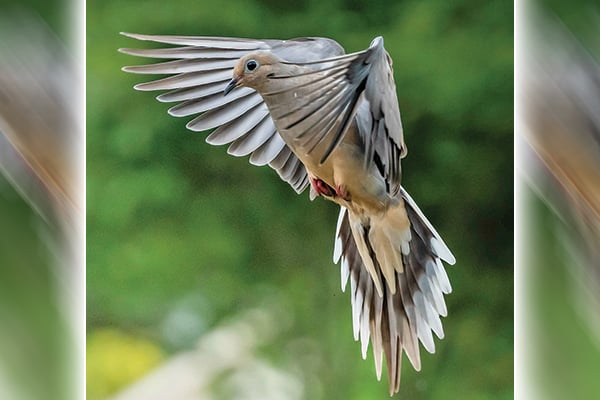
New Ulm, Minn. — It’s here.
The state’s early bird-hunting seasons open Sunday (Sept. 1), with Minnesota’s teal, Canada goose, and mourning dove hunters poised to hit the field. It’s the earliest the seasons can open based on federal frameworks outlined by the U.S. Fish and Wildlife Service.
“It’s a good opportunity to get out early in the season … and hunters have multiple species to choose from. The only downside is that it can get pretty warm,” said Dave Trauba, acting Wildlife Section manager for the Minnesota DNR. “I think last year on the opener the heat index was 100 degrees. If you’re in neoprene waders hunting teal, that’s hot.”
The good news: The weather should be fantastic on the opener, with sunny skies and daytime highs reaching the low 70s, with mornings in the mid-50s across much of the state. Wetland conditions are good across Minnesota, with some field sheet water – which blue-winged teal love – still available in certain areas of western Minnesota.
MORE COVERAGE FROM OUTDOOR NEWS:
One Minnesota hunter’s favorite fowl is quite a dove story
Four old-school waterfowling tactics that can work for you this fall
Federal duck count offers hope for 2024 waterfowlers
Meanwhile, agricultural producers have been busy harvesting small grain and sweet corn, opening up fields for Canada goose and dove hunting. In fact, a growing number of small-grain fields already have been plowed to black dirt, hunters and state officials say.
“I hate to sound like a broken record, but scouting is really important for all three species,” Trauba said. “There’s a direct correlation between hunting success and scouting.”

Canada geese
According to the DNR’s spring waterfowl survey, the estimated number of Canada geese was 106,000, which was 7% lower than last year and 31% below the long-term average. State officials said nesting success was about average this spring.
“Local goose numbers aren’t as good as they were 10 years ago, but they’re better than they have been for the last several years,” said Curt Vacek, Minnesota DNR area wildlife supervisor in Watson, a work area that includes Big Stone, Lac qui Parle, and Swift counties. “That said, small-grain fields are becoming more and more limited.”
Vacek said such fields are being replaced primarily by corn and soybeans, which don’t get harvested until well into autumn.
“If hunters can find small-grain fields, they should find geese,” he said. “They also should be scouting gravel pits, pastures, harvested sweet corn, and even fallow fields this year.”
Alex Culp is an avid Canada goose hunter from Lakeville. He hunts geese across the state, but primarily in and around the Twin Cities metro area.
He started scouting in June to locate potential fields (hay, small grain, sweet corn, etc.) and get landowner permission to hunt them. Culp said he’s starting to see more and more geese finding harvested agricultural fields.
“I start early because the competition is growing,” Culp said. “I suspect you’ll see plenty of hunters out scouting on Saturday before the Sunday opener, but most fields, I think, already will be locked up.”
Especially around the south metro, more agricultural fields are being leased for waterfowl hunting, state officials and hunter say. That includes small grain for early-season hunting and cornfields for late-season Canada geese and mallards.
Special permits are no longer needed to hunt the September goose season.
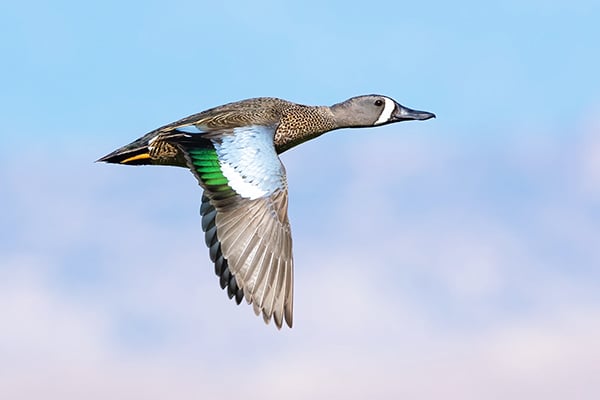
Teal
According to this year’s state survey, the estimated blue-winged teal population was 160,000, which was 26% above last year’s estimate of 126,000. Blue-winged teal numbers were 9% below the 10-year average and 23% below the long-term average estimates.
But the ingredients are in place for what could be a good to excellent five-day early teal season, state officials say. That’s especially true for blue-winged teal in the state’s prairie pothole region, an area dominated by row-crop agriculture.
Ample spring rains coincided with the arrival blue- and green-winged teal to the breeding grounds. Production of blue-winged teal in particular appears to have been good to very good across a wide geographical area.
“For most of the summer, we’ve had plenty of sheet-water flooding in the ag fields and grasslands, providing ideal annual growth for cover and food,” Vacek said. “This is where ducks had been spending most of their time.”
But conditions have changed, at least somewhat. Drier conditions are pushing ducks, including teal, into different habitat.
“Ducks are transitioning to more semi-permanent basins – especially those full of submergent vegetation,” Vacek said. “Many of those basins are in ideal condition now following a couple of years of drought.”
This week’s rain may improve sheet-water conditions, which would benefit teal hunters.
“If hunters can find any remaining sheet water full of ripening annual plants like barnyard grass, wild millet, and smartweed, they’re going to find teal,” Vacek said. “If those spots have dried up, they’ll need to look to those slightly deeper basins full of submerged vegetation like ripe sago pondweed … or even floating green duckweed for the best action.”
Adam Kleinschmidt is a Minnesota DNR wetlands specialist and early teal hunter. He works and travels extensively throughout western Minnesota.
He said teal numbers look promising; bluewings benefited from copious spring rains. Production was good and brood survival appears high.
“There are bluewings on pretty much every basin out there,” Kleinschmidt said. “It’s should be really good on the opener.”
According to the Minnesota DNR, early teal hunters may not hunt on active wild rice beds that are posted open to ricing within the boundaries of the White Earth Reservation or within one-half mile of posted wild rice beds open to harvest within the boundaries of the Leech Lake Reservation.
For more information: Check the 2024 Minnesota Waterfowling Hunting Regulations.
During the past three years, early teal hunters have harvested an average of 50,000 birds per year. The vast majority are blue-winged teal.
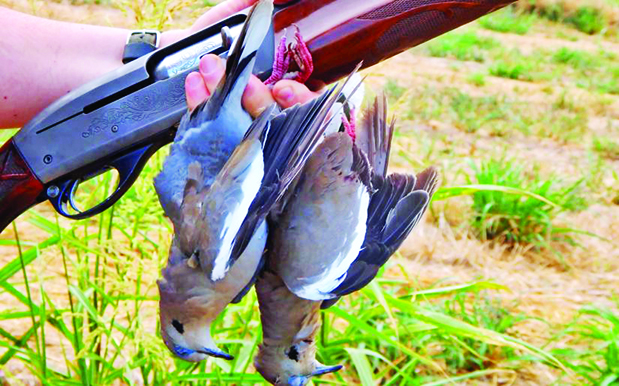
Mourning doves
State officials and hunters are seeing good number of doves feeding in recently harvested small-grain fields (wheat, oats, rye, etc.). The problem, says Tom Kalahar, a dove hunter from Olivia, is that small-grain fields are hard to find in corn and soybean country and that some of them have already been turned over after harvest.
“I typically have at least three fields lined up, but I’m down to one right now,” he said. “We’ll see what happens.”
Mourning doves are weather-sensitive birds, which means hunters should hunt early and often.
“It doesn’t take much of a chilly night and they’re gone and moving south,” Kalahar said. “Hunt as early as possible.”
The early teal season runs Sept. 1-5. The early Canada goose season: Sept. 1-15. Mourning dove: Sept. 1-Nov. 29.
Seasons on the horizon
Upcoming: Youth waterfowl weekend is Sept. 7-8, when waterfowl hunters age 17 and younger may hunt if accompanied by a nonhunting adult 18 years of age or older. Regulations for this hunt are available on Page 8 of the waterfowl-hunting regulations.
Regular hunting season dates for ducks, mergansers, coots, and moorhens are Saturday, Sept. 21, through Tuesday, Nov. 19, in the north zone; Saturday, Sept. 21, through Sunday, Sept. 29, and Saturday, Oct. 5, through Sunday, Nov. 24, in the south and central zones.
Hunting season dates for geese are Sunday, Sept. 1, through Sunday, Sept. 15 and Saturday, Sept. 21, through Saturday, Dec. 21, in the north zone; and Sunday, Sept. 1, through Sunday, Sept. 15, and Saturday, Sept. 21, through Sunday, Sept. 29, and Saturday, Oct. 5 through Thursday, Dec. 26 in the south and central zones.
Way less land for hunting spurs action from Pennsylvania Game Commission
The Pennsylvania Game Commission has overhauled its Hunter Access Program this year in an effort to boost declining landowner participation
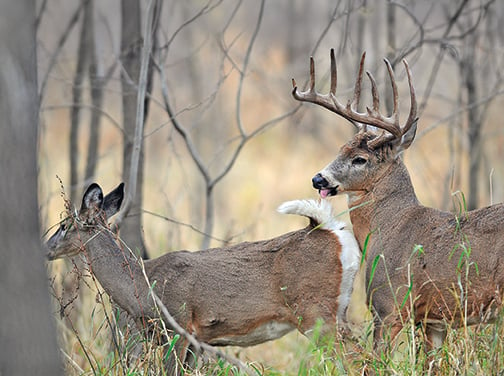
Where do big bucks go when they vanish?
Over the course of our three-months-plus bowhunting season, seeing just one wall-hanger buck can be cause for celebration. Trophy proportioned
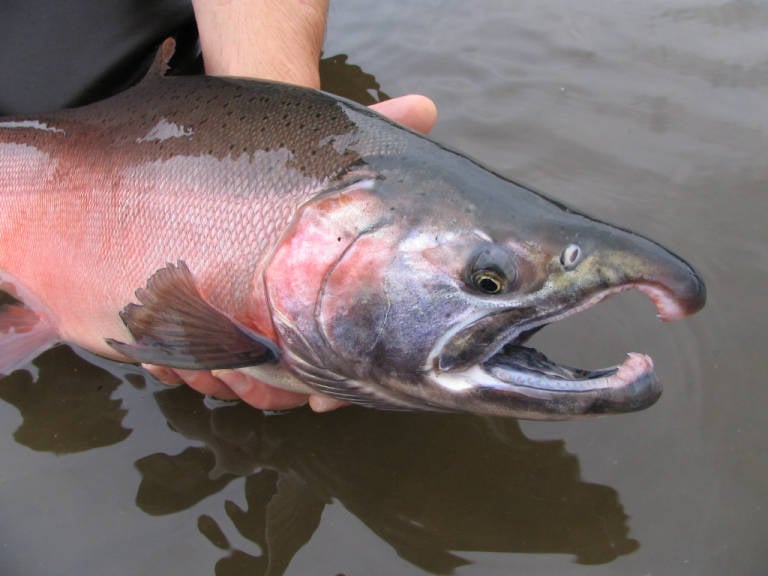
WI Daily Update: Tips for catching cohos on river mouths of Superior
This is a great time of year to chase coho salmon on the river mouths on Lake Superior. Tim Lesmeister
