




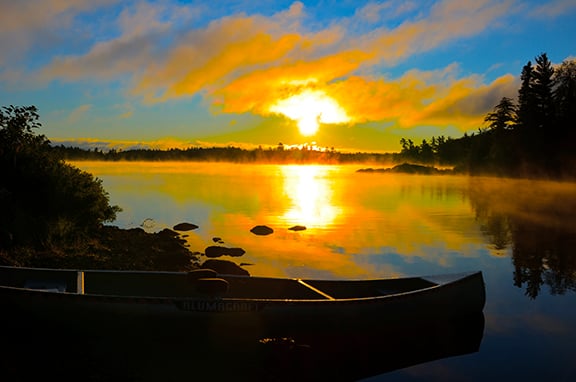
The Boundary Waters Canoe Area Wilderness isn’t just another patch of federal land on a map. It’s one of the last places in the Lower 48 where wild still means wild. Where clean water, abundant wildlife and quiet horizons remain the rule, not the exception. It’s where generations of Americans have hunted, fished, paddled, and learned what public land is supposed to be.
That didn’t happen by accident. The Boundary Waters exists today because leaders, both Republicans and Democrats, chose restraint over short-term gain. Teddy Roosevelt set the stage well over a century ago. Later, in 1964, Republicans in Congress unanimously voted to strengthen protections so the Boundary Waters would endure.
Now that legacy has been tested in Congress.
On Thursday, April 16, the U.S. Senate voted 50-49 to pass H.J. Res. 140, a resolution introduced by Rep. Pete Stauber, R-Minn., 8th District, that uses the Congressional Review Act to overturn a 20-year mineral withdrawal in the Rainy River Watershed, the headwaters of the Boundary Waters. That withdrawal, finalized in 2023 after years of scientific review and public input, has broad bipartisan support. But with this vote, a simple majority in Congress erased decades of careful, science-based protections for one of America’s most iconic public landscapes.
Now, we as Americans are left to reckon with that decision – and with the lawmakers who supported it.
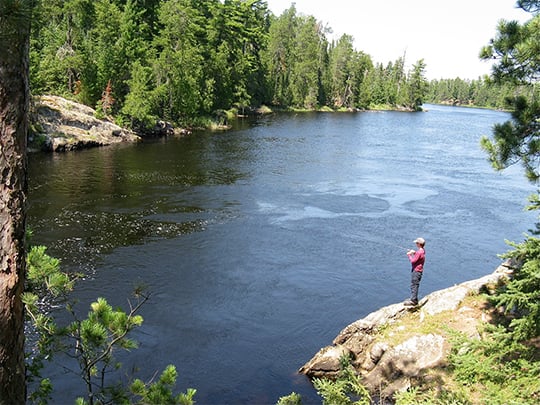
At stake is the Twin Metals mine, a proposed sulfide-ore copper project immediately upstream of the Boundary Waters. Twin Metals is owned by Antofagasta, a Chilean mining conglomerate. The minerals extracted wouldn’t power American manufacturing or strengthen U.S. supply chains. Company plans show concentrates shipped overseas, primarily to China, for processing. This would put American resources in the hands of our top geopolitical competitor.
At a moment when Congress talks frequently about strategic competition with China, supply-chain security, and American independence, Stauber’s proposal does the opposite. It risks one of America’s most treasured landscapes so a foreign corporation can send American materials to our global adversary.
That contradiction is no longer theoretical. It is now the result of a recorded vote.
MORE COVERAGE FROM OUTDOOR NEWS:
Here’s the 2026 outlook for Minnesota’s Great 8 walleye lakes
Wisconsin Musky Clubs Alliance asking where money it donated to DNR went to
Wisconsin DNR fish program looking at $7.3 million budget shortfall
If Washington is serious about countering China, it shouldn’t fast-track projects that ship American minerals to Chinese refineries while leaving Americans with the environmental risk. That’s not national security; it weakens America – and it sacrifices one of the last great outdoor destinations in the United States.
We, and many members of the hunting and fishing community, support responsible domestic mining. America needs minerals. But location matters. Method matters. Risk matters.
Sulfide-ore copper mining is one of the most polluting forms of mining on the planet, and it has a documented history of failure, especially in wet environments like the Boundary Waters watershed. Once sulfuric acid drainage begins, there’s no recall button. Clean water is gone for good.
This threat isn’t theoretical. It’s exactly why career scientists and administrations of both parties concluded the Boundary Waters is the wrong place for this kind of development.
What makes this moment especially dangerous is the tool that was used. The Congressional Review Act was designed to overturn last-minute agency rules, not dismantle long-standing, science-based public-lands protections. By using the CRA this way, and by voting in support of H.J. Res. 140, lawmakers have set a new precedent: that durable public-lands safeguards can be wiped away with a simple majority and minimal debate.
Hunters, anglers and anyone who values public lands should understand what that means. If it can happen here, it can happen anywhere.
The Senate had a chance to reject that precedent, and 50 of its members chose not to do so. That choice deserves scrutiny, especially from lawmakers who campaign as champions of conservation, public lands and America’s hunting and fishing heritage. You can’t claim to stand for those values and then vote to dismantle the very protections that keep places like the Boundary Waters intact.
Votes like this are where rhetoric meets reality. This shouldn’t be about left versus right. It’s about whether Congress still believes that some places are worth protecting – and whether public-lands policy is driven by science and the national interest, or by short-term pressure and overseas profits.
With the Senate vote cast, the question shifts to the American public: Do we accept this as the new standard for how public lands are managed, or do we demand better from the people elected to represent us?
Let’s be realistic: This won’t be the last fight. The precedent set here will echo across the country – in Montana, Alaska, the Southwest – anywhere public lands and waters are seen as expendable.
Our senators must understand this: Americans are watching: hunters, anglers, rural communities, tribal members and the millions of us who rely on public lands.
Some places are worth fighting for. Teddy Roosevelt knew that. So did the Republicans who protected the Boundary Waters in 1964.
The question now is whether today’s leaders will be remembered for defending that legacy – or for dismantling it.
Ryan Callaghan is president and CEO of Backcountry Hunters & Anglers. Steve Rinella is an outdoorsman, writer, conservationist, and founder of MeatEater Inc. Both live in Montana.
Got a hankering to build a wooden canoe? Here’s how to do it
“The way of a canoe is the way of the wilderness and of a freedom almost forgotten. It is an
Longtime Illinois DNR fisheries biologist leaves behind legacy for anglers
He referred to himself as a “river rat” and spent his career working to better Illinois’ fisheries. Wayne Herndon Jr.,
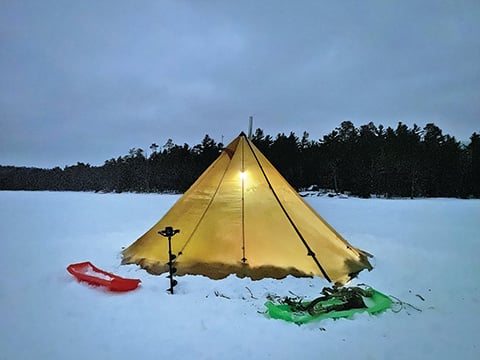
Ice fishing from a hot tent gives winter anglers freedom to roam
I’ve been using hot tents in the backcountry for years. Call it romanticizing, but there’s something special about watching smoke

3 thoughts on “Commentary: Drawing a line for America’s public lands”
Well said. We have over 10,000 lakes. That is what minnesota is known for. Currently the majority of them are polluted in some form. We have to be careful about where we swim, where our dogs drink, and how much fish we eat. Not to mention where OUR drinking water actually comes from. So why we would not protectect the last place we have here that is actually clean and natural blows my mind. To Steve and Cal your efforts are GREATLY APPRECIATED. Its an uphill battle but we need to keep fighting
Is this a bipartisan or a partisan story? I ask the question because it seems very one sided. I love the boundary waters. I have seen and been in it’s beauty more than a half dozen times throughout the years. I agree with some of the points the authors make but I need more evidence to believe everything they say. After reading this article I feel the authors are almost trying scare me into thinking mining is horrible. The authors make it sound like they will mine the entire boundary waters area out of existence. I will and I encourage everyone to do their own research on the details of this mining project and mining company. How much of this mining is actually in the boundary waters? Isn’t mining supposed to be safer than in the past? How can mining destroy the whole boundary waters? Isn’t it massive in size? How many years would it take to pollute the boundary waters? Most of us don’t live in this area. I think of the jobs that this would create for the community. The only thing I hear is how bad mining is. Maybe it is but, there is zero talk about how mining could help a person provide for themselves or their family. I understand peoples love of the boundary waters but let’s be open minded to others needs too. The last administration made many mistakes but I gave them a chance. This was voted in so I will give this a chance as well.
The proposed copper-nickel mine will be located just east of Birch Lake outside of the boundary waters but within the Kawishiwi river drainage which flows into the Basswood River, Crooked Lake, Iron Lake, Lac LaCroix and eventually into Voyageur’s National Park and the Rainy River watershed. There has not been a copper nickel mine that hasn’t leeched pollutants (sulfuric acid and heavy metals) into the adjacent environment. As a boundary waters lover that you claim to be, it is surprising that you are comfortable risking such a unique and pristine environment. Yes the mine will create jobs but once everything has been extracted what will we be left with? A rich Chilean mining conglomerate (Antofagasta), a hollowed out local economy, and in all likelihood a polluted boundary waters. No one is saying no to mining, we are saying no to THIS mine. There are active mining operations near the boundary waters currently (iron ore and helium come to mind) that do not pose the same risk and should continue as long as they are not a threat to the boundary waters and surrounding community. What kind of boundary waters do you want to leave for your children and grandchildren? I hope mine will be able to fish and drink from the same pristine lakes we do today. This copper mine is not worth risking that.