


Home » Home Page News » Commentary: Walz executive order gives Boundary Waters the commonsense protections it needs
Commentary: Walz executive order gives Boundary Waters the commonsense protections it needs
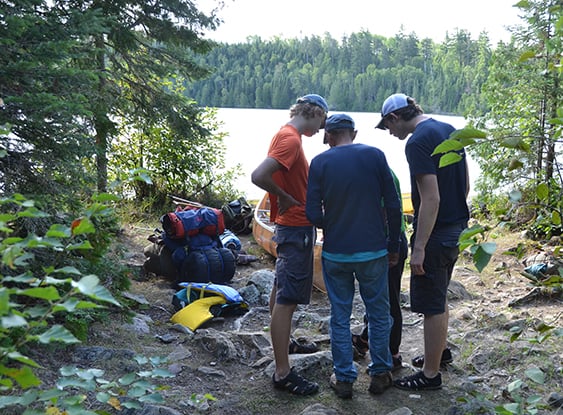
Some of my most-treasured memories are of hunting and fishing in the Boundary Waters Canoe Area Wilderness – and of fillets frying in the pan, of venison tenderloins on the fire grate. Like every Minnesotan, I’m intensely proud of America’s public lands including the wildest portion where we find our greatest, purest outdoors experiences – our wilderness areas.
They are, for common citizens like me, our hunting and fishing estate, a birthright set aside for all of us for all time through the labors and wisdom of generations past. The Boundary Waters is the crowning jewel in our public lands system, and we guard it jealously because it is unique, and because it’s one we own equally, together. No billionaire can buy it up, fence us out, or pollute it… or so we thought until this past winter.
That’s when Republican majorities in the U.S. House and Senate abused the Congressional Review Act and the public’s trust to reverse a carefully vetted and scientifically supported 20-year ban on new federal mineral leasing and development in the Boundary Waters watershed – over the pleas and angry objections of environmentalists, tribes, and America’s hunting and fishing rank and file.
With the watershed’s 20-year protection suddenly wiped away, Minnesotans including Gov. Tim Walz became rightly alarmed that federal agencies under the Trump administration are preparing to railroad a new copper-nickel-sulfide mining district into the Boundary Waters watershed.
MORE COVERAGE FROM MINNESOTA OUTDOOR NEWS:
Minnesota’s early bear harvest sees a 40% jump from 2025
Hunter from Wisconsin takes 690-pound black bear on Minnesota’s opening day
Minnesota DNR proposes permanent lead ammo ban for Keystone Woods Wildlife Management Area
Governor Walz’s executive order in August (“Executive Order 26-10, Enhancing Protection of the Boundary Waters Canoe Area Wilderness”) met this threat by formalizing several reasonable commonsense protections that effectively are already in place, and by adding to them a few new, very important additional protections.
The overall effect of Walz’ executive order is that it gives Minnesotans, our next governor, and the Minnesota Legislature the breathing room that we need to put permanent protections in place. It also ensures that federal political appointees and current majorities in the U.S. House and Senate now understand that they cannot, by taking some series of rushed actions in the next few months, lock Americans all into a grim future in which the Boundary Waters watershed is turned over to become a foreign company’s copper-sulfide mining district.
The Walz EO does the following:
- Directs the DNR to issue no new “nonferrous” mineral leases (nonferrous being copper-sulfide or other minerals besides iron) and no new surface land leases in the Boundary Waters watershed. There have been no state nonferrous mineral leases issued in a couple decades, and Gov. Mark Dayton gave the DNR the same direction about state surface leases years ago, so while an important policy, it is not new.
- Directs DNR not to conduct a joint federal-state environmental review on any nonferrous mining project in the Boundary Waters watershed. This continues existing DNR policy.
- Directs the DNR and the Minnesota Pollution Control Agency (MPCA) to postpone environmental review on any copper-sulfide mine proposal in the Boundary Waters watershed until litigation and rulemaking needed to fix and update the State’s mine siting rule has been completed. This is a pure common sense. It is not possible for mining companies to design a mine project, or for citizens and our state agencies to review and grade it when the standards are changing and unfinished.
- Directs the DNR to review and strictly enforce “to the fullest extent of the law” all existing nonferrous mineral leases in the watershed of the Boundary Waters. It is fair and proper that Minnesota should grant no free passes but vigorously exercise its rights under leases previously issued inside the Boundary Waters watershed.
- Directs the DNR to draft a state policy bill prohibiting copper-sulfide mining in the Boundary Waters watershed, for consideration in the next legislative session. This the most important part of Walz’ executive order.
An official DNR bill permanently protecting the Boundary Waters watershed is a monumental achievement, but drafting the bill is not the same thing as passing it. Our state representatives and senators need to hear that we expect them to support it, vote for it, block all attempts to weaken it, and then send it to our next governor for her to sign.
Some will say this bill puts the cart before the horse, that a mine-by-mine environmental review process is needed. Those voices are wrong. Mines have always gone through environmental review, and yet it is a sad fact that environmental reviews consistently fail to predict the pollution that occurs once those mines are built.
That faulty process is not able to ensure the utmost level of protection to which the Boundary Waters and we are entitled. That is why up-front, permanent protection that sets the Boundary Waters watershed apart from copper-sulfide mining can pass muster.
Don’t delay. Put your state representatives and senators on speed dial, and start calling.
SUBSCRIBER CONTENT
Read this article now.
Create a free Outdoor News account.
Create a free account below to get instant access to this article, thousands of Outdoor News stories, and our digital editions. Your 1-month trial starts the moment you sign up.
No credit card required
No credit card required
Subscriber? Login Here.
Share on Social
Hand-Picked For You
Minnesota Mixed Bag: Zebra mussels confirmed in Traverse, two other state lakes
Tom Venesky: Pennsylvania’s hunters, anglers need answers, not another study
Ohio State researcher provides an update on imperiled Ohio fish species
Minnesota Letters to the Editor: Another View on Norquist’s firearms safety column
Outdoor Insights: Beast of a marathoner runs 26.2 miles (8,390 rods) with a canoe
Minnesota’s Lessard-Sams Outdoor Heritage Council advances 57 projects looking for funding
Related Articles

Minnesota man defending his dog from black bear attack sustains minor injuries
A bear attack occurred the morning of Oct. 5 in Solway Township, Minn., after a man confronted it for attacking

Minnesota Mixed Bag: Zebra mussels confirmed in Traverse, two other state lakes
The Minnesota DNR has confirmed the presence of zebra mussels in Traverse Lake, near Browns Valley in Traverse County.

Minnesota Letters to the Editor: Another View on Norquist’s firearms safety column
Reader-submitted letters to the editor published in the Oct. 9, 2026 edition of Minnesota Outdoor News.
