


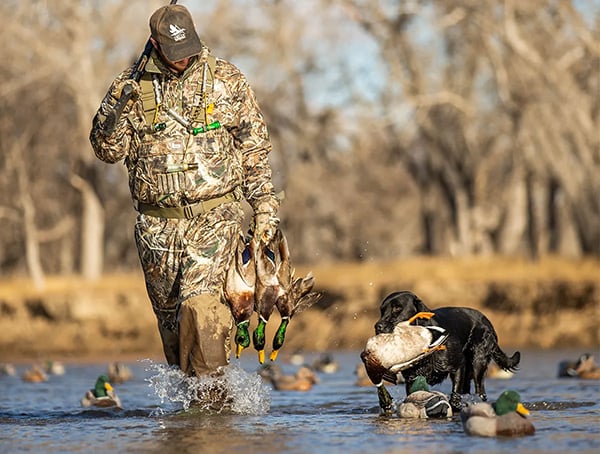
The U.S. Fish and Wildlife Service last week released its annual waterfowl population survey, and despite mallard numbers dropping below 6 million birds, the Adaptive Harvest Management formula is again recommending a liberal duck season for 2027.
For years we heard from the feds that robust mallard numbers helped maintain liberal seasons, even while other species struggled. Per the report, we have 5.86 million mallards this year, down 11% from 2025, 26% below their long-term average, and 49% below their 2016 peak.
 After grousing about this on the Outdoor News Radio show last week, I discussed it in detail with DNR Migratory Gamebird Consultant Nate Huck, who represents Minnesota on the Mississippi Flyway Technical Committee. Huck acknowledged that managers are dealing with a situation they haven’t encountered in 30-plus years: a continental mallard population below 6 million.
But with changes to AHM over the years, that 6 million is not a rigid threshold that triggers a shorter season. Mallard abundance is one piece of a larger calculation. AHM also considers breeding-habitat, particularly pond numbers (which were up 29% in Canada in 2026), because those wetlands help determine the population’s reproductive potential.
How close were we to a moderate season for 2027? Huck said the model could recommend a liberal season with only 4.25 million mallards if pond numbers were substantially higher than this year. Conversely, with the same pond conditions that managers observed this year, the model would recommend a moderate framework at 5.25 million mallards, so 600,000 fewer greenheads likely would’ve meant fewer duck hunting days in 2027.
“We’re as close as we’ve been to a moderate season recently,” Huck said. “We’re a couple of steps away.”
MORE WATERFOWL COVERAGE FROM OUTDOOR NEWS:
How far is too far to shoot in waterfowl hunting? Answer these three questions
Trump’s EPA pitches more Clean Water Act rollbacks
The geese are getting smarter; here’s a few tricks to outwit them
Older hunters grew up when managers placed more emphasis on harvest. But research increasingly suggests that breeding-season conditions have a greater effect on mallard numbers than hunting mortality. Overwinter survival, including hunting, has the least influence of the major factors the models considers, Huck said.
There also are fewer waterfowl hunters now. Take 1991, when Minnesota hunters killed an estimated 784,000 ducks during a restrictive, 30-day season. Mallard numbers were substantially lower than the species’ population peak in 2016, when Minnesota hunters harvested 606,000 ducks during a long, 60-day season.
“We just aren’t driving populations with the gun,” Huck said.
That’s difficult for some hunters to accept. We assume our collective harvest must be a leading factor in duck abundance. If regulations don’t become more restrictive when mallard numbers fall, critics might ask whether AHM is “adaptive.”
Huck hears that criticism, especially because the model has recommended liberal frameworks for many years. But he said the matrix does change.
Flyway committees will meet later this month, followed by the USFWS Regulations Committee in October, and it’s not a slam dunk that representatives will lock in a liberal framework for 2027, but they almost always trust the model’s recommendation.
During my rant last week, I suggested that if a more restrictive season was on the horizon for 2027, the feds might be waiting till after the election. Huck challenged me on that, because he trusts the flyway rule-making process and said no one is keeping seasons liberal to satisfy voting sportsmen. There have been times when politics influenced duck regulations, as recently as the early 1990s, and those disagreements helped birth science-based AHM.
“I believe in the process,” Huck said.
Another poor breeding year for mallards could move the model closer to a moderate package. We’re nearer to that possibility than we’ve been in years, but decent water in Canada saved us for 2027. Between now and 2028, we need to end this drought in the States.

Iowa’s upland wildlife researcher Todd Bogenschutz receives career award
National group recognizes his uplands work
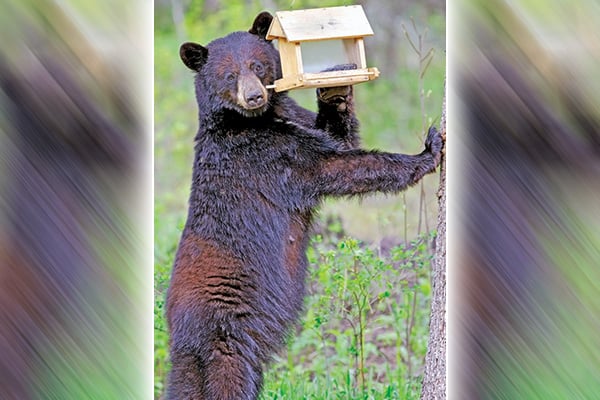
Minnesota man defending his dog from black bear attack sustains minor injuries
A bear attack occurred the morning of Oct. 5 in Solway Township, Minn., after a man confronted it for attacking

Minnesota Mixed Bag: Zebra mussels confirmed in Traverse, two other state lakes
The Minnesota DNR has confirmed the presence of zebra mussels in Traverse Lake, near Browns Valley in Traverse County.
