




Michigan Mixed Bag: Grants Available for Michigan ORV Safety Education Providers, Certified Courses

Lansing — To help keep ORV recreation enjoyable and safe on the state’s 4,000 miles of state-designated off-road vehicle trails, the Michigan DNR is accepting applications for off-road vehicle safety education grants to help fund certified instructors and ORV safety courses throughout Michigan.
The funding must support organizations providing ORV safety education through certified ORV safety instructors. All instructors must successfully complete a background check and obtain ORV safety instructor certification before teaching grant-funded classes.
“We use our funds to teach several classes per year,” said Lt. Brian Kurin of the Marquette County Sheriff’s Office. “From the questions and comments we get from students, I believe these classes are crucial.”
Grant funding helps eligible organizations offer ORV safety classes led by certified instructors. These classes, required for all ORV operators under 16 years of age, teach riders how to safely and responsibly enjoy Michigan’s designated ORV trails and routes.
Grant applications are due Aug. 1. Recipients will be chosen based on eligibility requirements and receive funding after Oct. 1.
For more information, email Richard Kennedy, state trails operations specialist, at KennedyR@Michigan.gov.
MORE COVERAGE FROM MICHIGAN OUTDOOR NEWS:
Funding shortages might curb fish stocking efforts for Michigan DNR
Final budget spares Michigan DNR staff, programs
An Ontario fly-in adventure is a great July option for Michigan anglers
Aging Net River Dam Restoration Underway
Lansing — The Michigan DNR is reconstructing the aging Net River Dam in southern Baraga County, a collaborative project that will restore water levels and improve the wetland habitat. Work started in late June and is expected to be completed in the fall.
The dam, built in the early 1960s, and the 200-acre wetlands impoundment it creates are part of the DNR-managed Net River Flooding State Wildlife Management Area. During construction, the parking area and boating access site will be closed; anglers and other visitors should plan accordingly.
Bill Scullon, DNR field operations manager for the western Upper Peninsula, said water levels in the impoundment area have been drawn down to accommodate construction. The wild rice beds on Net River will not be accessible this summer and fall due to the low water levels.
The Net River Dam partially failed in 2022 after a corroded water control structure in the middle of the dam collapsed, creating a sinkhole and washing out a road. Upstream and downstream embankments continued to retain water as designed.
Once the project is completed, Scullon said water levels will be restored to their normal levels and management of the wetland habitat, as well as wild rice resources, will be enhanced.
Qualified Forest Applications Due Sept. 1
Lansing — Applications to enroll in the Qualified Forest Program are due Sept. 1 to receive the associated tax exemption for the 2027 tax year. The program, administered through the Michigan Department of Agriculture and Rural Development, encourages Michigan landowners to actively manage their privately owned forests for commercial harvest, wildlife habitat enhancement and improvement of other forest resources. The program provides potential tax benefits as incentives for sustainably managing their forests. Interested landowners should keep the following in mind:
• Land parcels must be 20 acres or larger
• A qualified forester must write a management plan for the property
• An annual fee tied to the taxable value of the land is required.
• Buildings and structures are allowed on the property but are not eligible for tax exemption
• On parcels less than 40 acres in size, at least 80% must be stocked with productive forest. On larger parcels, at least 50% must be stocked with productive forest. A productive forest is a forest capable of producing forest products at a rate of 20 cubic feet per acre per year.
For more information, contact Ben Schram, Michigan Department of Agriculture at schramb1@michigan.gov.
Woodcock Will Charge Deer to Defend Nests
Bangor, Maine — University of Maine researchers captured what may be the first recorded evidence of nesting birds aggressively driving away deer, revealing an unexpected defense strategy against a little-recognized nest predator.
Their findings suggest woodcock can respond to deer in multiple ways, challenging the assumption that these large herbivores pose little threat to nesting birds.
Woodcock typically rely on their cryptic feathers, which act as camouflage, to avoid nest predators. They also deploy a “broken wing” display to lure predators away from their eggs or chicks.
In six instances during April 2024, however, five nesting woodcock in West Virginia chirped, postured, charged and even flew into approaching deer, UMaine researchers found. The deer either walked away or fled the area in response.
“Documenting these behaviors got researchers thinking more deeply about how birds could respond to deer as nest predators,” said Kylie Brunette, lead researcher on the investigation and UMaine Ph.D. student in wildlife ecology. “That small birds are willing to aggressively defend their nests against something as large as a deer, using different strategies based on the situation, opens a lot of interesting questions about how these unexpected interactions affect wildlife communities.”
Researchers deployed the cameras that captured the footage in 2024 and 2025 as part of the Eastern Woodcock Migration Research Cooperative research project.
SUBSCRIBER CONTENT
Read this article now.
Create a free Outdoor News account.
Create a free account below to get instant access to this article, thousands of Outdoor News stories, and our digital editions. Your 1-month trial starts the moment you sign up.
No credit card required
No credit card required
Subscriber? Login Here.
Share on Social
Hand-Picked For You
Origin of road-killed armadillo in southwest Ohio a mystery
South Dakota Fishing Report – September 16, 2026 – video
Bowhunt gets started in Ohio with additional opportunity in CWD surveillance area
Ohio’s statewide fishing and hunting report on Sept. 17, 2026
Niagara Falls (N.Y.) Fishing Report – September 15, 2026
Michigan Fishing Report – September 16, 2026
Related Articles

Pennsylvania’s hunting license sales down so far this year
Hunting license sales are down nearly 4.5% at the end of August, although Pennsylvania Game Commission officials believe there is
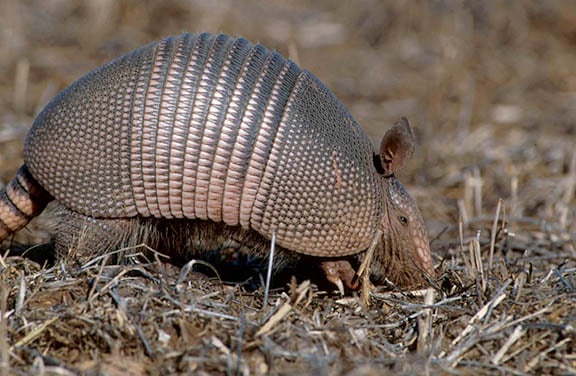
Origin of road-killed armadillo in southwest Ohio a mystery
An armadillo found as roadkill in southwest Ohio has researchers scratching their collective heads wondering from where the non-native mammal
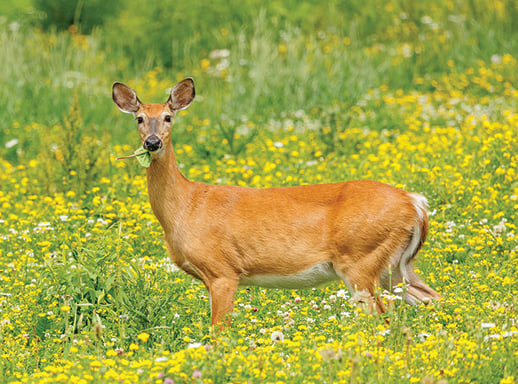
Bowhunt gets started in Ohio with additional opportunity in CWD surveillance area
Hunters in Ohio’s chronic wasting disease (CWD) surveillance area have additional dates this season to pursue white-tailed deer. The Ohio
