




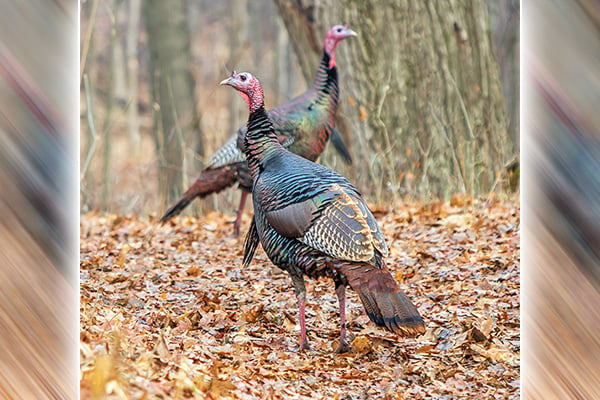
St. Paul — Years ago as wild turkeys were expanding their range across Minnesota, hunters in some parts of the state were still learning about the new recreational opportunity.
After a public meeting in Alexandria that focused on turkey hunting, a DNR staff member said in a side conversation that he believed many areas could support a two-turkey spring limit.
“But hunters don’t want it,” he said at that time.
But after record spring harvests in 2024 and 2025, it seems that opinion may have changed.
The DNR is finalizing the results of a recent survey the agency sent out to turkey hunters. The results should be released sometime this year, possibly this spring or early summer, according to Roy Churchwell, the DNR’s upland gamebird consultant. Those survey results could help shape some changes to future turkey hunting seasons.
One could be a little bit longer fall season with an earlier start to sync with small game openers. The 2025 fall turkey season, which had a harvest of approximately 1,000 birds, ran from Oct. 4 through Nov. 2.
“The majority of turkey hunters in the fall were interested in extending the season a little bit,” Churchwell said. “Not many were interested in that season going into rifle deer season.”
MORE TURKEY COVERAGE FROM OUTDOOR NEWS:
The art of sitting still may be the most important skill in turkey hunting
Shawnee National Forest offers a true public land turkey hunting experience in Illinois
Hunters asked to help with the science of wild turkey genetics this season
A two-bird spring limit?
Another question the DNR asked of hunters was if they would support a two-bird limit during the spring when only male turkeys (toms and jakes) can be shot.
“As you can imagine, if you ask a turkey hunter if they’d like to shoot two birds, many people said yes,” Churchwell said. “There’s been a lot of talk about two birds in the spring. We haven’t settled on whether we’re going to try to push that through. We’re still having discussions.”
The DNR is considering which areas of the state could support a two-bird limit. When turkeys become established in an area, it’s common for their numbers to increase quickly before decreasing, then settling into a more natural carrying capacity based on available habitat.
Churchwell pointed to the open farmland region of southwest Minnesota where numbers seem to be declining after peaking.
“I’m not sure that area (could support a two-bird limit) because it’s so much farm country,” he said. “So going two birds statewide at this point may not be the way we want to go. That’s kind of the discussion we’re having now.”
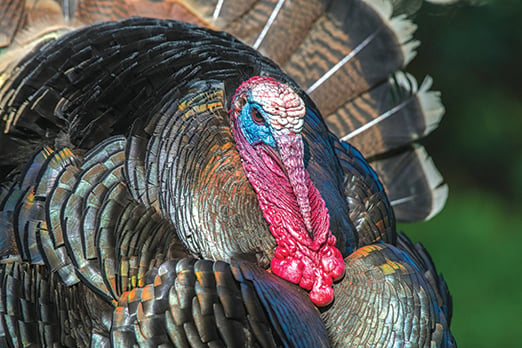
Minnesota issued a total of 61,834 spring turkey permits in 2025 when 16,903 birds were registered for a 27.3% hunter success rate. That’s the second highest success rate in the past 10 years (28.1% success in 2024) and the second most licenses sold (63,196 in 2020).
Turkey hunters in Minnesota, Wisconsin, Iowa and Illinois have experienced record or near-record spring harvest seasons recently. But that success comes amid concerns of declining turkey populations in other regions of the country, especially the South.
“The research that’s coming out is indicating that those areas in the southeast U.S. are having problems with birds because of adult female survival of turkeys,” Churchwell said. “So a spring harvest of males-only doesn’t give me any pause for parts of Minnesota that have lots of birds. I don’t think that harvesting male birds would have any impact on those populations.”
Many states in the South are rich with turkey-hunting tradition where hunters for years have been able to shoot multiple birds in the spring. Asking hunters to pull back on those bag limits has been a tough sell for some state agencies.
Minnesota hunters have only experienced a one-bird limit, which may make them more accepting of fluctuating bag limits should population concerns arise in the future.
“A lot of people feel like if we start a two-bird season that we won’t be able to go back, but I don’t think that’s the case,” Churchwell said. “I think if there’s a time that suggests that turkey populations aren’t doing good that we should readily try to go back to a one-bird limit.”
Churchwell expects opportunities for public comment if the DNR moves forward in trying to implement a two-bird limit.
An emphasis on population monitoring
The DNR’s goal in future years is to have a good idea of what the carrying capacity is for turkeys in different regions in the state, which requires monitoring trends in the population.
“We don’t currently have any population monitoring in the state. It is a goal of the department and a focus to work on that and try to develop something,” Churchwell said. “It will take some time to develop and we’re trying to figure out the best method.”
Churchwell pointed to the possibility of using genetic methods to build up data, or something similar to what the Wisconsin DNR uses with its Snapshot Wisconsin program. That’s a citizen-science program that uses a statewide network of volunteer-managed trail cameras. Photos are made available online and the resulting dataset is used to inform WDNR management decisions.
“A lot of times for the past 20 years, not only in Minnesota, but other states have used an estimate of the harvested numbers being 10% of the population,” Churchwell said. “We have a better understanding now that that percentage isn’t really that accurate, so we’re moving away from that and trying to develop something that gives us some more sound estimates.”
Churchwell said that 20 years ago the DNR was dedicating money available for turkey management toward moving birds around the state to develop new populations.
“I think I’ve heard that turkeys have been at least spotted in every county in the state,” Churchwell said of current numbers. “We don’t need to move birds around anymore. They’re going to expand on their own, and so at this point it’s time for us to buckle down and watch these populations.”
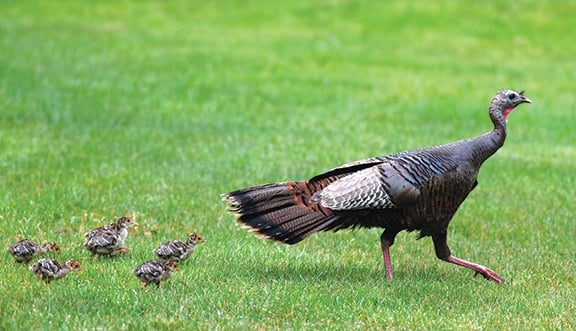
In 2024, the DNR implemented a citizen-science effort where the public could report sightings of wild turkeys from July through August, a time when poults are more visible. A goal with that online survey is to better understand the ratio of poults per hen. Churchwell said there was better participation in 2025 than there was during the rollout year of 2024.
This is part of a nationwide effort where states are using similar methods so wildlife managers can view overall trends.
“In the end, we may not end up with a population estimate, but we may have indices that go up and down with the population that we can follow,” Churchwell said of future monitoring efforts. “As managers, that’s what we need more than anything is, ‘How is the population doing compared to last year and what’s the current trend in the population?’”
Pennsylvania’s hunting license sales down so far this year
Hunting license sales are down nearly 4.5% at the end of August, although Pennsylvania Game Commission officials believe there is
Origin of road-killed armadillo in southwest Ohio a mystery
An armadillo found as roadkill in southwest Ohio has researchers scratching their collective heads wondering from where the non-native mammal
Bowhunt gets started in Ohio with additional opportunity in CWD surveillance area
Hunters in Ohio’s chronic wasting disease (CWD) surveillance area have additional dates this season to pursue white-tailed deer. The Ohio
