




Most whitetail hunters put away their hunting gear once the season ends, and they don’t really think about deer again until the velvet bucks start showing up in mid-summer. The ones who don’t, often spend the winter scouring food sources and bedding areas for shed antlers.
A smaller subset of hunters keep their hiking boots out, and their scouting apps fired up and ready to go. They also tend to be the kinds of hunters who don’t leave a lot of their buck tags unfilled.
Winter scouting is a really good opportunity to set yourself apart from the rest of the pack. But before that, you have to understand why it can be so valuable.
Risk-free intel
The main selling point on trail cameras, besides the fact that they can gather recon 24/7 for months at a time, is that they don’t require you to go in and disturb the natural world with your presence. While this isn’t a perfect comparison, winter scouting is as close to risk-free as you can be on that front, while still entering the woods.
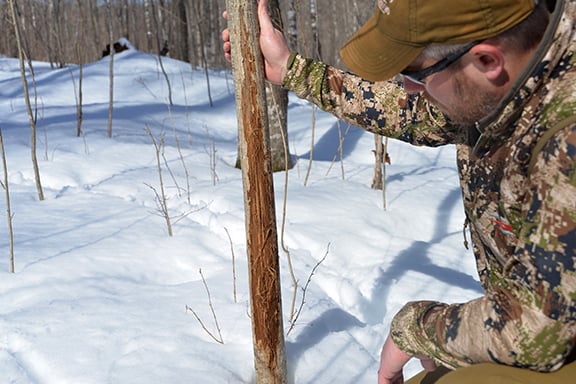
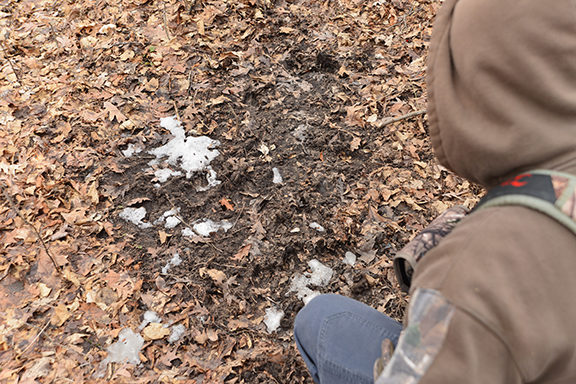
There’s no need to be cautious about where you scout, so you can dip into every spot where big ones might have spent their time last fall. The rubs they leave behind are clues to fall buck behavior, and so are scrapes if you extend your scouting season long enough into the spring to get out when the snow has melted.
This benefit can’t be overstated. We often avoid going into areas of our farms or leases or the piece of public land we prefer to hunt, because we don’t want to spook bucks during the season. With months to go before bow season opens, you don’t have to worry about that. You can get out and take a good look around, and when you do, pay attention.
MORE WHITETAIL COVERAGE FROM OUTDOOR NEWS:
Want a more efficient whitetail rut in 2026? Start brainstorming now
Ryan Rothstein: Don’t underestimate the power of good deer moms
Knife accident turns deer hunt into all-night survival challenge for Wisconsin hunter
The sign that matters
Most hunters with a little salt and pepper in their beards are quick to point out that not all sign is created equal, and they’re right. A rub on the edge of a picked cornfield is great, but you already know deer spend time in cornfields – often in the middle of the night. A similar rub tucked back into the timber on the edge of a swamp is a different story.
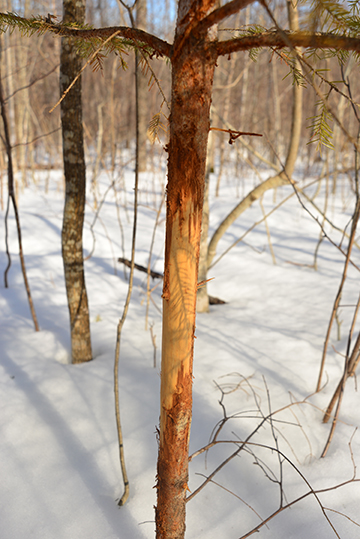
The buck responsible for that rub has tipped his hand in a different way. The odds are much higher he made that rub during daylight hours, and sign in close proximity to really thick cover is often an indicator that you’re close to a bedding area, a staging area, or both.
This is a crucial component of winter scouting in a region with a decent population of deer, but if you hunt where the density is much lower, the rules don’t quite apply the same way.
You want to find any and all of last fall’s sign that you can, because in low-density settings you’re looking for any indication that bucks spent some amount of time in a spot.
This is where you often see a real disconnect between hunters. It seems like hardcore whitetailers who have access to really good ground are most likely to winter scout, but the folks who point their trucks north each year to hunt in wolf country would probably be better served to get out between now and spring. Where there aren’t many deer to begin with, the winter woods can reveal isolated pockets of activity, which can play into the upcoming season’s strategy.
Pay attention
It’s great to get out and put on some miles where you hunt, but it’s also a good idea to acknowledge that our memories aren’t as reliable as we’d like them to be. When you hike into a your deer ground in late February to look around, and then find a killer rubline, you might think your winter scouting job is finished.
Then you hike back in sometime in July to drop a camera, or maybe hang a stand, and realize the barren winter woods have morphed into a jungle. Drop waypoints on your winter findings, make note of the best stand trees, and conduct as much due diligence as possible into how you’d actually set up in that spot to hunt.
What work you do on that front in the winter, will absolutely pay dividends next October or November.
Pennsylvania’s hunting license sales down so far this year
Hunting license sales are down nearly 4.5% at the end of August, although Pennsylvania Game Commission officials believe there is
Origin of road-killed armadillo in southwest Ohio a mystery
An armadillo found as roadkill in southwest Ohio has researchers scratching their collective heads wondering from where the non-native mammal
Bowhunt gets started in Ohio with additional opportunity in CWD surveillance area
Hunters in Ohio’s chronic wasting disease (CWD) surveillance area have additional dates this season to pursue white-tailed deer. The Ohio
