




Gus’ body language gave off all the classic signs as we approached a corner near the end of a long walk along the edge of a cattail slough.
At age 7, he is in his prime years as a bird dog. Young enough where stamina isn’t an issue and experienced enough to consistently piece together the puzzle. His pace quickens when on a bird, but he’s methodical in his approach, dissecting every detail.
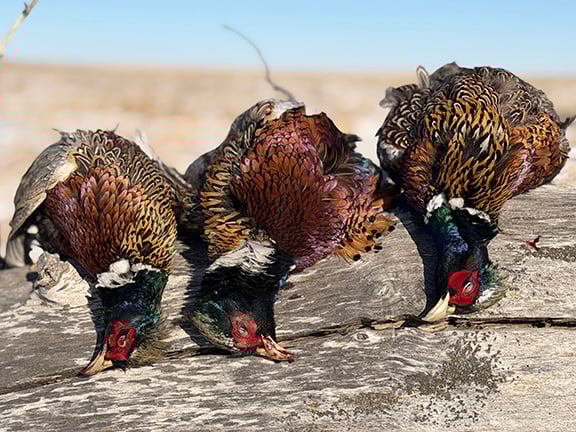
Gus froze and glanced back at me. Almost simultaneously, a rooster erupted from the cattails. I shouldered my Citori and dropped our three-man group’s third bird of the early afternoon.
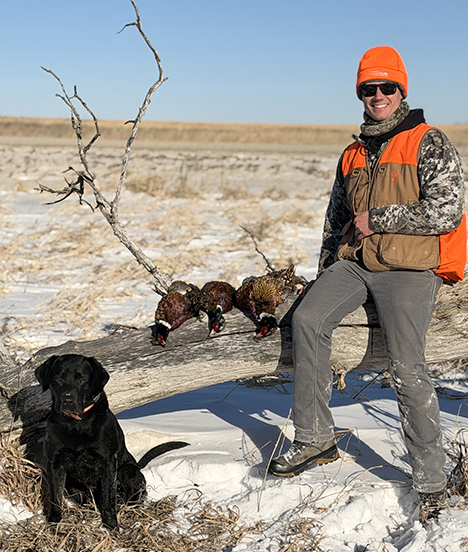
This hunt came on Jan. 30 under brisk but calm conditions in South Dakota. The challenges of hunting late-season roosters are well documented – jumpy birds and the potential for difficult weather – but there are advantages to working the late season, too.
I’d argue late-season weather is often easier on the dogs than the high temperatures we all-too frequently see in early-to-mid October nowadays.
Birds are more confined, and it’s often easier to get permission on private property during late season, too.
Most hunters have packed away their pheasant hunting gear by January. There was not one other person at the lodge we stayed in that last weekend of the month.
All this factors into why our small Minnesota group targets mid-to-late January to visit South Dakota. We welcomed the change the state made in 2020-21 when the season was extended through Jan. 31. (It traditionally wrapped up the first Sunday of the month.)
The extension offers hunters more flexibility around weather, holidays, and other hunting seasons that take place earlier.
‘Phenomenal’ last couple of seasons
Whispers of extending Minnesota’s season further into January have been floated more formally by the Minnesota DNR in recent years. Only roosters are shot in both Minnesota and South Dakota, but the pushback from some who oppose an extension is that hunters are pressuring roosters and hens at a time of year when they should conserve energy.
“Although that concern may be valid, conditions where unnecessary pressure may be negatively affecting pheasants would indicate a harder winter than normal,” Alex Solem, a senior upland game biologist with South Dakota Game, Fish & Parks, wrote to me in an email. “This would limit the number of hunters based on weather conditions they are experiencing.”
South Dakota is now six seasons into the extension. Has hunting through January affected hunter satisfaction or the birds? Game, Fish & Parks has not asked specifically about the extension in a public opinion survey.
MORE UPLAND BIRD COVERAGE FROM OUTDOOR NEWS:
The anatomy of a successful public lands pheasant hunt
Pheasant Fest, Quail Classic in Minneapolis set for Feb. 20-22
Dedicated Nobles County Pheasants Forever chapter achieves big public lands milestone in Minnesota
In recent years, our group has had a couple of landowners tell us they shut down their property to pheasant hunters after Jan. 1. So some are living by the old rules, but overall satisfaction remains high among South Dakota’s rooster hunters.
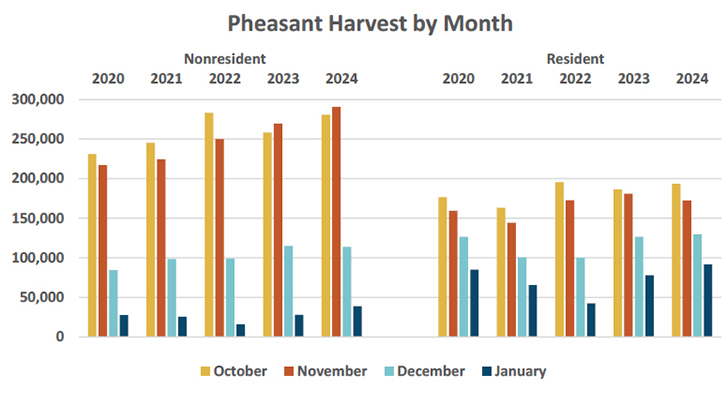
“We rarely get any negative comments in our harvest survey responses,” Solem said. “We estimate the number of hunters and harvest for both nonresidents and residents by month for our harvest surveys. Surveys indicate an overwhelming amount of harvest and participation occurs in October and November when compared to January. Pressure on the birds drops fast once hunting conditions decline.”
That matches what I have seen in hunting late-season roosters in Minnesota and South Dakota the past 20 years. Those of us who love it know it can be a great experience, but few hunters place busting through cattails high on their priority list.
“There are certain years where the weather is more favorable at the end of the season where we see a slight increase compared to the year before, but it is negligible,” Solem said.
Two of my buddies wrapped up their season on South Dakota’s final day this year by getting a two-man limit in four hours. Year after year, we hunt the same sloughs in January and see hundreds of birds that keep bringing us back.
“Our last two seasons have been phenomenal,” Solem said. “They’ve been the best we’ve had in the past decade, even with the extended season, which would indicate there’s been no negative impact. Although pheasant hunters have had more days to harvest pheasants, our birds-per-hunter-harvested ratio has been extremely high.”
A look at Minnesota
So should Minnesota extend the pheasant season deeper into January?
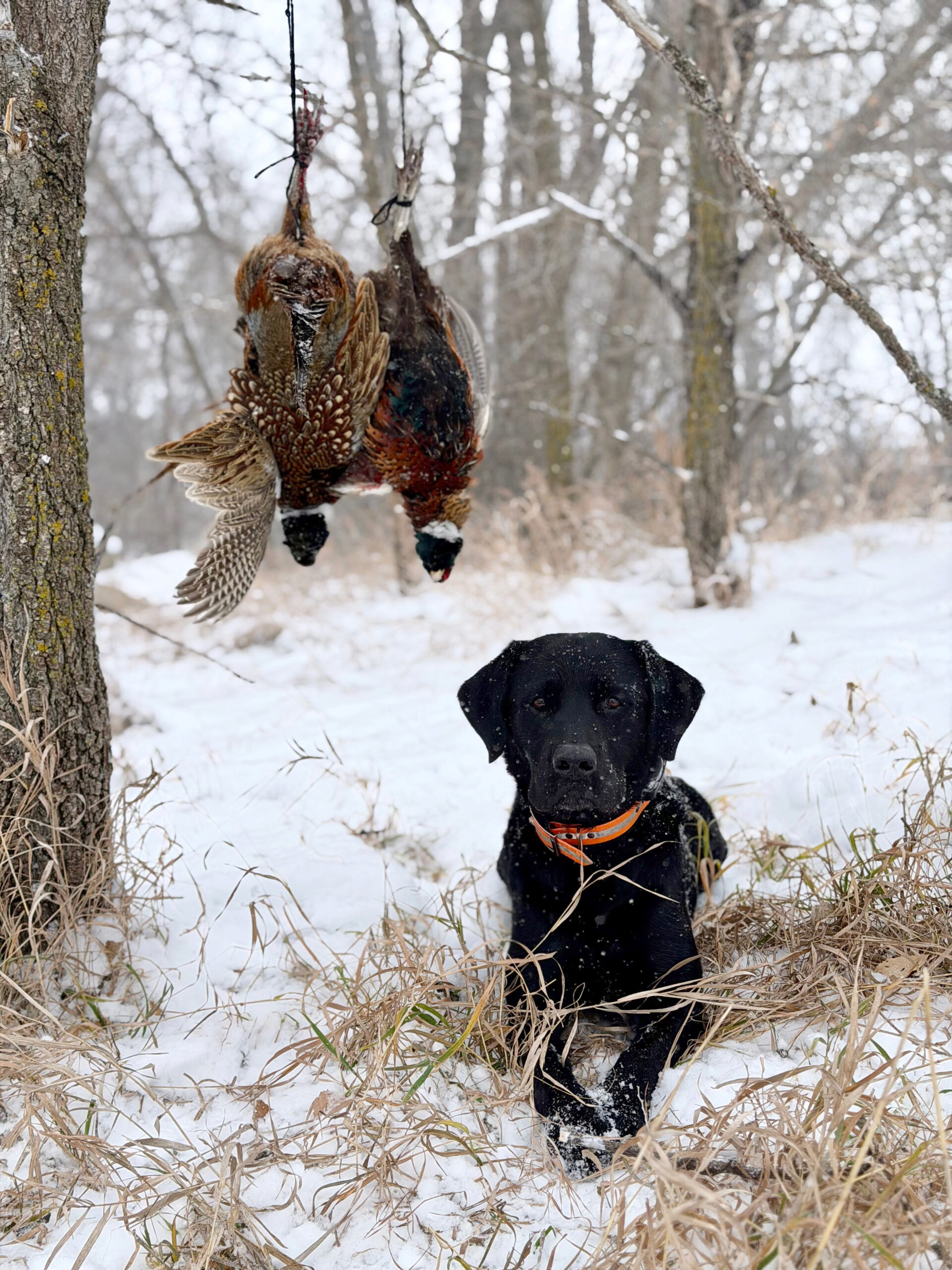
Minnesota isn’t South Dakota when it comes to producing pheasants, but it’s darn good in the heart of the bird’s range like the southwest. Where habitat exists, good bird numbers follow.
In an interview with Outdoor News in 2024 related to extending Minnesota’s season, Nate Huck, now a DNR migratory gamebird consultant, said, “In my mind, it’s really a social issue.”
Roy Churchwell, a resident upland gamebird consultant with the DNR, echoed those same sentiments when I reached out for this story. “I will add, according to our current survey, socially, folks prefer the current season,” Churchwell wrote.
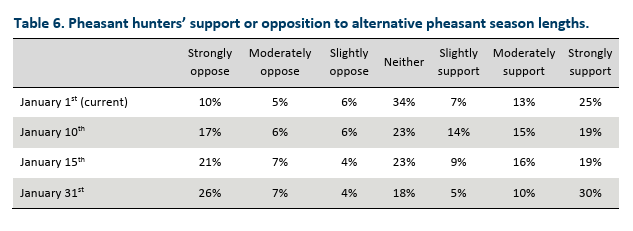
The DNR asked questions related to a January extension in its 2024 hunter survey. Given the options of a Jan. 1, Jan. 10, Jan. 15, or Jan. 31 closing date, Jan. 1 tied for the highest combined support (45%) and had the lowest opposition (21%).
Jan. 31 had the same level of combined support (45%) with the highest level of strong support (30%). It also had the highest level of strong opposition (26%). Minnesotans did get through the first Sunday of the year (Jan. 4) to hunt this past season.
My vote? Meet in the middle. Give hunters through the second or third Sunday in January (I’d be fine if this meant opening a week later into October when the landscape might not be quite as covered in corn). Then trust wildlife biologists to monitor any potential trends through August roadside counts and hunter surveys to adjust regulations if needed.
I’ll be the first to champion pulling back the reins if we see signs that the birds can’t handle an extension. So far, we’ve seen nothing to indicate that would be the case.
Season lengths for some of the top rooster states (2025-26)
South Dakota: Oct. 18-Jan. 31
Minnesota: Oct. 11-Jan. 4
North Dakota: Oct. 11-Jan. 4
Iowa: Oct. 25-Jan. 10
Nebraska: Oct. 25-Jan. 31
Kansas: Nov. 8-Jan. 31
Montana: Oct. 11-Jan. 1
Colorado: Nov. 8-Jan. 31 (East of I-25); Nov. 8-Jan. 4 (West of I-25)
Ralph Loos: Illinois Outdoor Hall of Fame class has common interest: being useful
You could make a pretty long list of reasons why people get involved in outdoor conservation. Some love hunting. Some
Mixed bag of success as many Minnesota hunters face a wet waterfowl opener
It felt like a “ducky day” in Minnesota for Saturday’s waterfowl opener.
Many hunters shot through rain and strong
Minnesota’s wolf population remains stable, DNR considers new monitoring
Minnesota’s wolf population remained statistically stable within confidence intervals from 2025 across nearly 26,000 square miles of wolf range, but

2 thoughts on “Has South Dakota seen any negative effects from longer pheasant seasons?”
Neat article, I too enjoy the late winter hunts, alot less pressure from other hunters for sure. Biggest issue I see is loss of habitat, drain tiling is more detrimental to pheasants than anything.
The SD GF&P is nothing more than a puppet department to the governor and tourism department, it’s all about the money regardless of the stress and over harvest of game and fish. Why does South Dakota not close walleye fishing in the spring like Minnesota? MONEY. The East River deer herd is in shambles. Why? MONEY. Keep selling those tags for deer that don’t exist. Worst GF&P department in the entire US.