




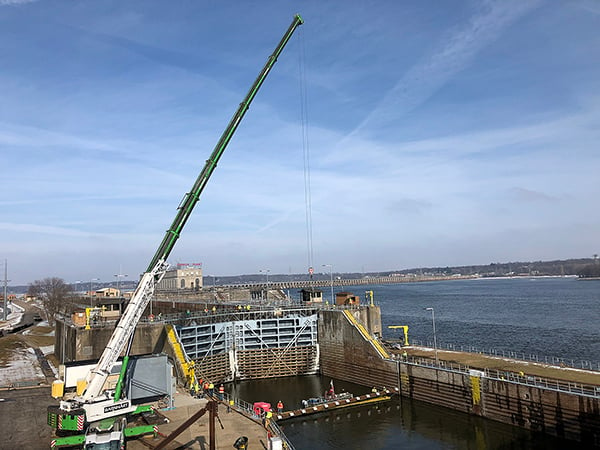
Minnesota City, Minn. — The Minnesota DNR is inching closer on the Lock and Dam 5 carp deterrent as the U.S. Army Corps of Engineers officially began designing the underwater Acoustic Deterrent System (uADS) at the site.
Based on statutory project timeline of completing the deterrent by June 30, 2029, Carli Wagner, DNR project coordinator, said the team remains on track to meet that overall deadline.
Although the U.S. Army Corps Research and Development Center recently began designing the uADS deterrent at Lock and Dam 5, Wagner said the design deadline might need to be extended beyond June 30, 2026.
“We have communicated with our funding source, the Lessard-Sams Outdoor Heritage Council, that the timeline may need to be adapted based on what was originally planned when this appropriation was awarded,” Wagner said.
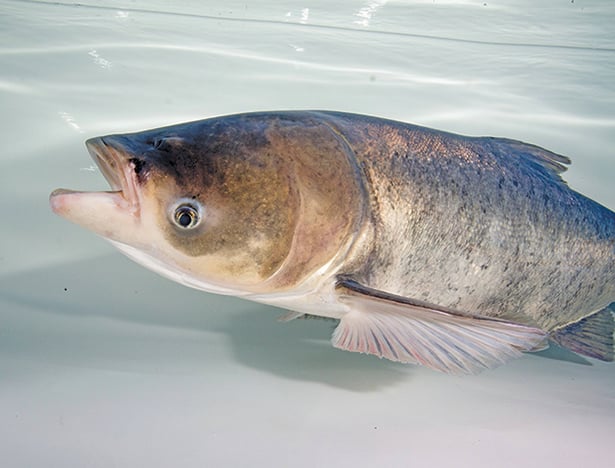
Even though years of planning and interagency coordination has taken place, designing what will become the third carp deterrent like this in the country requires a bit more time for the design phase.
“DNR has been working as efficiently and quickly as possible on this project. As we’ve emphasized, it’s very new. There’s no other deterrent examples in Minnesota and the U.S. Army Corps – first time working on a deterrent,” Wagner said.
Even if the design deadline is pushed further into 2026 past the mid-summer deadline, the overall construction timeline remains on track to see the project completed by June 30, 2029, she said.
“We’re really going to start to see some tangible results for the design, and one thing I also wanted to emphasize is in … we are currently still on track for our original construction timeline,” Wagner said.
MORE COVERAGE FROM MINNESOTA OUTDOOR NEWS:
Life for a 2026 Farm Bill? Conservation officials ‘cautiously optimistic’
The accomplishment plan, or timeline and framework for the project as approved by the Lessard-Sams Outdoor Heritage Council, follows the 2024 laws that allocated funding for the project and scheduling.
The statute that passed in 2024, states that the “design must be fully completed within two years of the date of the appropriation (June 30, 2026). Deterrent installation must be completed by June 30, 2029.”
To update the design completion timeline, there would need to be a legislative amendment passed this session. Wagner said she didn’t have enough information to comment on what the extension process could look like.
Throughout the past few years of launching the project, project coordinators frequently have offered the LSOHC progress updates during meetings. Some council members have raised concerns that the project has been focused on planning to plan thus far.
Despite the timeline hiccup that Wagner said might necessary, the years of planning have led to the recent decision to install a uADS at the site.
In July 2025, the interagency workgroup – DNR, U.S. Fish and Wildlife Service, U.S. Geological Survey, and the U.S. Army Corps of Engineers – was still trying to decide what kind of deterrent to install. The options were a uADS or BioAcoustic fish fence (BAFF). An experimental BAFF was previously utilized in Kentucky’s Lake Barkley dam and the uADS was used on Lock and Dam 19 in Iowa’s stretch of the Mississippi.
The interagency workgroup analyzed “very technical stuff to get an assessment of how those two different deterrents might perform at Lock and Dam 5, as well as some estimates on cost,” Wagner said.
She added that trade-offs, efficiency, and long-term operation and maintenance needs also were weighed into making the decision to install a uADS at the site.
Once that selection was made last month, the Army Corps began designing how the uADS could be employed at Lock and Dam 5, but there are already some ideas guiding the design team in the next phase.
“There will be some things refined specifically for Lock and Dam 5, but the overall design and set up is kind of a speaker bar,” Wagner said.
One of the alluring aspects of selecting the U.S. Army Corps Engineer Research and Development Center to spearhead the design for this deterrent is that they’re thinking ahead and baking versatility into the design.
“One of the things they really emphasize as important is designing for operational flexibility,” Wagner said.
Minnesota duck hunters await fresh birds as warm weather lingers
If you spoke with enough waterfowlers and waterfowl managers across Minnesota in the last handful of days, the message you
Minnesota DNR reminds firearms deer hunters to prepare for CWD sampling
Sampling is mandatory for southwest Minnesota the opening weekend of firearms deer season Nov. 7-8

Short on walleyes, but long on muskies: Beers Lake in Minnesota’s Otter Tail County
Otter Tail County’s Beers Lake is an excellent walleye fishery – nope. Beers is loaded with good-sized panfish and northern
