




Home » Nature Page & Night Sky » Pennsylvania Mixed Bag: Hanover Foods to pay for river pollution
Pennsylvania Mixed Bag: Hanover Foods to pay for river pollution

Harrisburg — The Pennsylvania Department of Environmental Protection, he U.S. Environmental Protection Agency, the U.S. Department of Justice, and the Lower Susquehanna Riverkeeper Association have entered into a proposed Consent Decree with Hanover Foods Corporation to address more than 600 violations of the federal Clean Water Act.
As part of the proposed settlement to eliminate unlawful discharges into the Susquehanna River and ultimately the Chesapeake Bay filed with the U.S. District Court for the Middle District of Pennsylvania on Nov. 18, 2025, Hanover Foods would agree to pay a civil penalty of $1,150,000.
New Trees Part of $500,000 Statewide Effort
Harrisburg — The state recently helped plant trees in the Cloverly Heights neighborhood in south Harrisburg – part of a $500,000 investment statewide to add shade, reduce stormwater runoff and make communities more welcoming places to live.
Pennsylvania Department of Conservation and Natural Resources Secretary Cindy Adams Dunn together with Harrisburg Mayor Wanda Williams, staff and volunteers planted 33 trees including oaks, serviceberry, and eastern redbuds.
The trees were provided by the TreePennsylvania Bare-Root Tree Program and the City of Harrisburg. This fall the program is providing 1,100 trees to 51 communities in the commonwealth through a combination of a $500,000 DCNR grant, private donations, and federal funds.
MORE COVERAGE FROM PENNSYLVANIA OUTDOOR NEWS:
Notes off a soiled cuff: Thoughts on possible merger of Pennsylvania fish and game agencies
CWD in northeast Pennsylvania adds challenges for some deer processors
Pennsylvania Game Commission dismisses game warden for misconduct
Skin Cancer Cluster Found in 15 Counties
State College, Pa. — Counties in Pennsylvania that contained or were near cultivated cropland had significantly higher melanoma rates compared to other regions, according to a new study led by scientists at Penn State.
Researchers at Penn State Cancer Institute analyzed five years of cancer registry data, 2017 through 2021, and found that adults over the age of 50 living in a 15-county stretch of south-central Pennsylvania were 57% more likely to develop melanoma, the deadliest form of skin cancer, than residents elsewhere in the state. They published their findings Nov. 14 in the journal JCO Clinical Cancer Informatics.
The cancer cluster includes both rural and metropolitan counties, meaning risks are not confined to remote areas or reserved for those most exposed to the outdoors.
Freshwater Fishing Hall Offers Youth Writing Contest with Cash Prizes
Hayward, Wis. — The Freshwater Fishing Hall of Fame reminds young people to submit entries to the Lindsay Sale-Youth Writing Contest by Jan. 10, 2026. The Hall of Fame encourages stories about your most memorable fishing trip. Prizes are available for 1st place ($300), 2nd ($200) and 3rd ($100).
Winners will be announced by May 15, and winning stories will be published in the spring issue of the Hall’s “Splash” newsletter. The contest is open to youth between the ages of 12 and 15 (parental consent required). Limit one entry per person. All stories must be the work of the entrant, without the use of AI. Stories need to be between 200 and 500 words long, and entries will be judged by qualified outdoor journalists, photographers, and educators.
Complete contest details are available online at: www.freshwater-fishing.org/lindsay-sale-tinney-award-entry-form/
Drone With AI Monitors Turkey Behavior
State College, Pa. — At a time when millions of Americans have turkey on their minds, a team of researchers led by an animal scientist at Penn State has successfully tested a new way for poultry producers to keep their turkeys in sight.
Crucial for productivity, monitoring behavior and health of poultry animals on large, commercial farms is a costly, time-consuming and labor-intensive task. To help producers keep track of how the birds are behaving, the researchers tested a new method using a small drone equipped with a camera and computer vision – a form of artificial intelligence that enables recognition and processing of visual information – to automatically recognize what turkeys are doing.
Their study is available online now ahead of publication in the December issue of Poultry Science.
SUBSCRIBER CONTENT
Read this article now.
Create a free Outdoor News account.
Create a free account below to get instant access to this article, thousands of Outdoor News stories, and our digital editions. Your 1-month trial starts the moment you sign up.
No credit card required
No credit card required
Subscriber? Login Here.
Share on Social
- Tags: Fishing, Hunting, Pennsylvania
Hand-Picked For You
Pennsylvania Mixed Bag: Docks removed early at Lake Wallenpaupack
Pennsylvania’s hunting license sales down so far this year
EHD in Michigan’s deer herd concentrated to four counties so far
Michigan’s statewide fishing and hunting report on Sept. 18, 2026
Partnerships help preserve public lands, habitat for Minnesota’s prairie chickens
Dan Small Outdoors Radio: Show 2138
Related Articles
Pennsylvania Mixed Bag: Docks removed early at Lake Wallenpaupack
The Pennsylvania Fish & Boat Commission recently announced that public boat docks at the Mangan Cove Access on Lake Wallenpaupack,
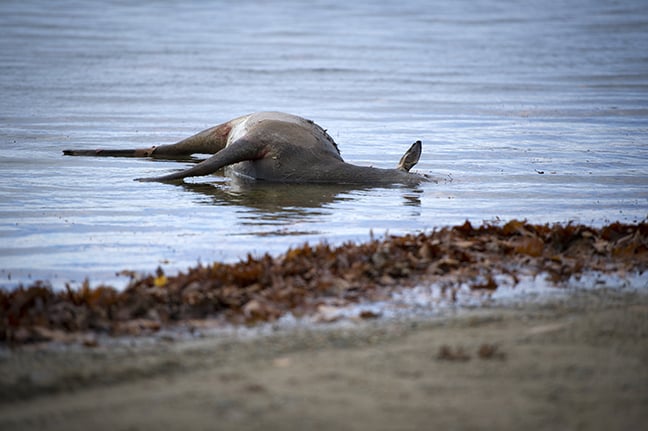
EHD in Michigan’s deer herd concentrated to four counties so far
The Michigan DNR has confirmed epizootic hemorrhagic disease in four counties so far in 2026, with plenty more tests pending

Dan Small Outdoors Radio: Show 2138
Indiana hunter scores a huge black bear in northern Wisconsin. Jeff heads to Cass Lake, Minn. for a Masters Walleye
